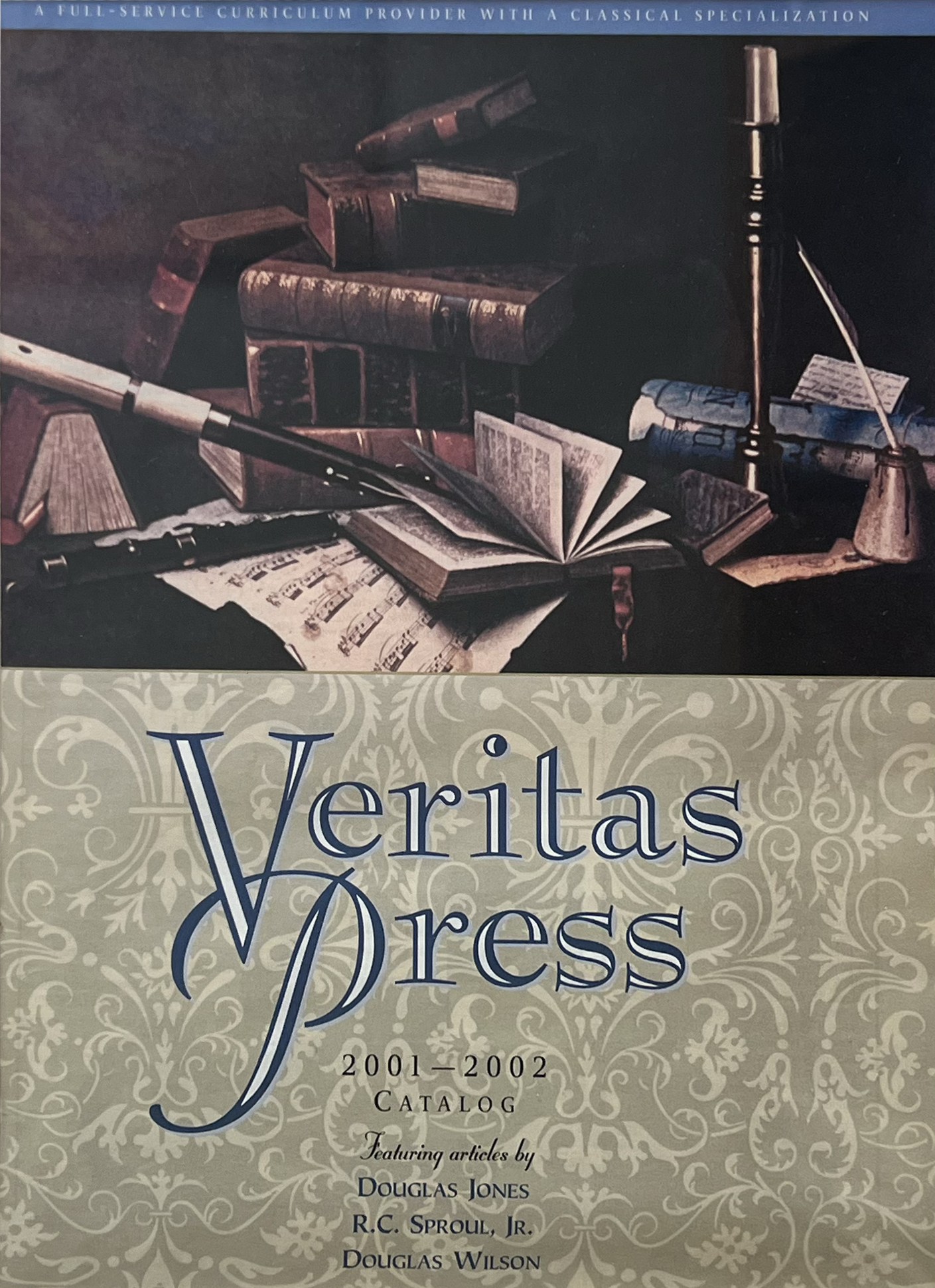
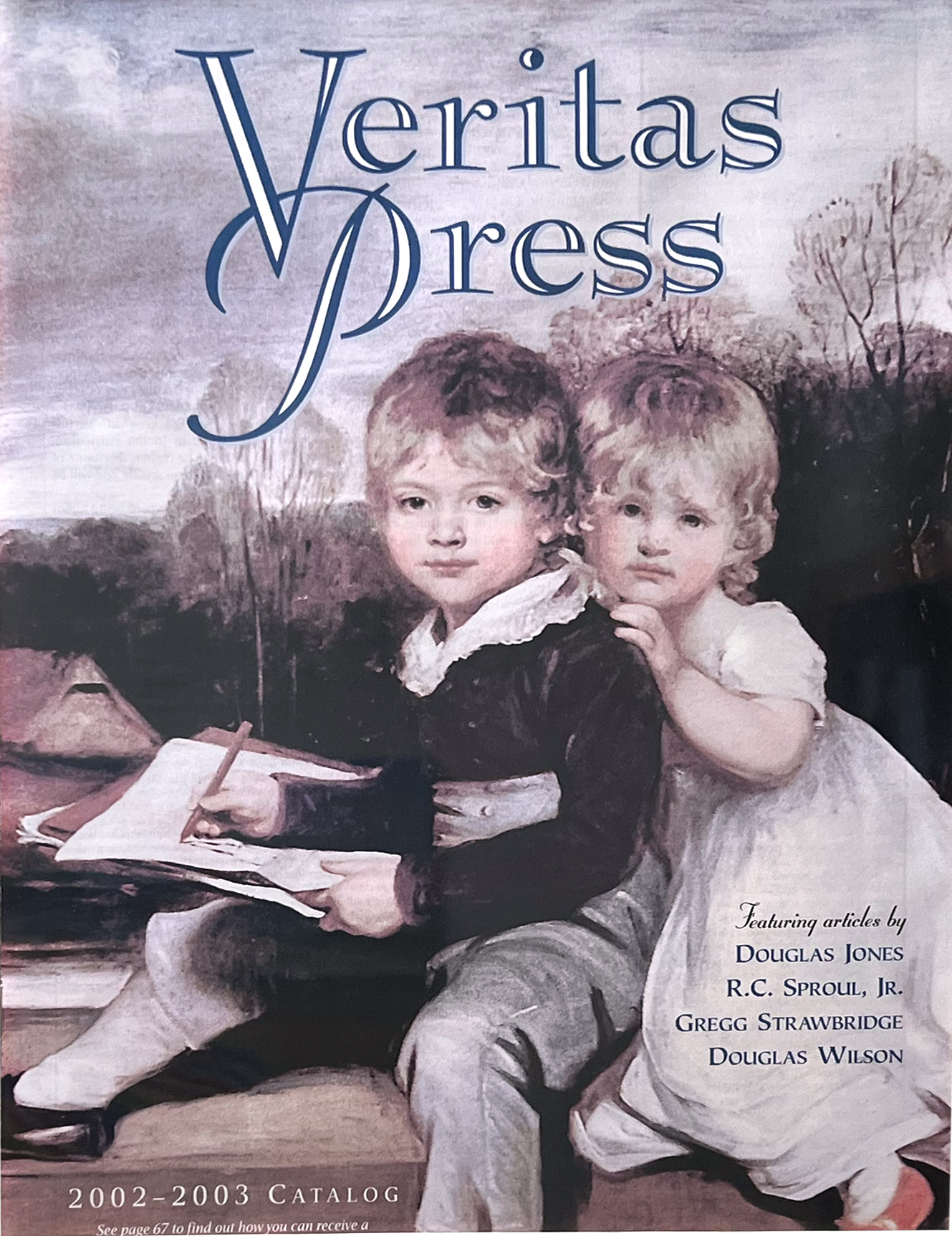
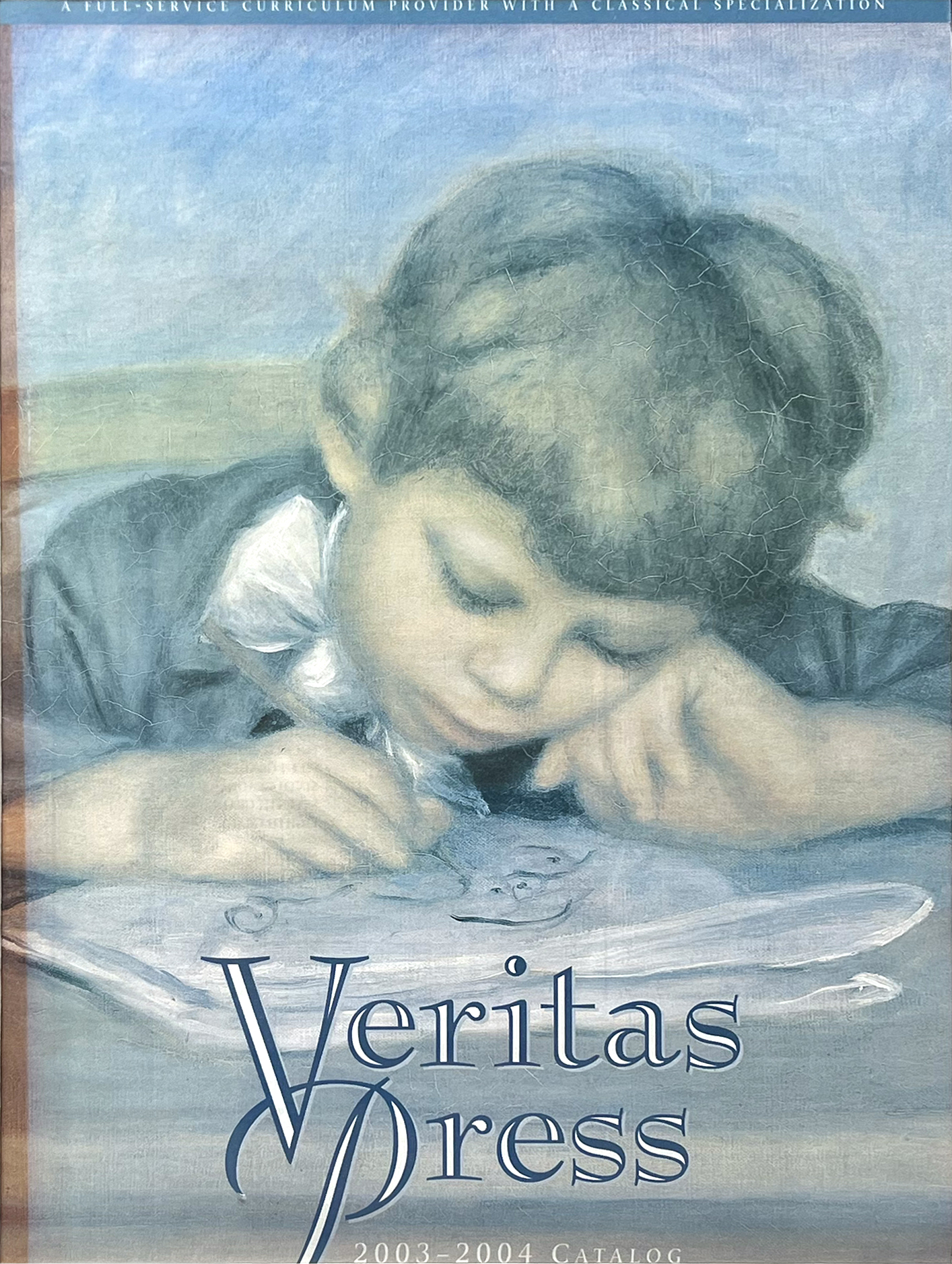
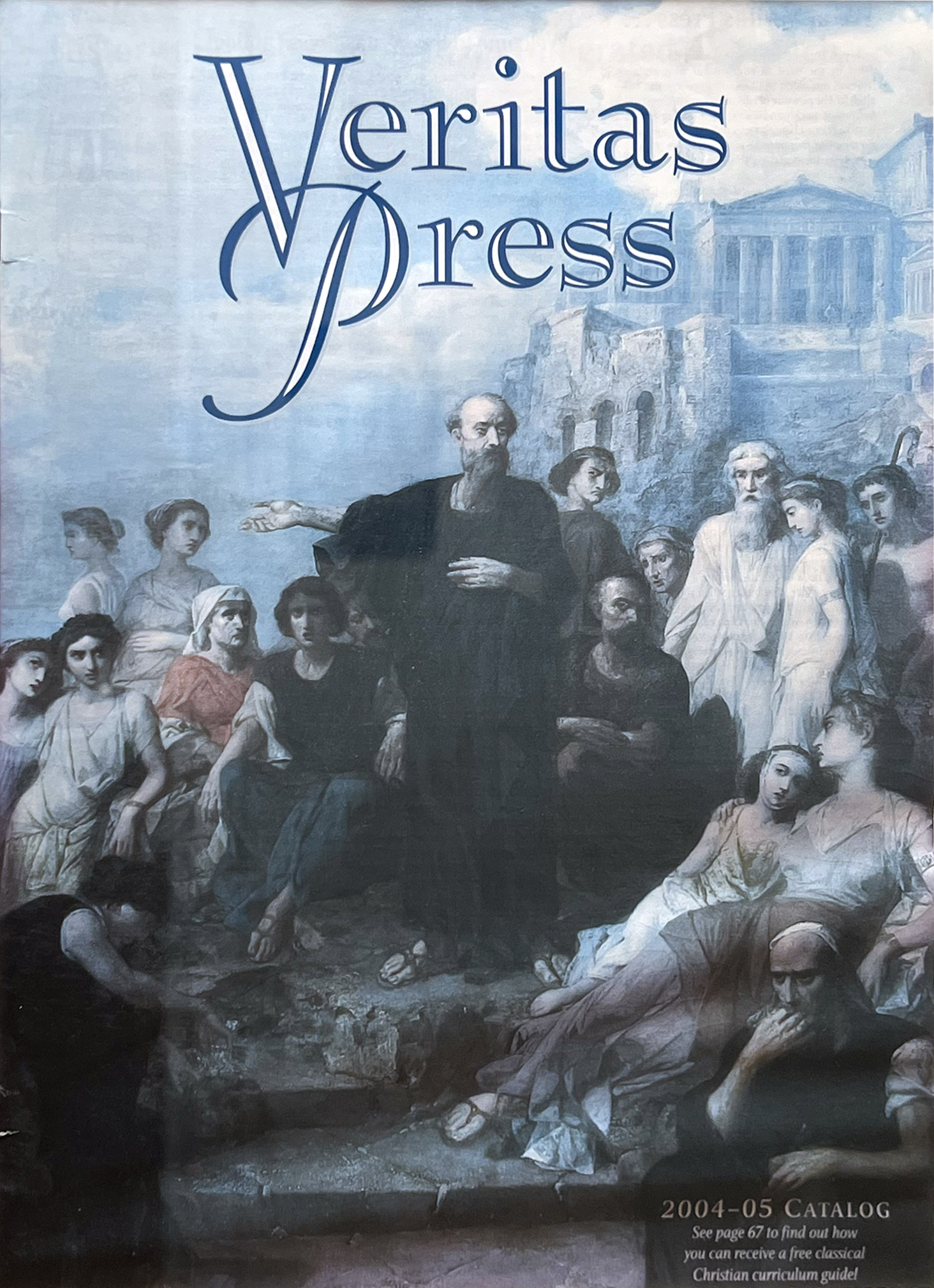
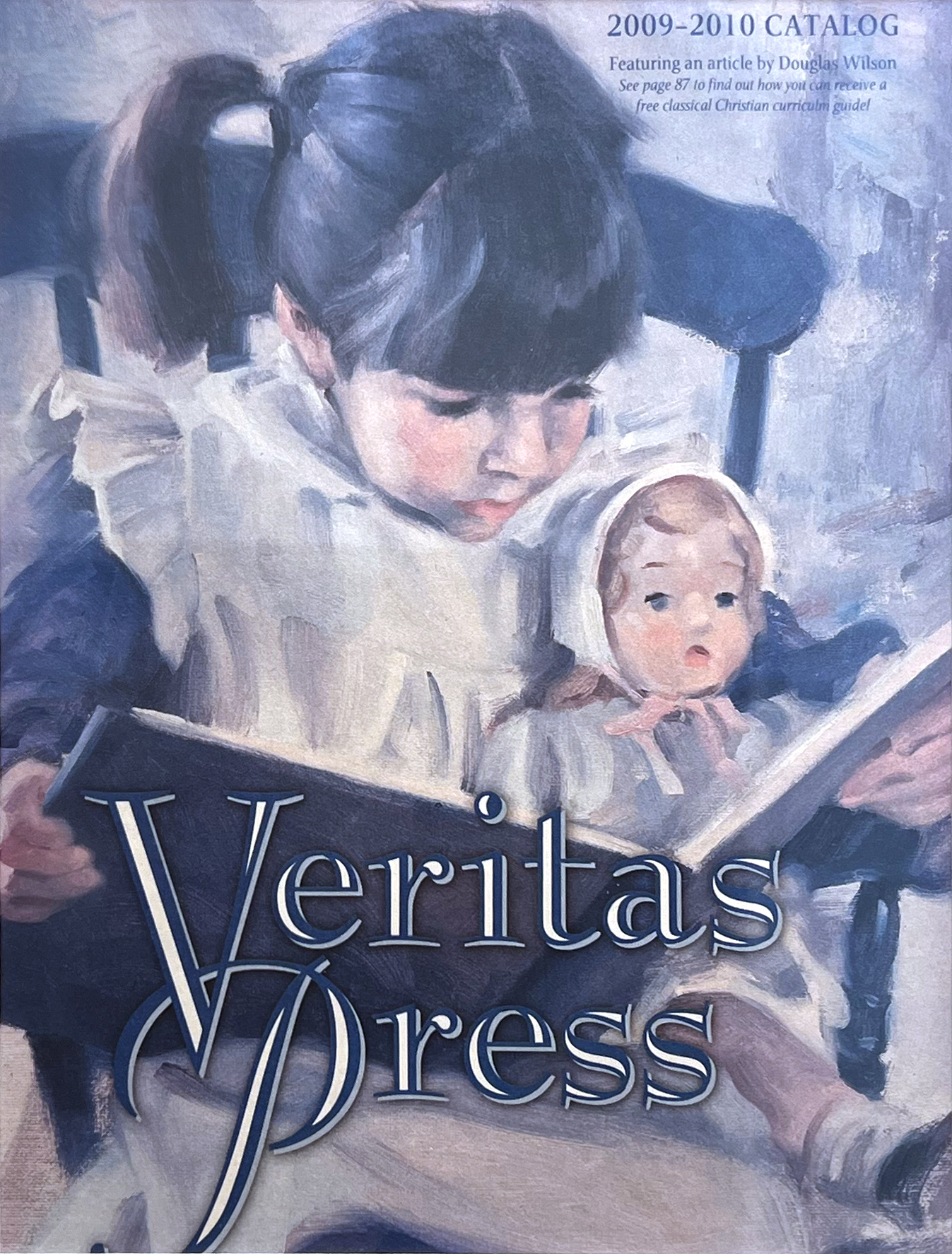
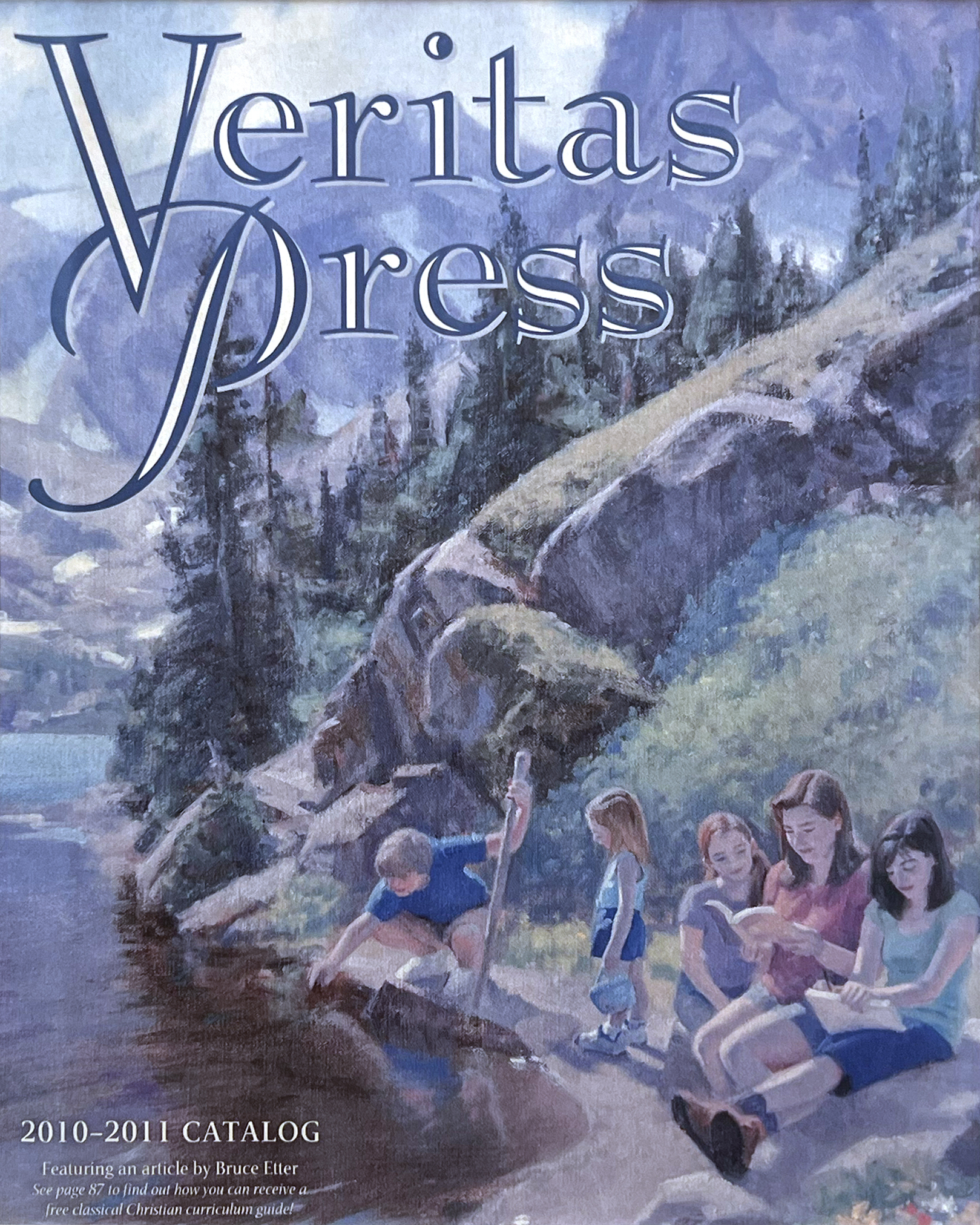
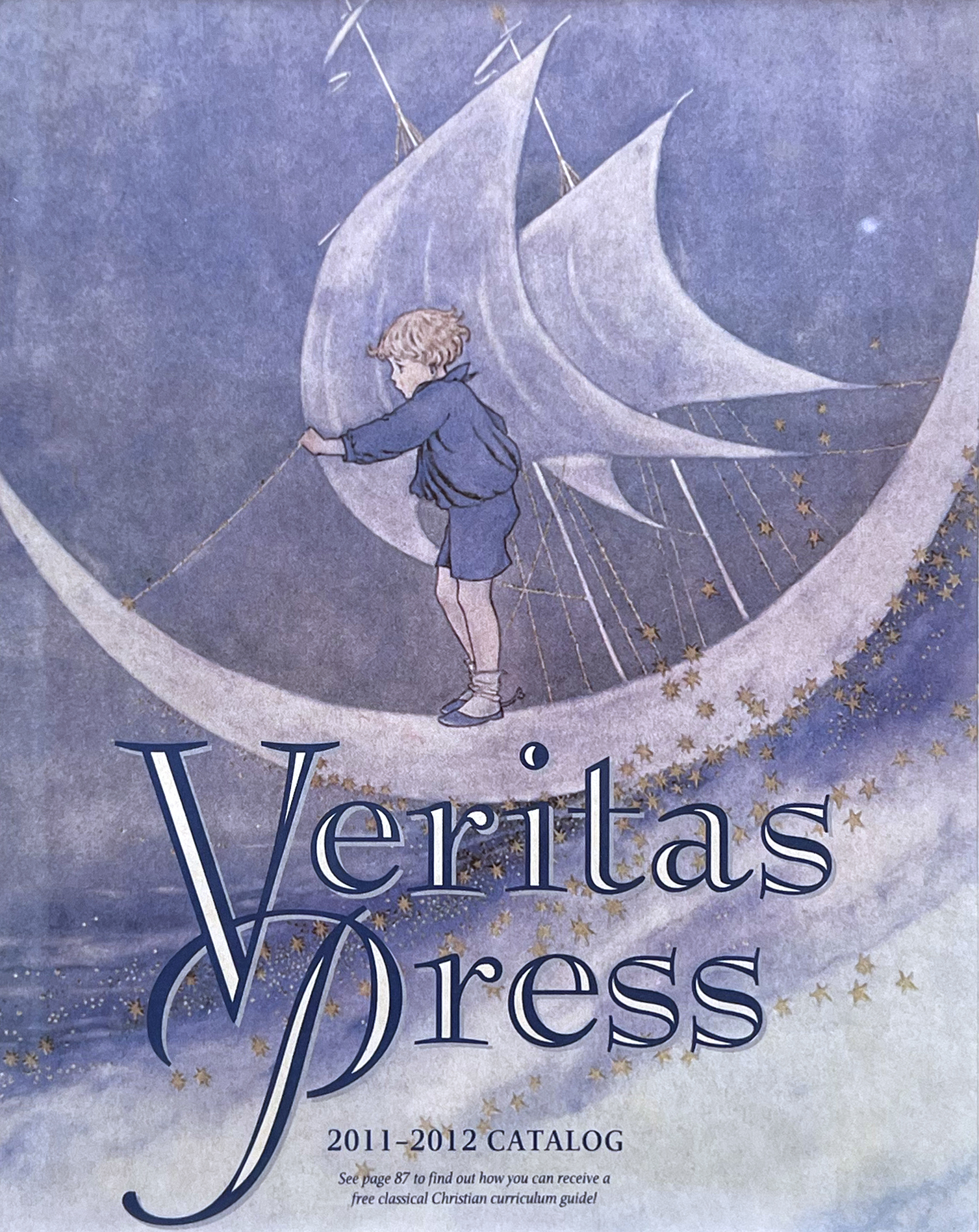
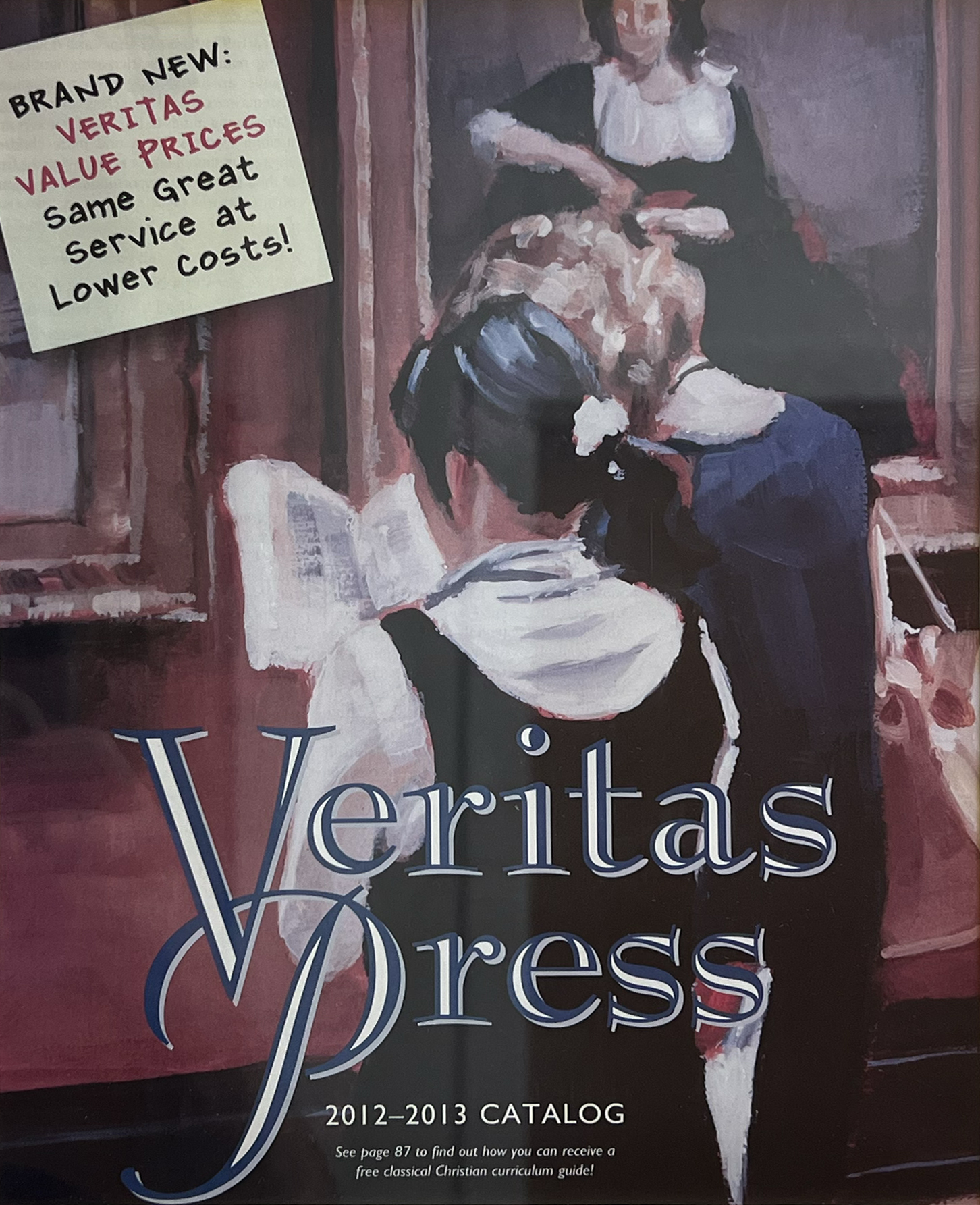
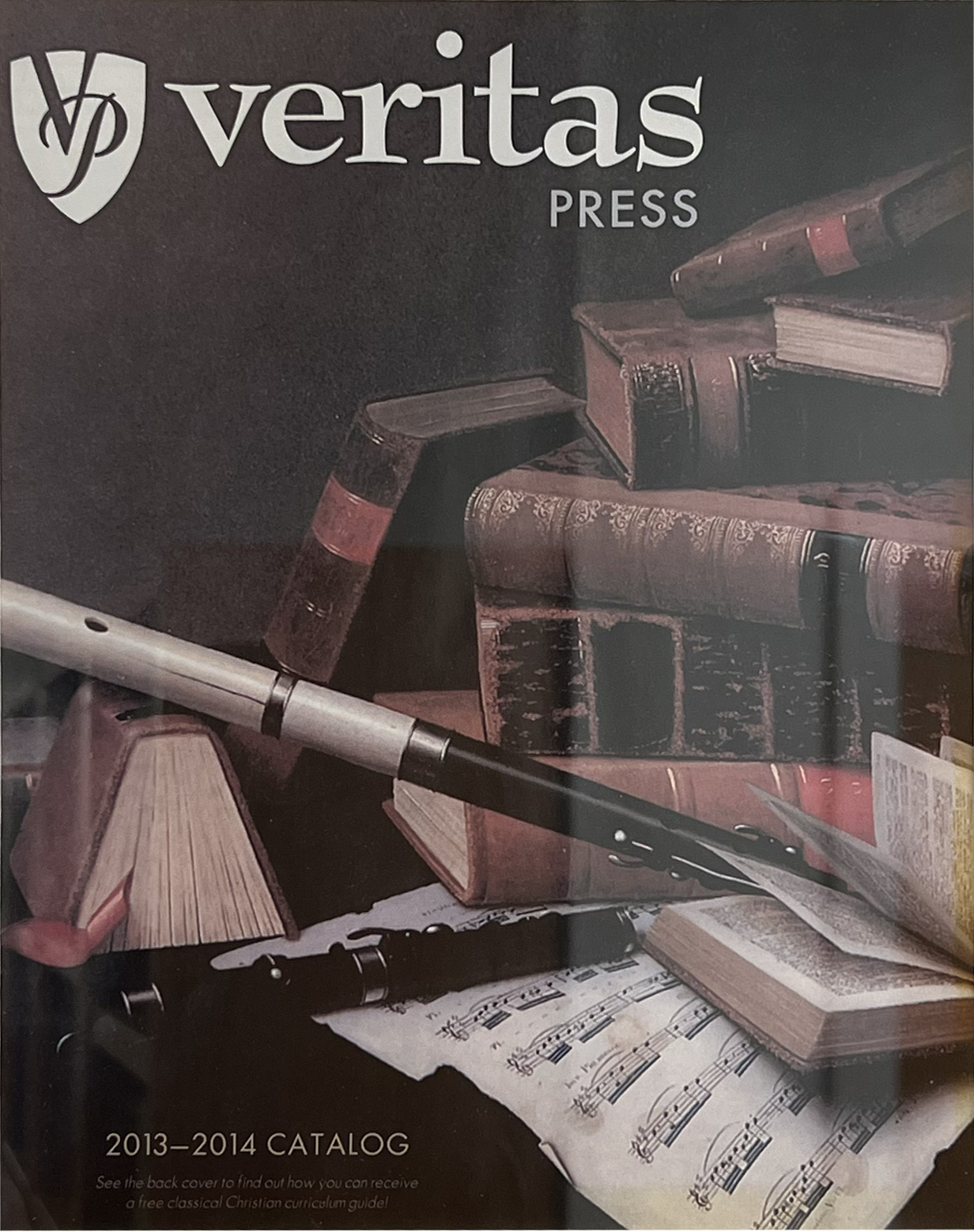
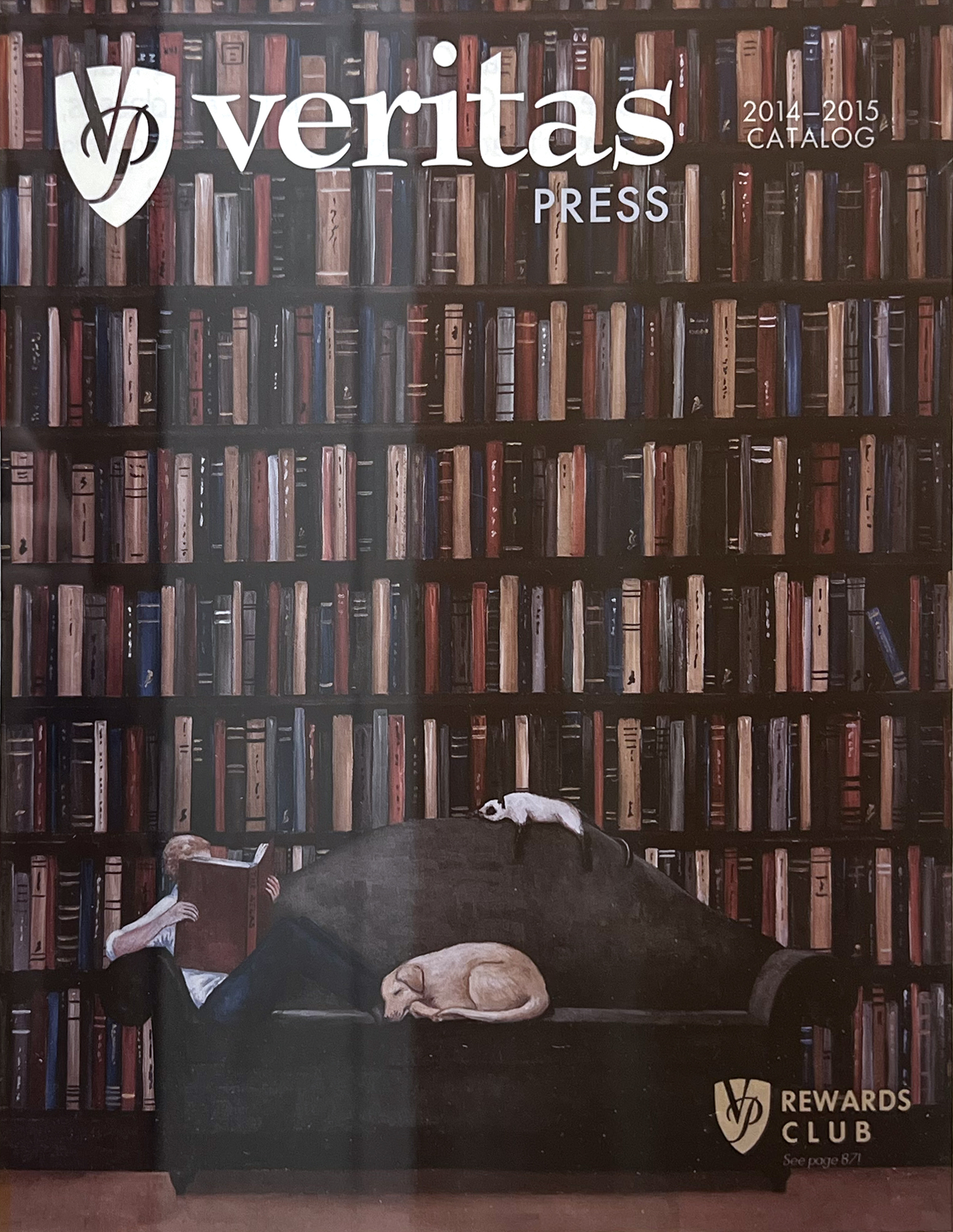
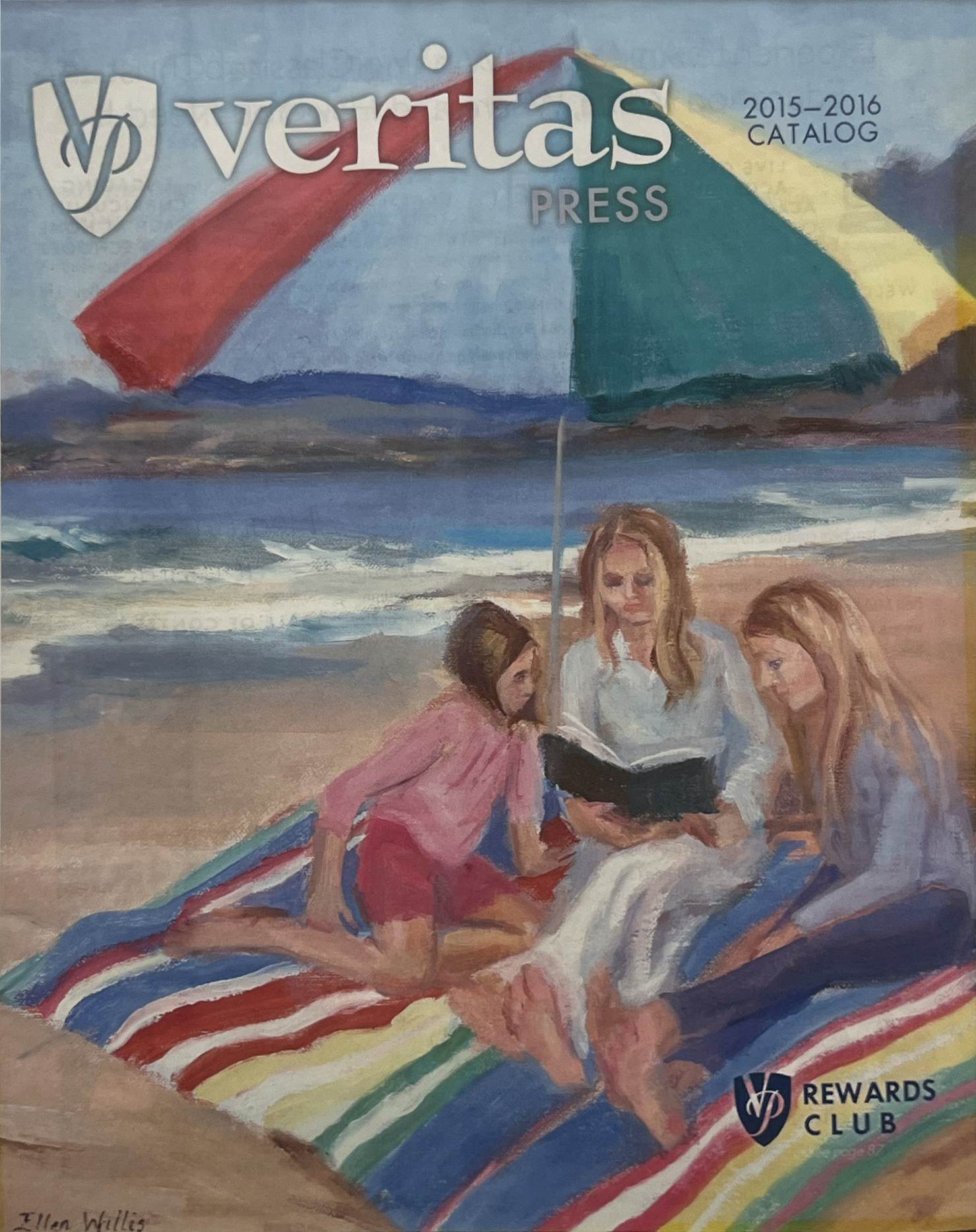
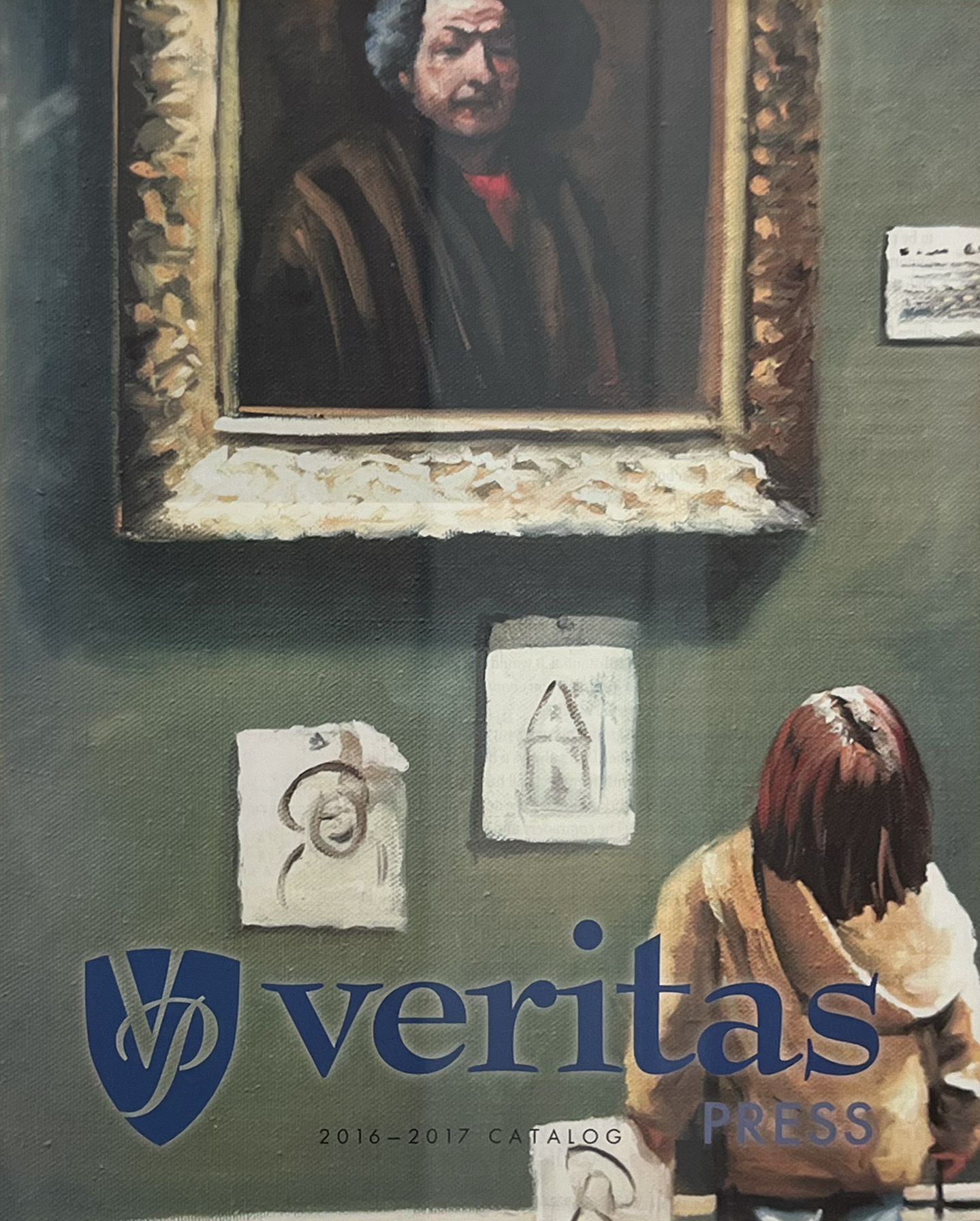
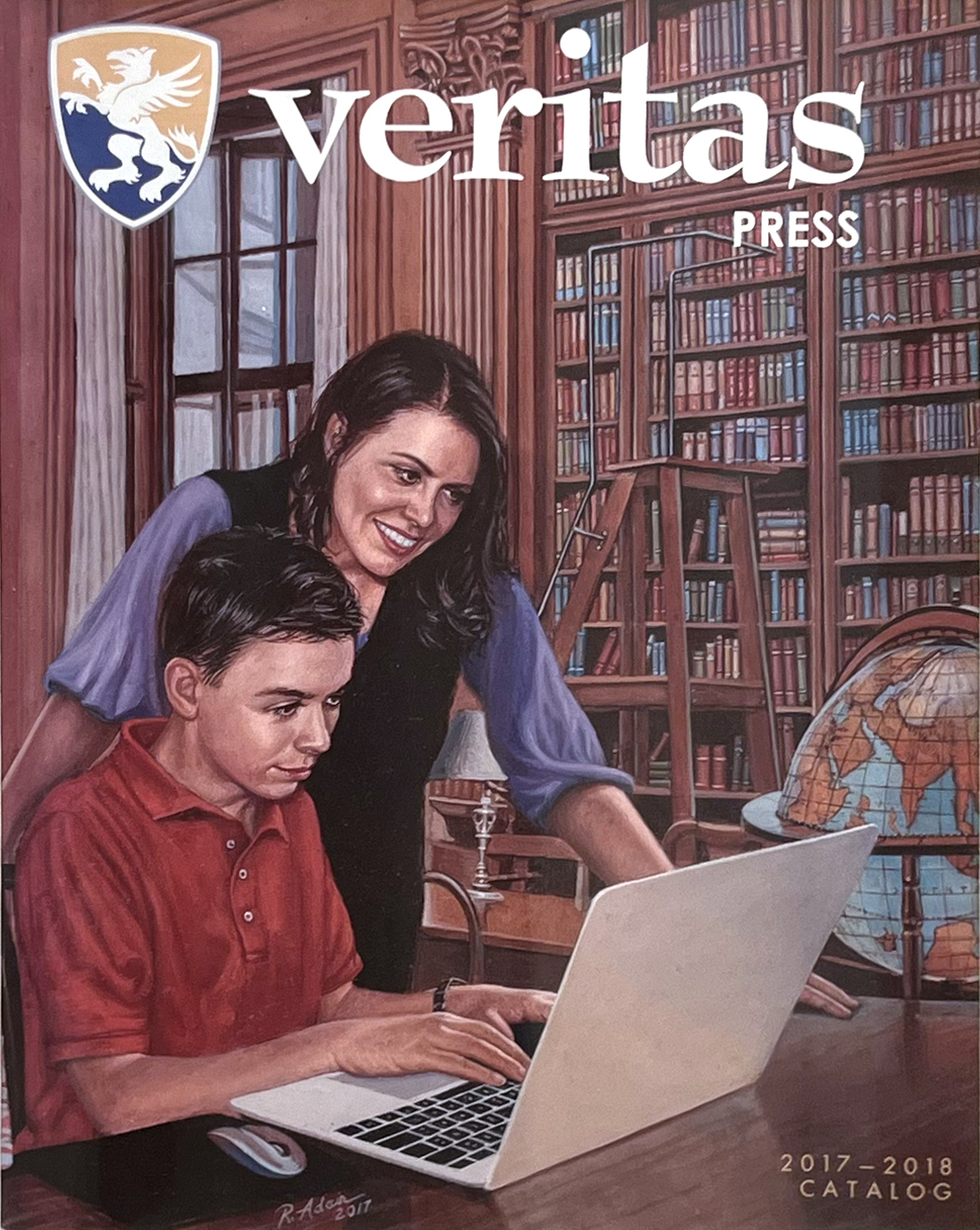
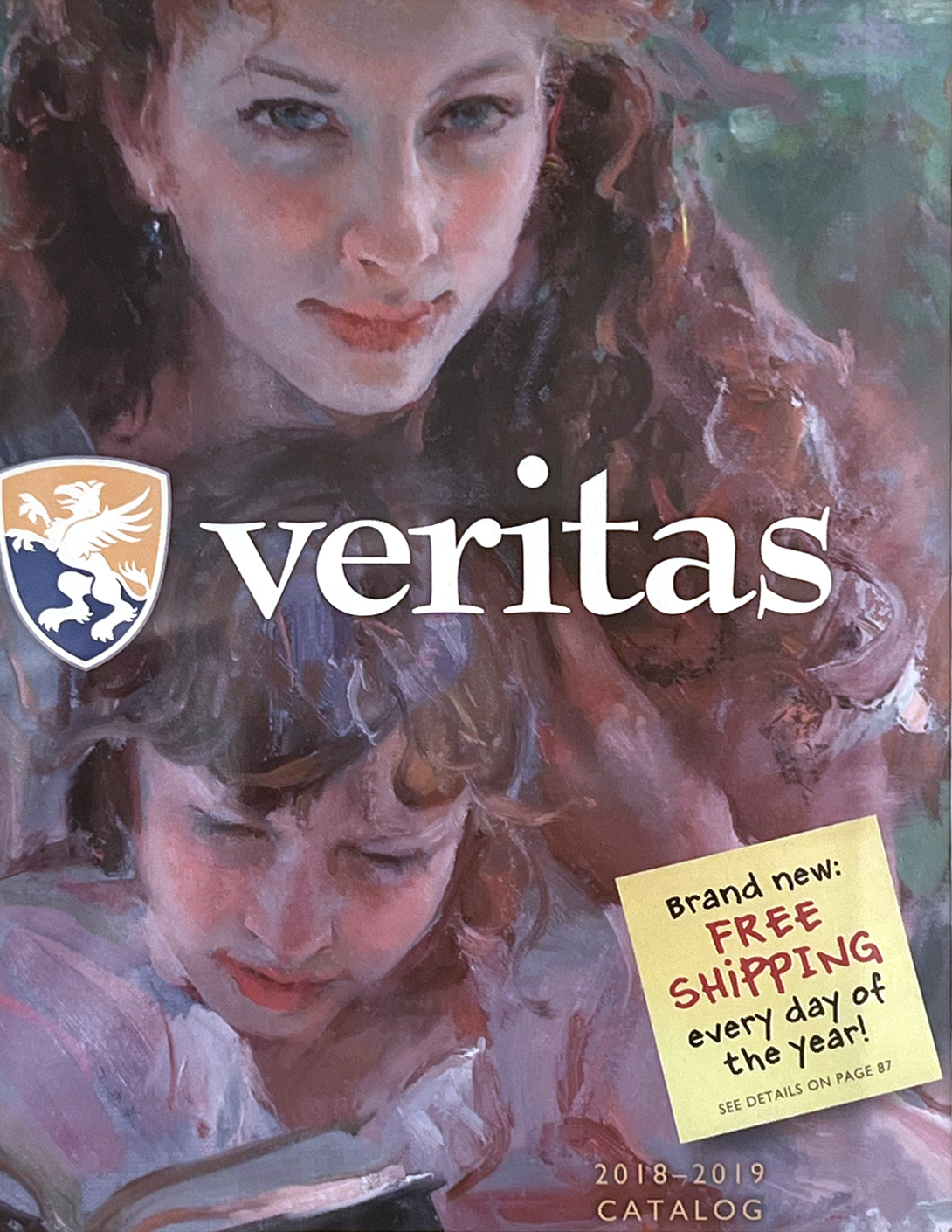
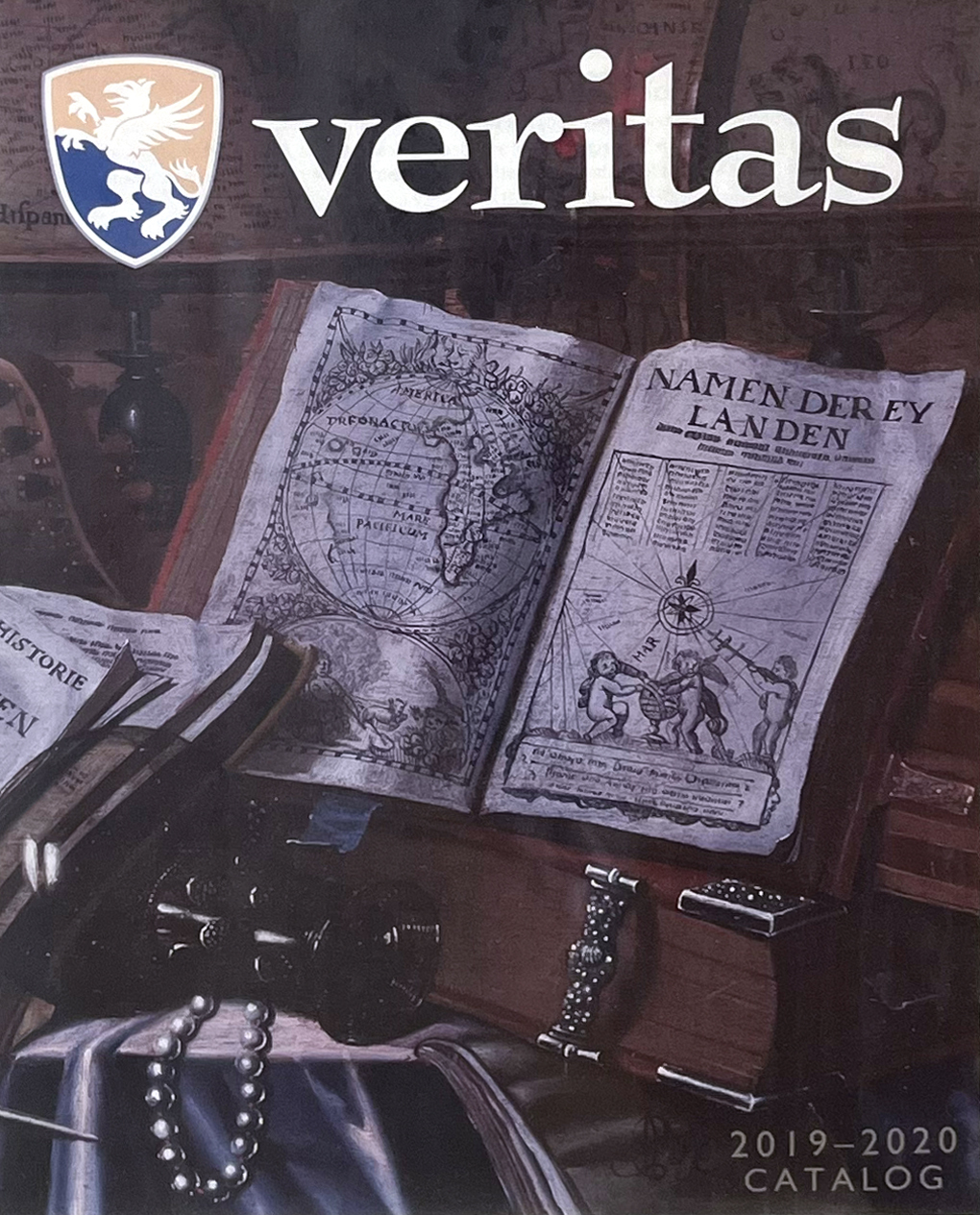
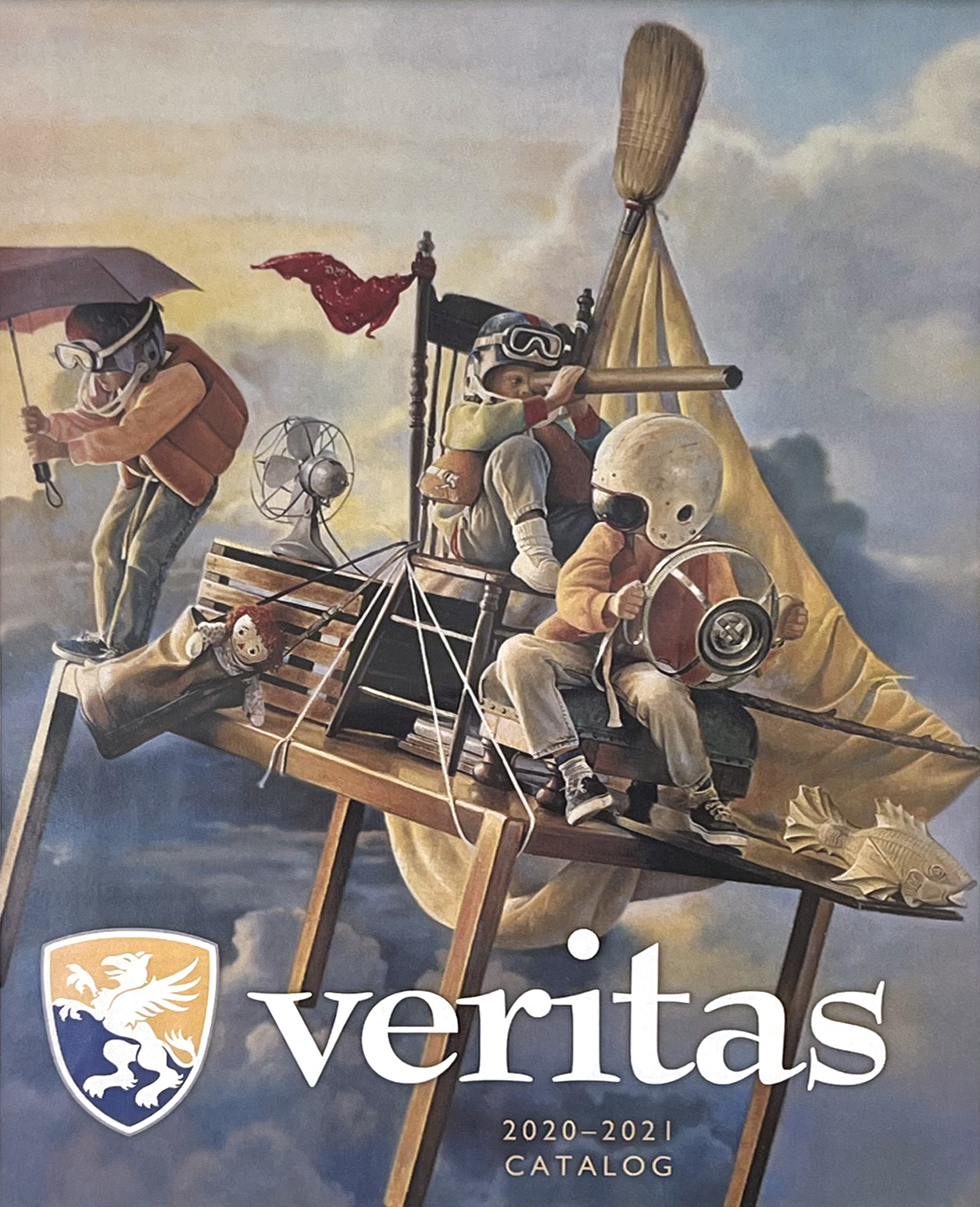
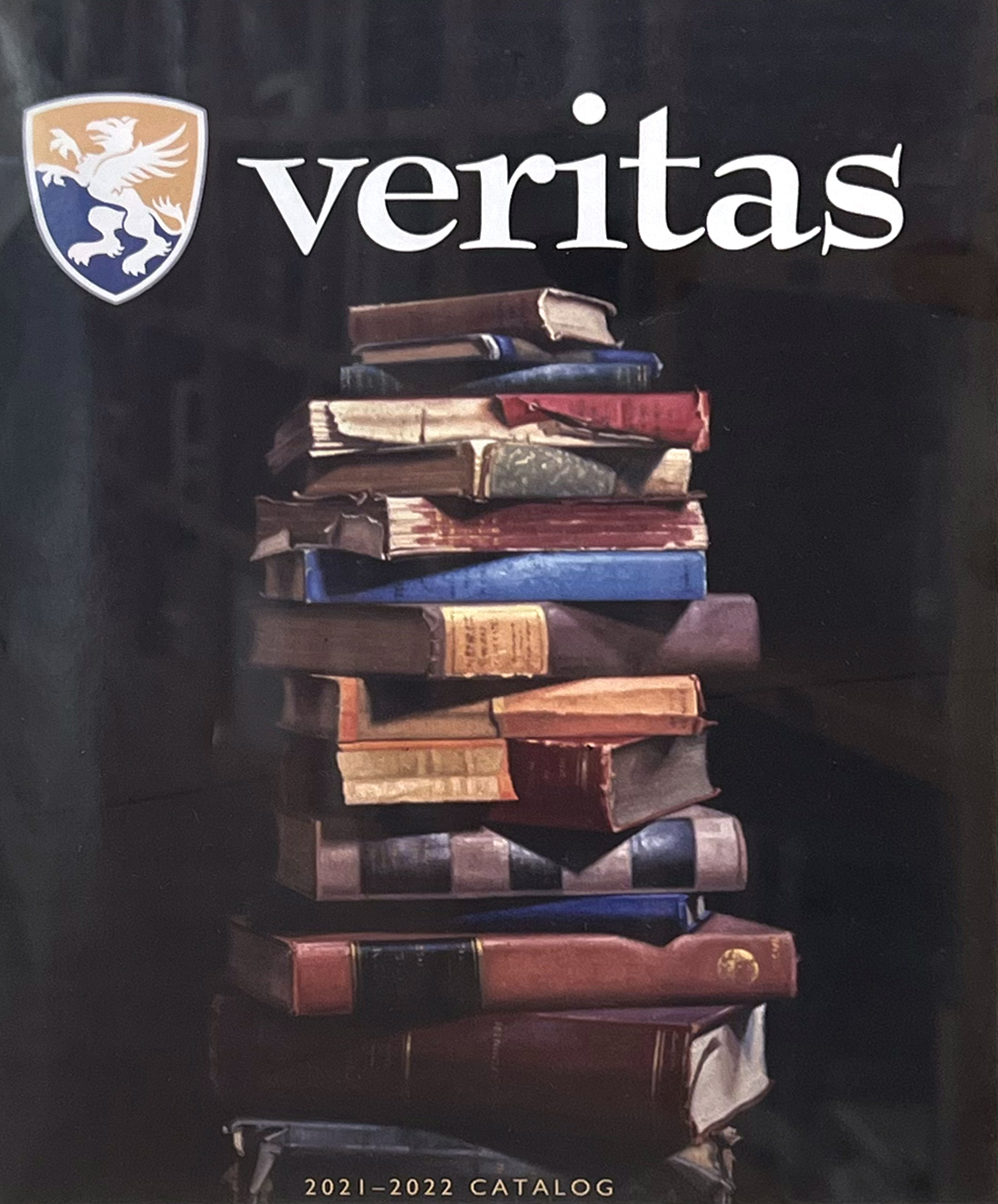
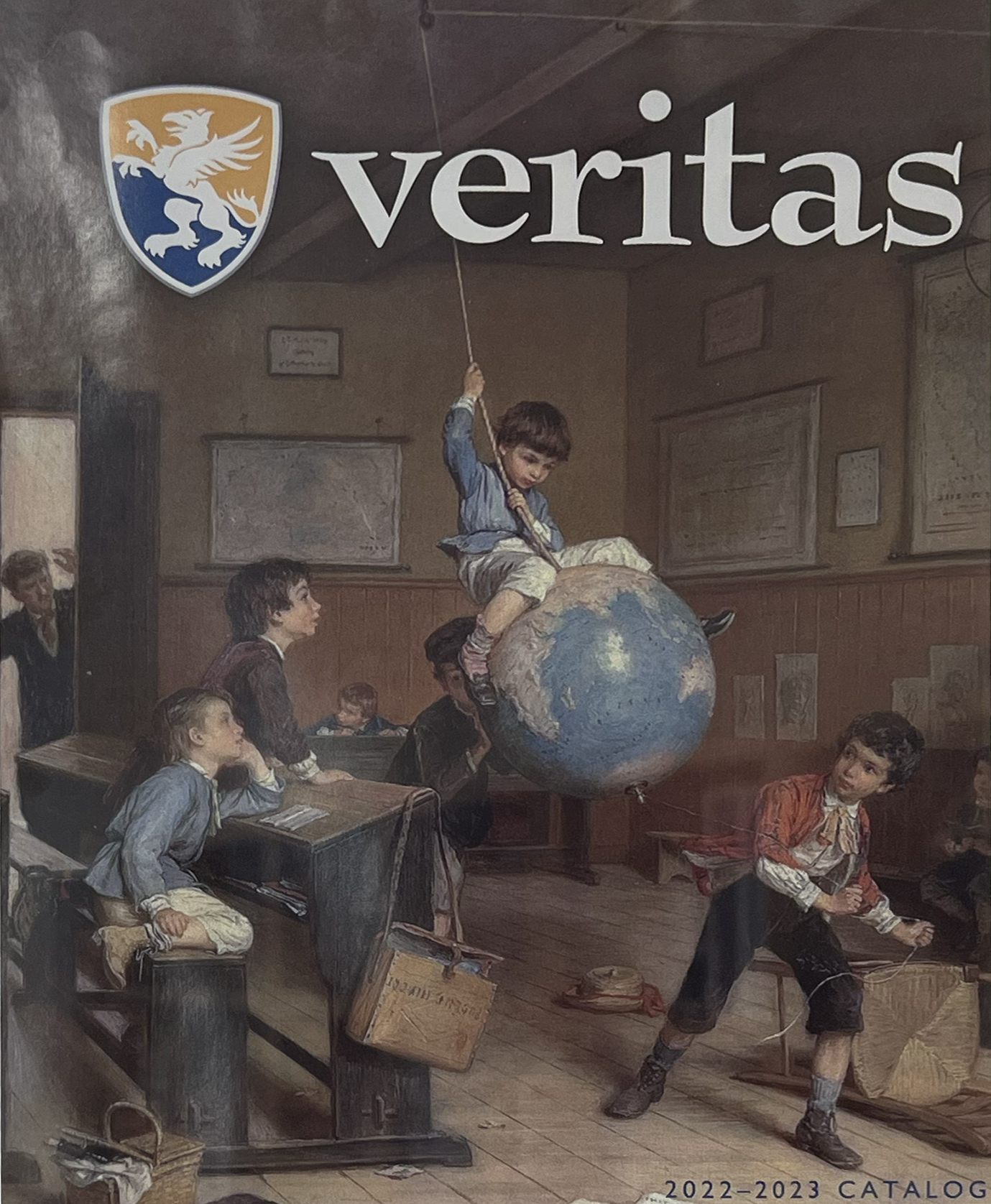
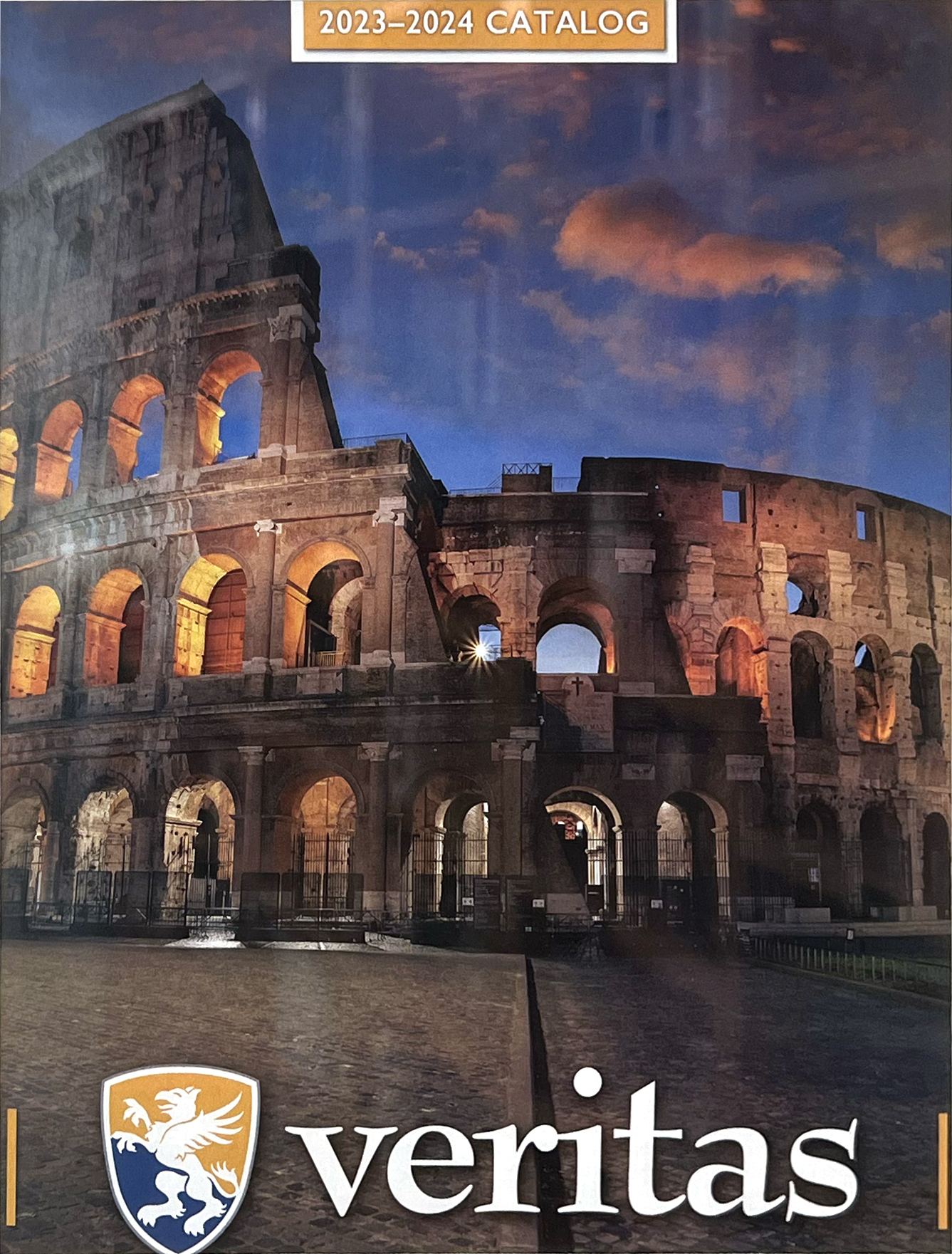
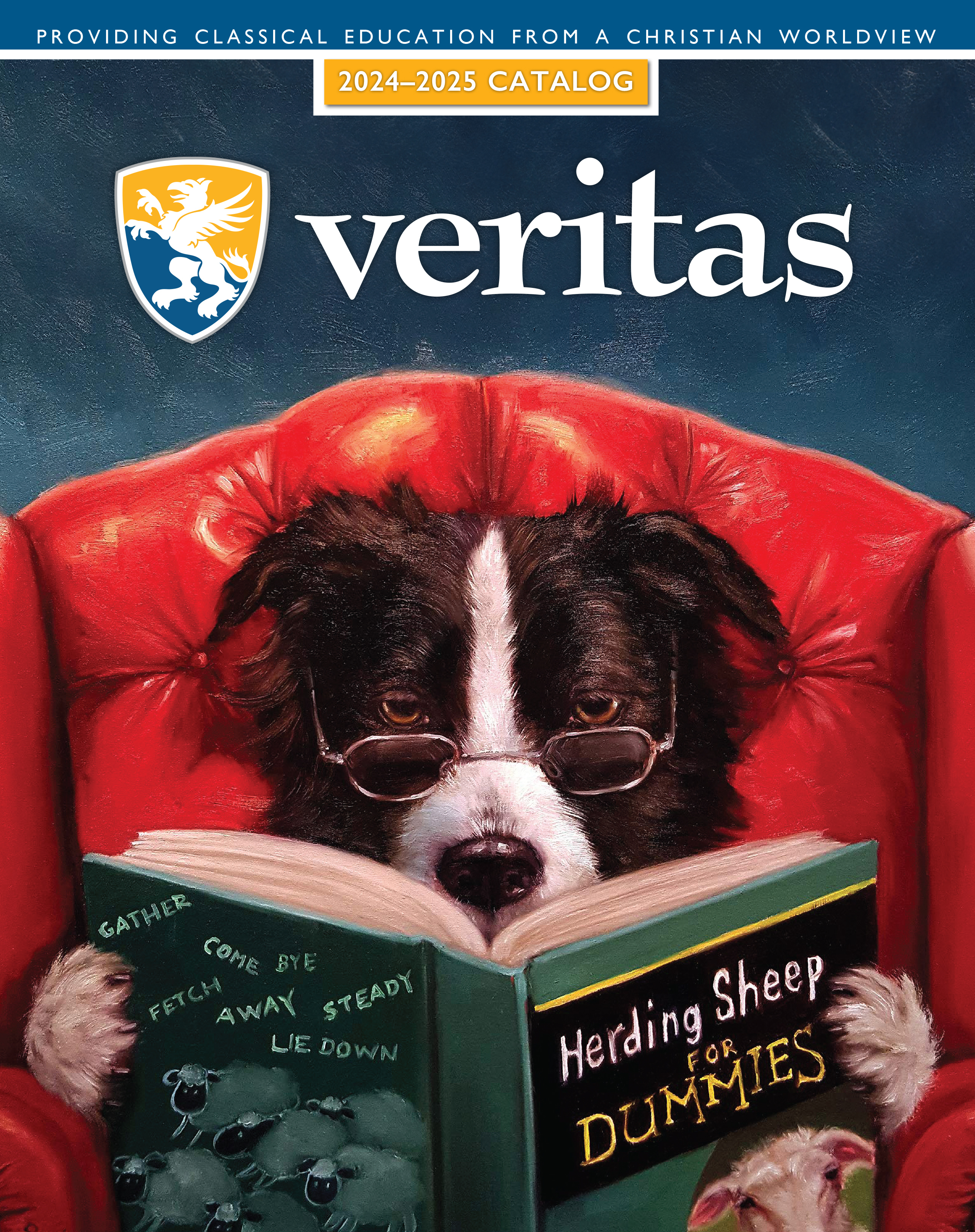
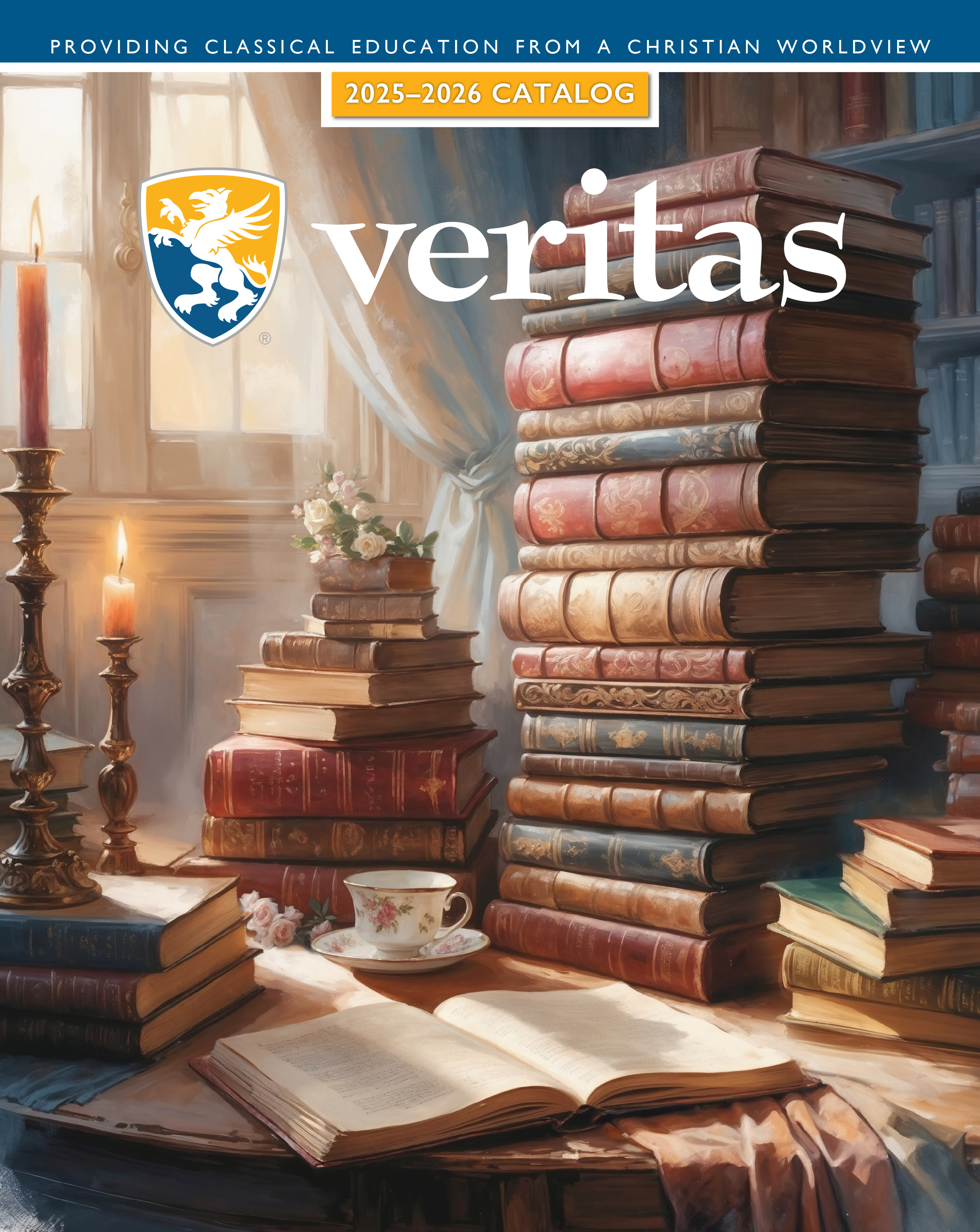
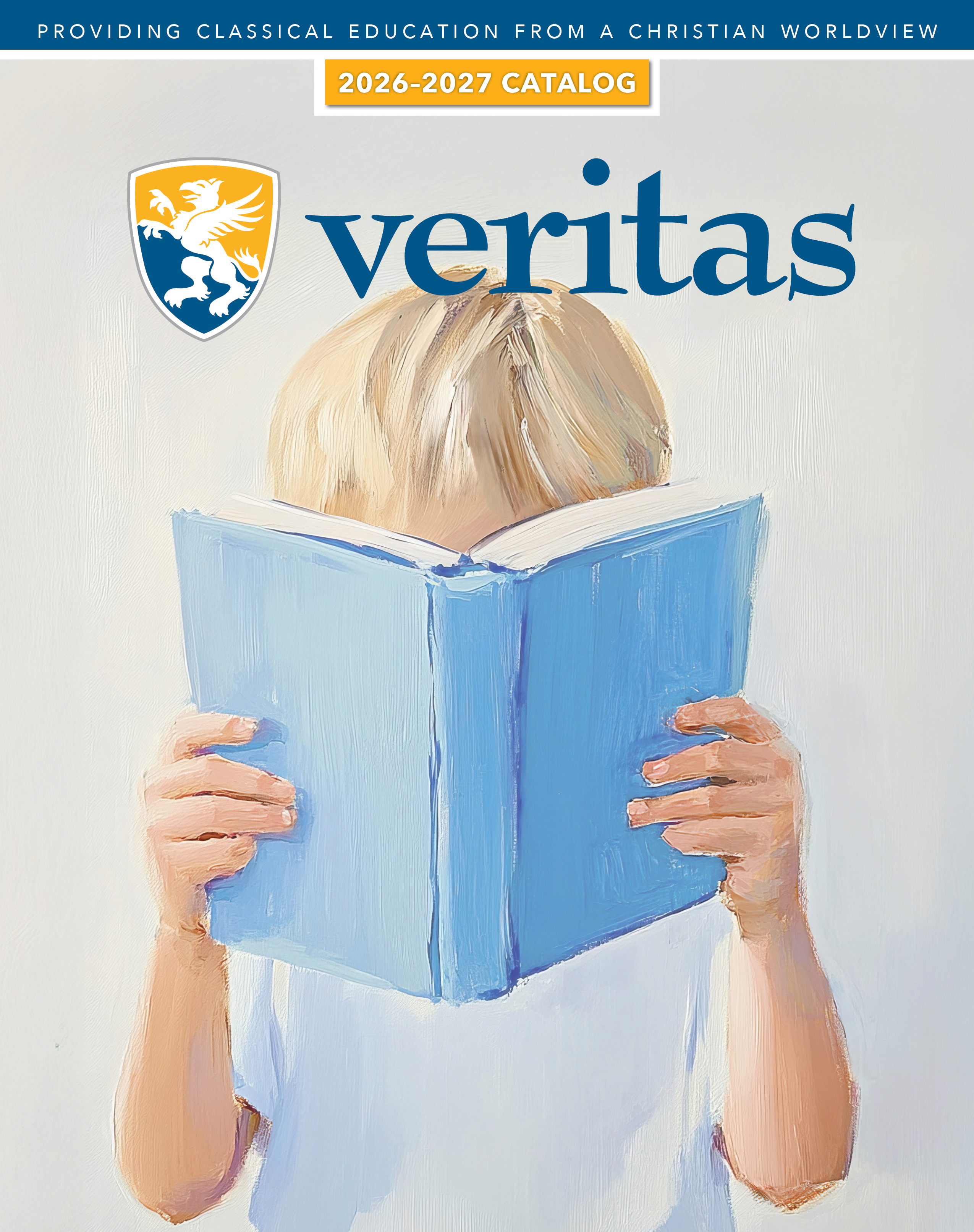
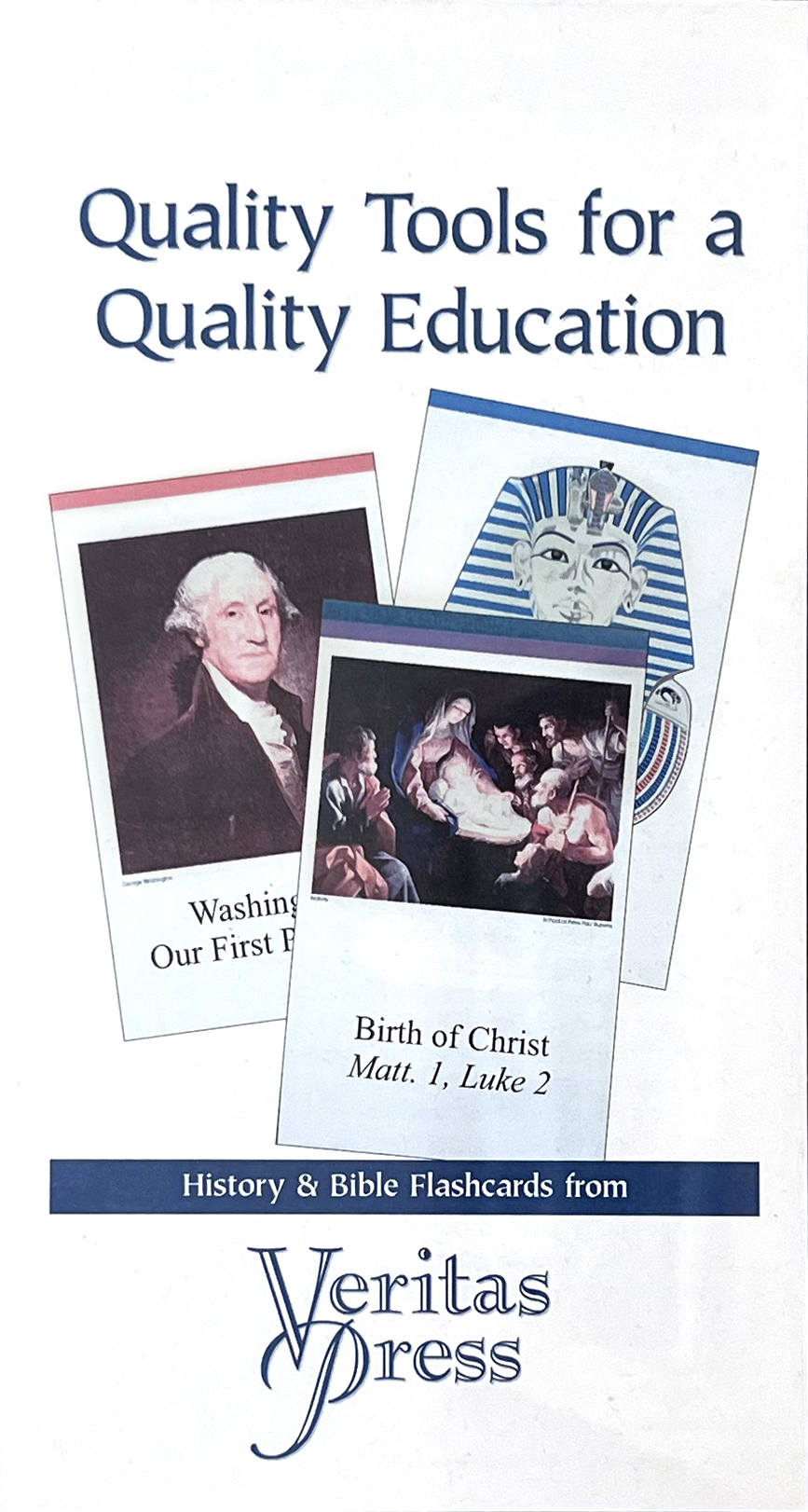
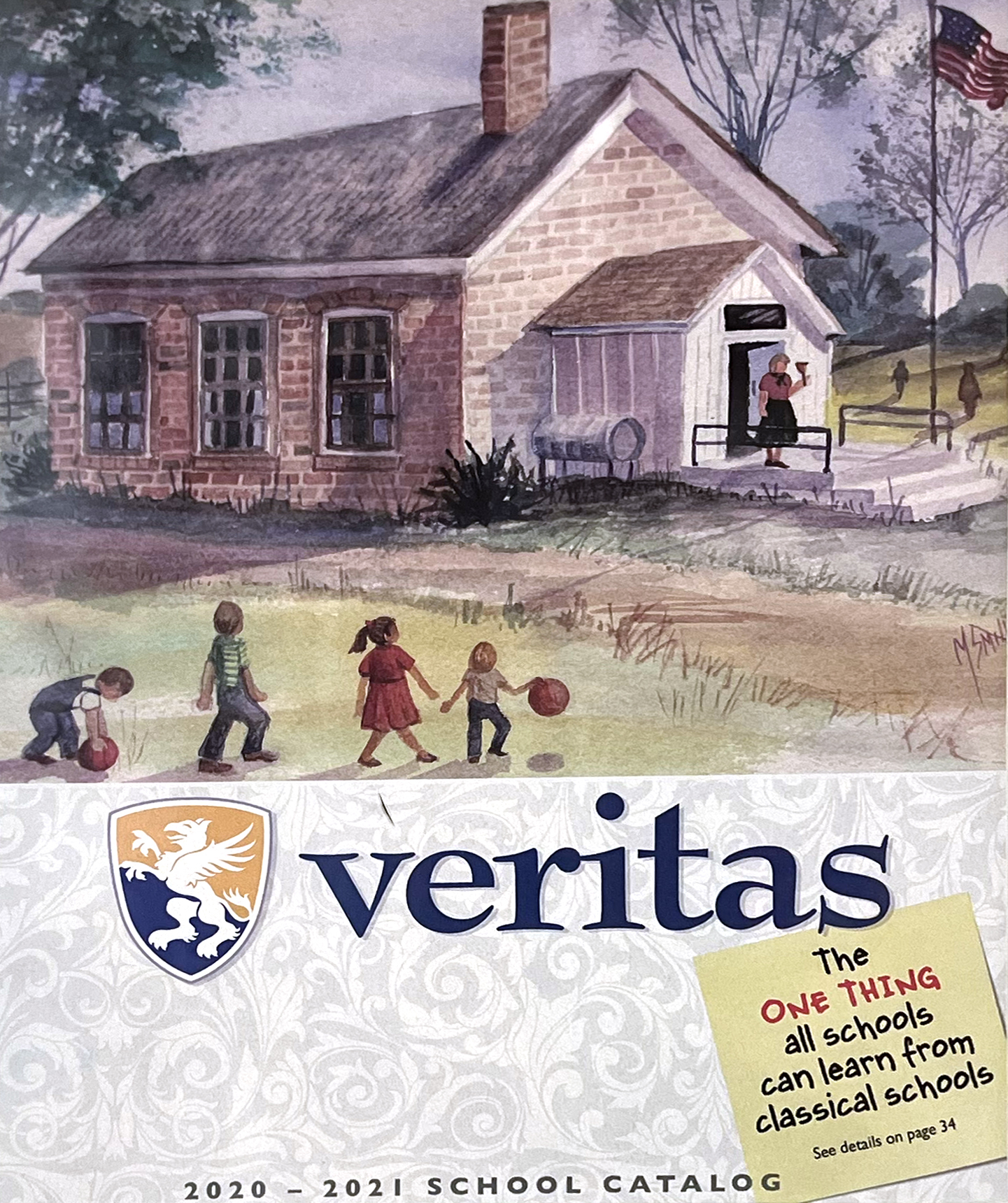
Scroll to browse. Select a cover to jump to that year.
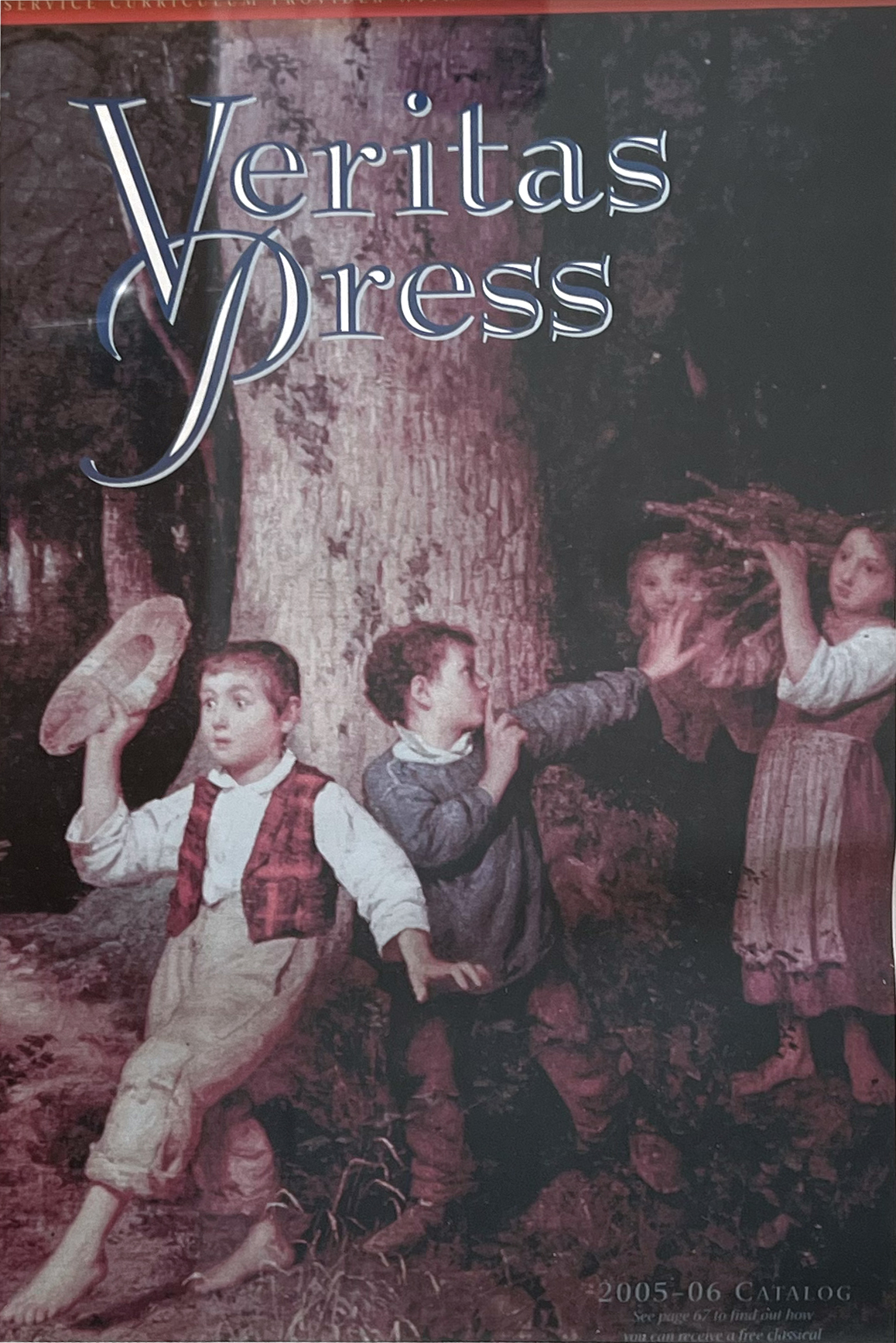
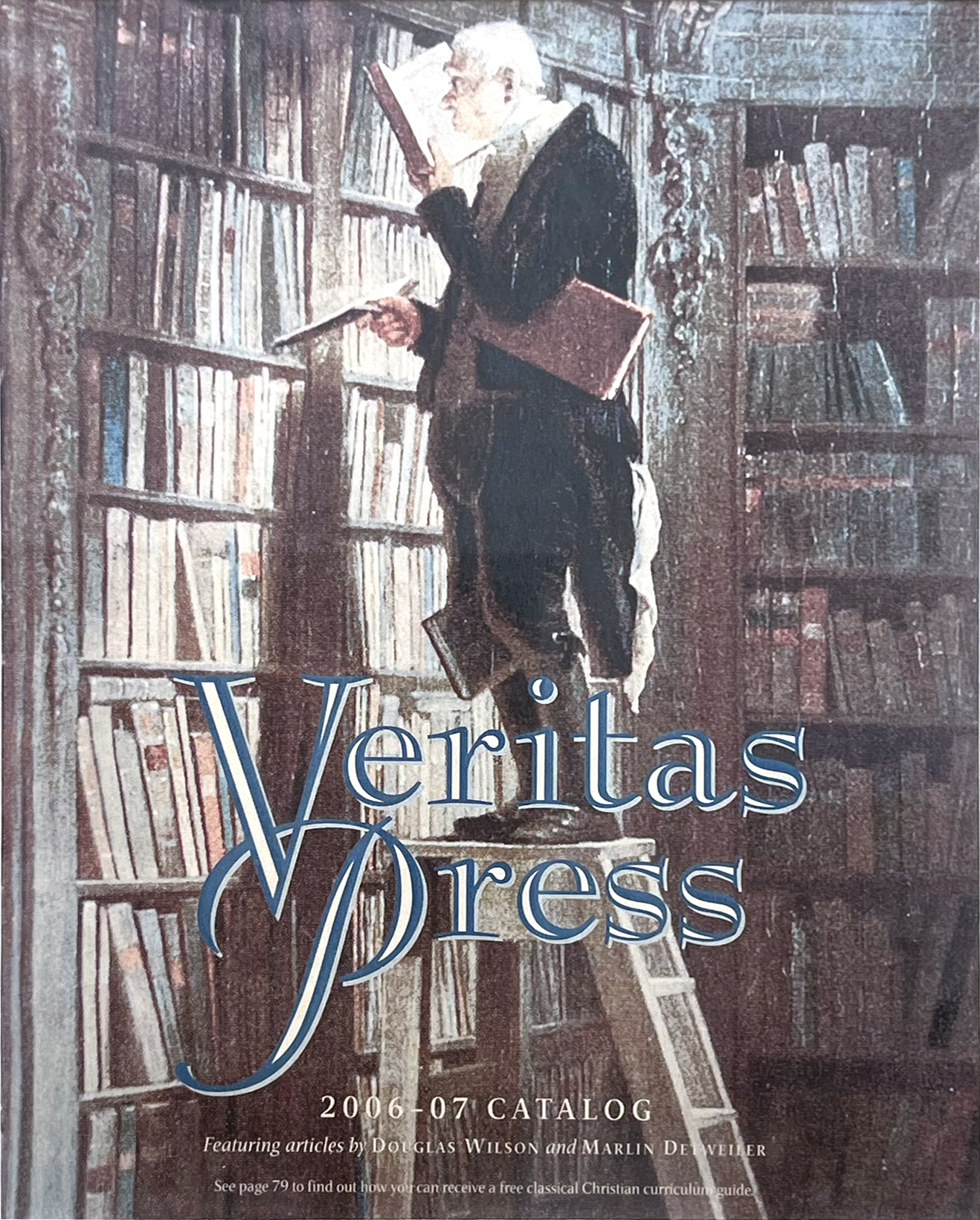
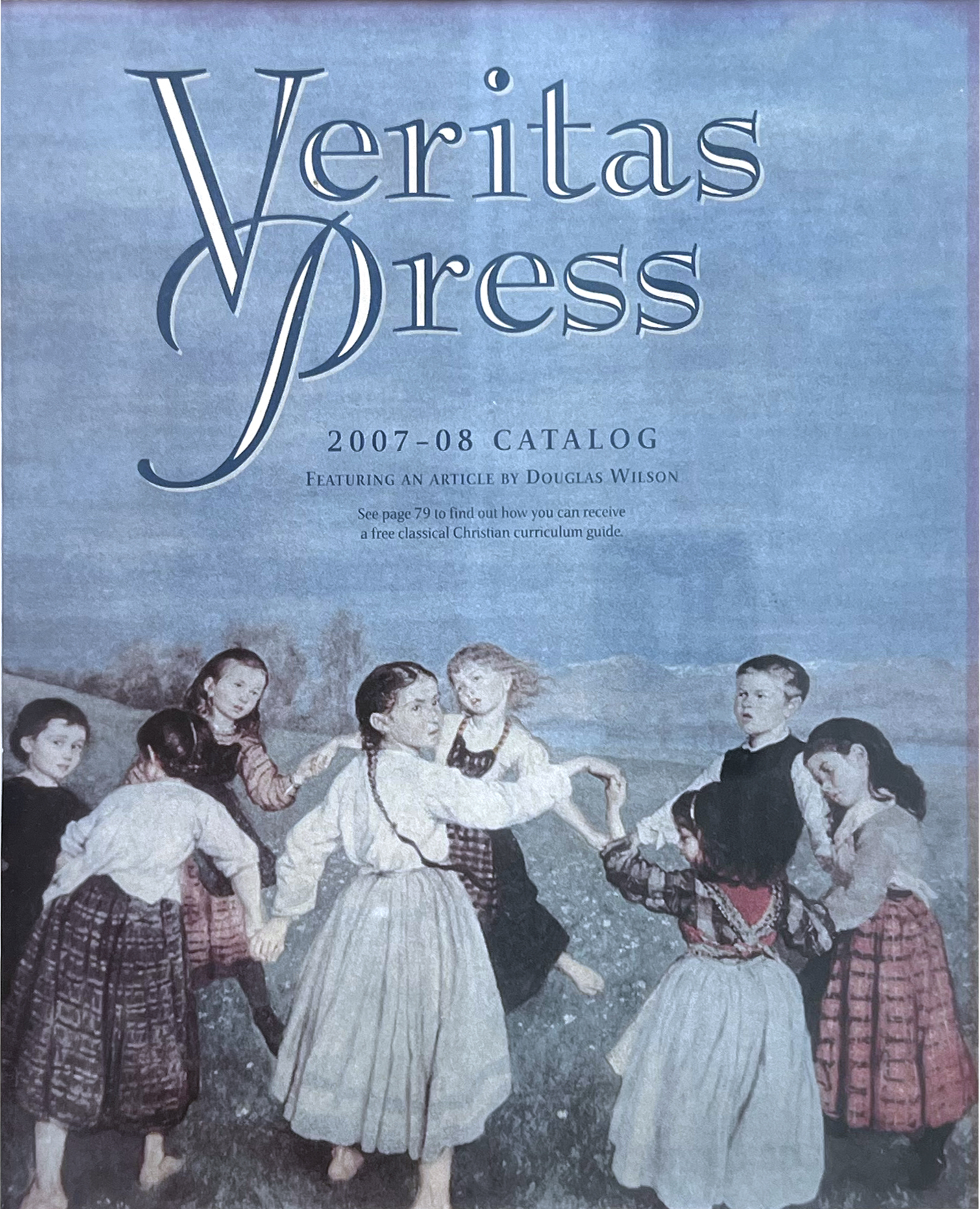
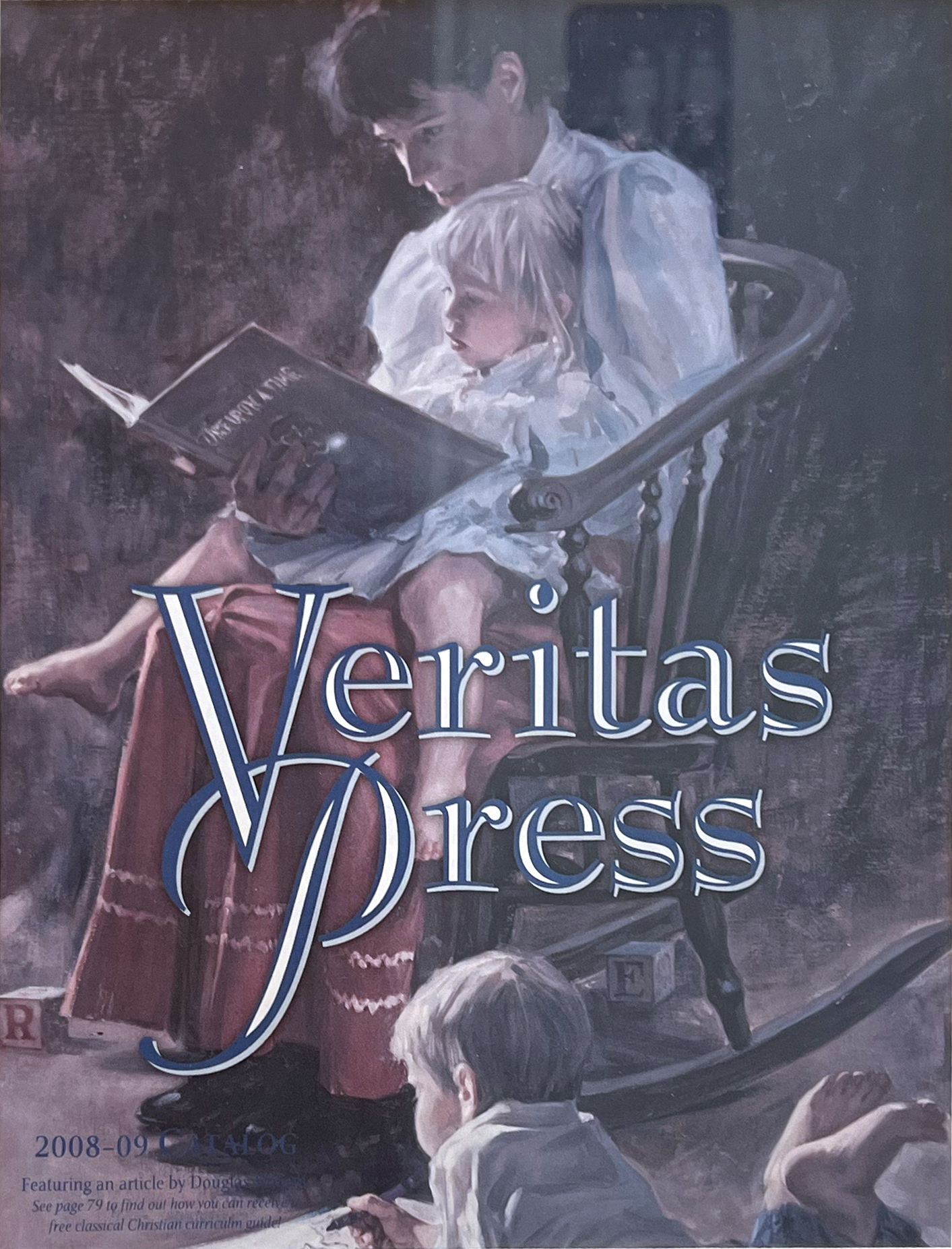
Before there was a website, before a family could book a consultation or log into a dashboard, there was a catalog that showed up in the mail.
That was the whole thing. Once a year, a parent who had decided to do something difficult opened their mailbox, and inside was Veritas Press’s entire answer to the only question that mattered: what should my child learn, and in what order?
You could hold it. You could dog-ear it. You could leave it open on the kitchen table in March and come back to it in June, still open, still on the same page.
Thirty years later we do this in more ways than we could have imagined in 1996. But the job hasn’t changed, and neither has the reason we do it. Here is every catalog we’ve ever mailed, and what was happening — here, and out there — while each one was in the mail.
1996
The Founding
Marlin and Laurie Detweiler produce the first history flashcards and sketch out an integrated history and Bible curriculum.
It started with four boys and a problem.
Marlin and Laurie wanted their sons — Jameson, Brandon, Travis, and Parker — to get an education that took both truth and history seriously, and they couldn’t find one to buy. They had read Douglas Wilson’s Recovering the Lost Tools of Learning, and Marlin has said it changed everything for them. So they called him. This was 1996, and he answered his own phone.
There was no company yet. There was a conviction, four boys, and a stack of cards with one event on each.
1998
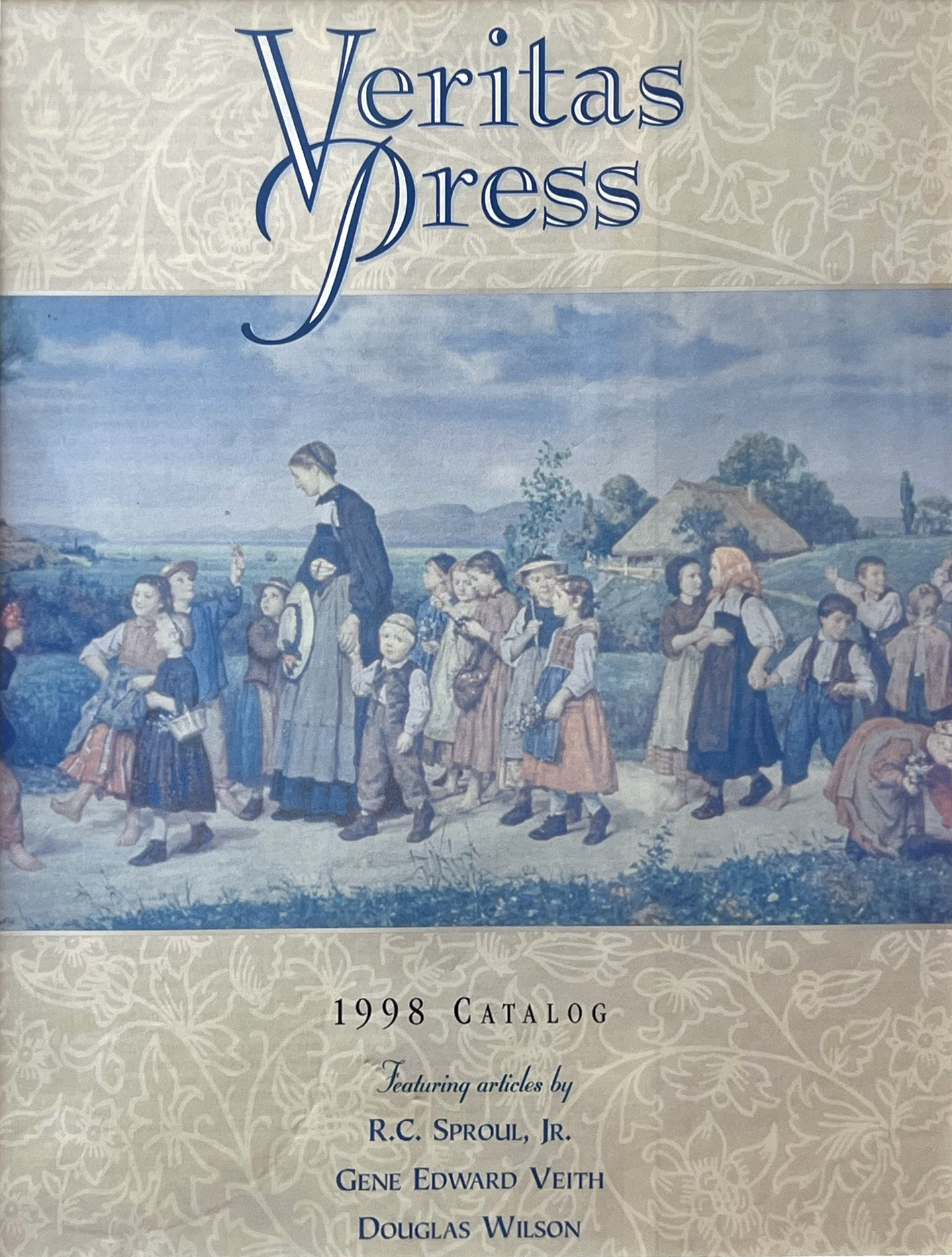
The First Catalog
The first Veritas Press catalog goes out. One has followed every year since.
In the worldGoogle is founded, and “look it up” begins its slow change of meaning.
Somebody had to design it. Somebody had to decide how many to print, and what a stamp cost, and which families to send it to. Then somebody carried the boxes to the post office.
And then they did it again the next year. And the next. Twenty-eight years, no gaps. Whatever else is true about this company, that is true first: it has never once failed to tell families what was coming.
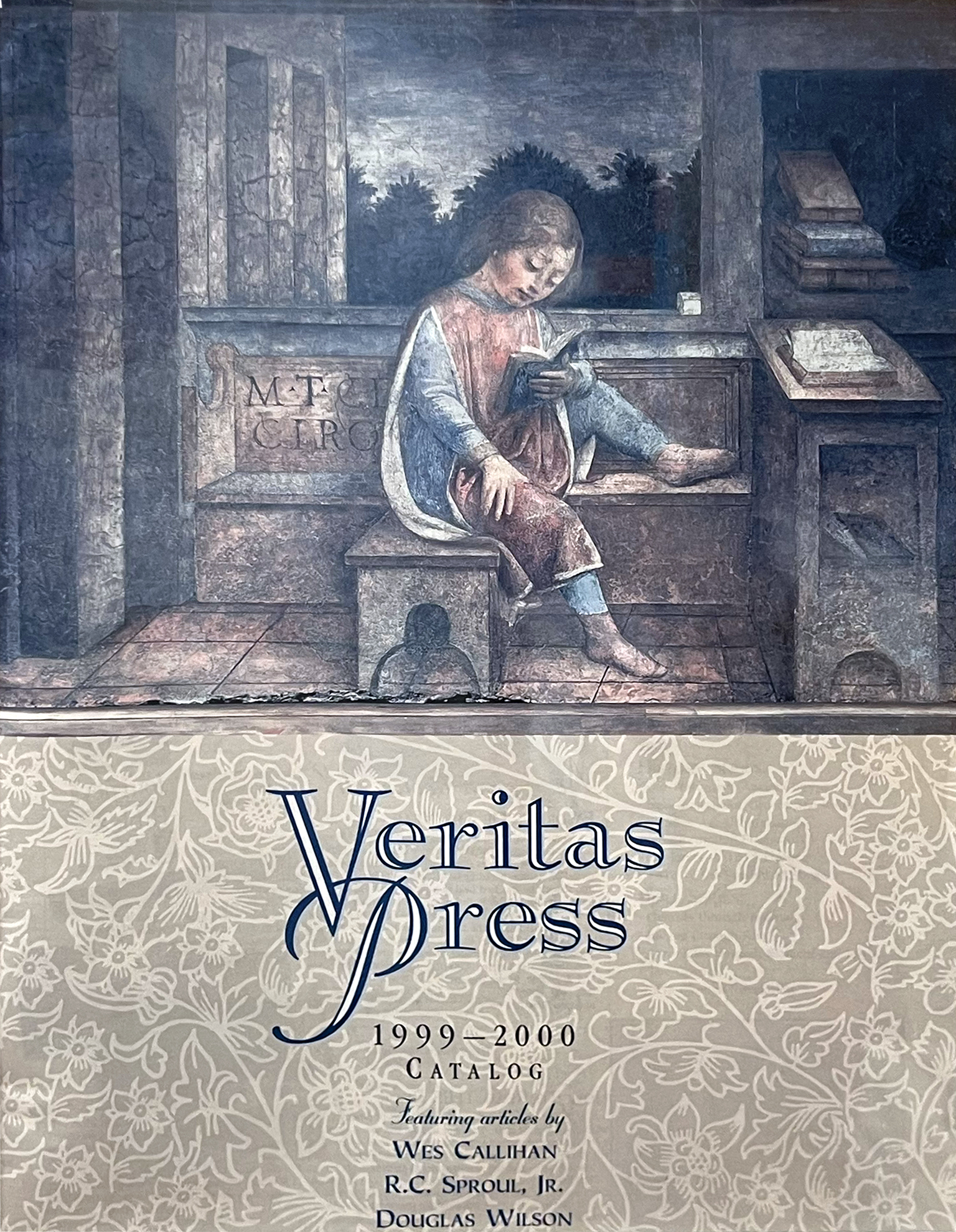
1999
Bible Cards released.
In the worldThe federal government counts homeschooled students for the first time. There are about 850,000 — 1.7 percent of American K–12.
Before 1999, nobody official had bothered to count. Homeschooling was common enough to be real and rare enough to be invisible.
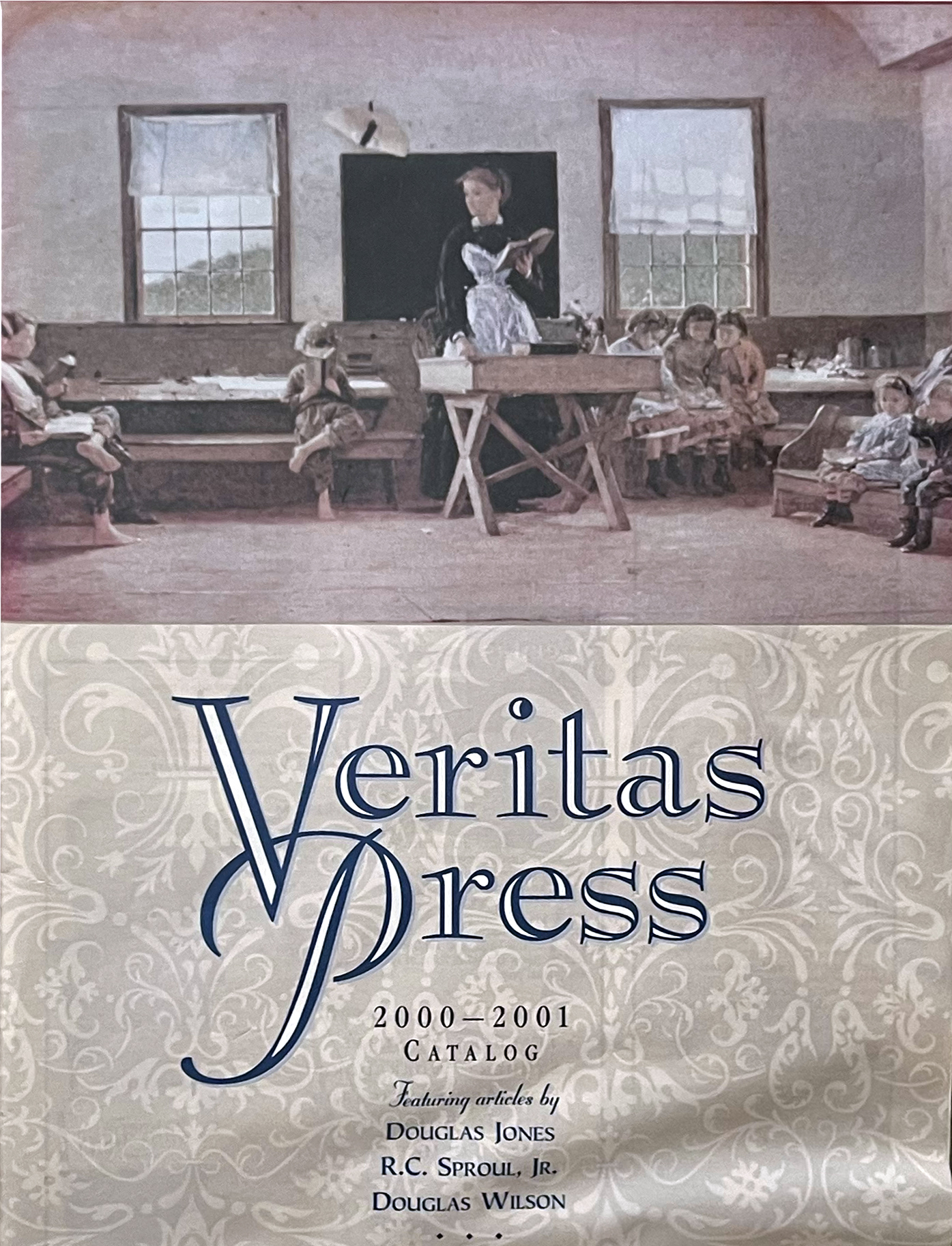
2000
Phonics Museum
Phonics Museum released — Veritas’s first full program rather than a set of materials.
In the worldThe first PISA assessment is administered worldwide.
Flashcards teach a child what happened. Phonics Museum taught a child to read, which is a different order of undertaking. It meant sequencing, pacing, and a plan for a parent who had never taught anyone to do anything.
This is where Veritas stopped being a press that sold tools and started being something closer to a guide.
2001
Core elementary teacher’s manuals published across the Bible and history series, including Judges Through Kings and Explorers to 1815.
2002
The first Comprehension Guides are published.
In the worldNo Child Left Behind is signed into law.
2003
Phonics Museum First Grade Teacher Manual, second edition, plus a run of literature and comprehension guides — The Milly-Molly-Mandy Storybook, Pinocchio, and others.
In the worldThe homeschool count comes back at 1.1 million. In four years it has grown by nearly a third.
2004
Legends and Leagues geography curriculum published.
In the worldFacebook launches.
2005
Omnibus I
Omnibus I released.
In the worldYouTube is founded.
Until Omnibus, Veritas was a grammar-school company. Omnibus said something larger: that a homeschooled teenager could read the actual Great Books, argue about them, and write about them at a level no one was expecting.
It also answered the question every parent of a fourth-grader was already asking. And then what?
2006
The first live online course is taught through Veritas — a French class.
In the worldGoogle acquires YouTube.
2007
Thirty-Two Students
Veritas Scholars Academy launches its first slate of live online classes. About thirty-two students enroll.
In the worldThe iPhone launches. The homeschool count reaches 1.5 million.
Thirty-two.
Small enough that everyone involved could have fit in a church basement. Small enough that if it hadn’t worked, it would have been a footnote instead of a milestone.
Every graduating class photo further down this page traces back to those thirty-two.
2008
Self-Paced
The first self-paced course launches: Old Testament & Ancient Egypt.
In the worldKhan Academy incorporates as a nonprofit.
The same year, in a different corner of the country, a hedge fund analyst was formalizing the tutoring videos he’d been making for his cousins. He wouldn’t quit his day job for another year.
Two groups of people with almost nothing in common arrived at the same conclusion at the same moment: a student could learn something well without a teacher standing in front of them at a fixed hour. Veritas got there through classical education. Khan got there through algebra. Both were doing it alongside everything else they had to do. Neither knew about the other.
Some ideas are simply due.
2009
The remaining four self-paced history courses are released.
In the worldState governors and education chiefs announce the Common Core initiative.
2010
In the worldThe iPad launches.
2011
In the worldSalman Khan’s TED talk sends “flipped classroom” into the vocabulary.
2012
The First Class
Veritas Scholars Academy graduates its first class. Pages of History is published.
In the worldThe “Year of the MOOC” — Coursera, edX, and Udacity all launch. The homeschool count passes 1.7 million.
Sixteen years after the first flashcards, a group of students who had done the whole thing — the Latin, the Omnibus, the arguing — walked across a stage.
A curriculum is a hypothesis. This was the first result.
Look at the photograph. Then keep scrolling and watch it happen thirteen more times.
2013
Bede’s History of Me and Bede’s History of Us published. The first self-paced Omnibus course is released.
2014
The first self-paced Bible course is released. VSA publishes its first yearbook, Legato.
In the worldChromebooks pass iPads in shipments to American schools.
A yearbook is a small thing that means a large one. You don’t make a yearbook for a course catalog. You make one for a school — for people who know each other, who have inside jokes and a senior class and something worth remembering.
2015
Accredited
Veritas Scholars Academy earns Middle States Association accreditation. VSA’s first field trip travels to Italy and Greece.
In the worldThe Every Student Succeeds Act replaces No Child Left Behind.
Accreditation is paperwork, and paperwork is boring, and this particular paperwork changed what a Veritas diploma could do in an admissions office.
The same year, a group of Veritas students stood in front of the actual ruins they had been reading about since the grammar stage. Both of those things happened in 2015. We’d argue they’re the same event.
2016
VeritasBible.com launches. History of Art published in August. VSA’s first mission trip travels to Ecuador, and a dual-enrollment partnership begins with Cairn University.
In the world1,690,000 homeschooled students — 3.3 percent of American K–12. A rate that had held steady for years, and was about to stop being steady.
2017
The Phonics Museum iOS app launches in June. Veritas Composition — the first book in the series — is published. The Veritas Teacher Certification program begins for VSA faculty.
2018
A Rhetoric of Love, first in the series, is published. VSA names its inaugural Parent of the Year and hires its first Dean of Academics and first Dean of Students.
Remember this book. It comes back in 2022.
2019
Two Catalogs
For the first time, the catalog splits: one for families, one for schools.
In the worldThe last ordinary school year.
For twenty-one years there had been one catalog, because there was one kind of reader: a parent at a kitchen table.
In 2019 there were two. Somewhere along the way, whole schools had started building their programs out of Veritas materials, and they needed to be talked to differently.
Neither catalog had any idea what was coming.
2020
The Year Everyone Came Inside
Journey Through the Bible, Veritas edition, is published. VSA restructures around Department Heads.
In the worldCOVID closes schools. The share of American households homeschooling goes from 5.4 percent in the spring to 11.1 percent by the fall.
For one strange season, a tenth of the country was homeschooling.
Most of them hated it, and they were right to — what they were handed was not homeschooling. It was a school building crammed through a laptop with no notice and no plan.
We had been doing this for twenty-four years. It would be easy to tell this as a story about being ready. The more honest version is that a lot of exhausted parents found us that year with no interest in classical education whatsoever, and some of them stayed, and the reason they stayed had nothing to do with the pandemic.
2021
Veritas History Projects, first in the series, is published. VSA offers its first night classes for international students.
Night classes, because a student in Seoul or Nairobi shouldn’t have to be awake at four in the morning to take Omnibus. Note this one. It comes back at the end.
2022
The Argument, In Public
Veritas Logic, first in the series, is published. The first mini-courses launch. And on July 11, Veritas Vox releases its first episode — Marlin’s guest is Douglas Wilson, and the subject is the argument at the heart of a book Veritas had published four years earlier: whether Christians should persuade by love or by domination.
In the worldChatGPT is released in November.
Twenty-six years after that first phone call about Recovering the Lost Tools of Learning, the same two men sat down to disagree in public, on the record, for anyone to listen to.
That’s what a rhetoric of love looks like in practice. You don’t stop talking to the person you disagree with. You publish the disagreement.
2023
VSA charters a National Honor Society chapter.
In the worldSchool districts ban ChatGPT, then quietly unban it.
2024
Self-paced archive courses launch.
2025
Veritas Chemistry and Rhetoric Self-Paced are released.
2026
Around the Clock
Veritas builds a 24-hour schedule of live classes. More than 10,000 students from over 50 countries now take Veritas classes each year. Thirty years since the first flashcards.
There is now no hour of the day when a Veritas class isn’t in session somewhere.
Think about what that means against the first entry on this page. In 1996 the reach of this company was however far Marlin and Laurie could carry a box to the post office. In 2026 it is every timezone, continuously, without stopping.
And the newest catalog in this run is on somebody’s kitchen table right now, open to a page they haven’t decided about yet.
Thirty catalogs is a strange thing to be proud of. Nobody frames one. Many get recycled by August. But every one of them was somebody sitting down and deciding what a child ought to learn next, and then saying so in print, where it could be checked.
The tools changed. Paper became a website, a website became a classroom, a classroom became a schedule that never sleeps. What hasn’t changed is our mission, which has been the same since the first catalog in 1998: Preparing Students for Life.
Have questions? Talk to an expert for free!
Our Family Consultants are here to help! Fill out the form below to schedule a quick call for free.