

The Trivium · Stage 1 of 3
The Grammar Stage Grades K-6
The first stage of the trivium, when children love to sing, chant, and memorize, and build a foundation of knowledge that lasts a lifetime.

Where the Grammar Stage Fits
| Grammar Stage | Logic Stage | Rhetoric Stage | |
|---|---|---|---|
| Grades | K-6 | 7-9 | 10-12 |
| Children love | To memorize | To ask why and argue | To be heard |
| At Veritas Scholars Academy | Elementary | Middle School and 9th grade | High School |
The trivium is the classical pattern of learning in three stages, each matched to the way children grow.
What Is the Grammar Stage?
The Grammar Stage is the first of the three stages of the trivium, the classical pattern of learning. It covers roughly kindergarten through 6th grade, the years when children memorize easily and gladly. In this stage, children gather the building blocks, or “grammar,” of every subject: the facts, words, rules, and stories that all later learning builds on.
You’ve probably seen this stage at work already. Young children will watch the same movie, sing the same song, or ask for the same book again and again, and they remember every word. Classical education treats that love of repetition as a gift.
Dorothy Sayers described these years in her 1947 essay The Lost Tools of Learning, which helped spark the modern revival of classical education.


Teaching With the Grain
Classical education teaches with the grain of childhood. Young children already love songs and chants, so that’s how we teach them: with songs, chants, actions, and even choreographed movements that work together, so children remember what they learn for years to come.
What Children Learn in the Grammar Stage
These years fill young minds with things worth knowing, in ways children enjoy.

Latin, the Swiss Army Knife of Languages
We like to call Latin the Swiss Army knife of languages. More than half of English words have Latin roots, so Latin builds vocabulary, makes English grammar easier to see, and opens the door to Spanish, French, Italian, and more. Young children pick up Latin chants and vocabulary quickly, which makes these years an ideal time to begin. At Veritas, Latin starts in 2nd grade.

History, in Order From Creation
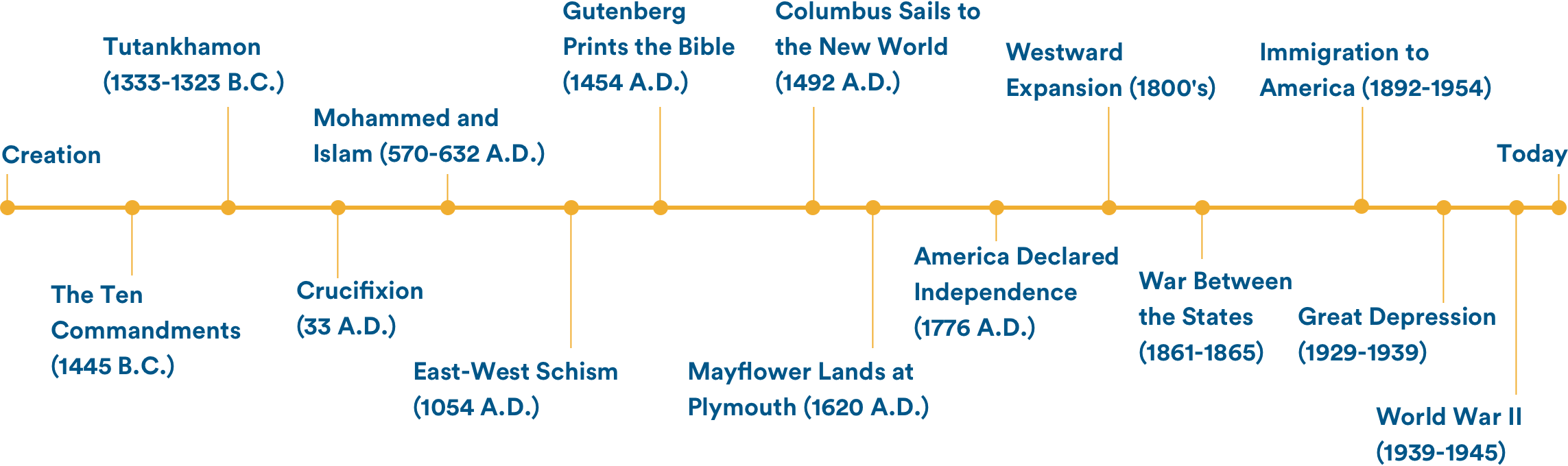
We teach history chronologically, beginning with Creation and weaving in the events of the Bible, so children see the story of the world as one connected story. Veritas students walk through that story in five years, from 2nd through 6th grade, with songs and history cards that give every event its place on the timeline. (Veritas Press itself began in 1996 with a set of history cards Marlin and Laurie Detweiler made for their own sons.)
Ecclesiastes 1:9 reminds us, “That which has been is what will be, that which is done is what will be done, and there is nothing new under the sun.” Children who know where the world has been are better prepared to understand where it’s headed.
Scripture
Children memorize verses and walk through the Bible in order, so they know its whole story by heart.
Math Facts
Facts practiced until they’re automatic free a child’s mind for harder problems later.
Grammar and Writing
Parts of speech, sentence structure, and handwriting give children the tools to write clearly.
Geography
Maps, continents, and countries give the stories of history a place to happen.
Teaching the Grammar Stage at Home
If you’re teaching young children at home, you may wonder whether all this memorizing is worth the effort, or whether it asks too much of a six-year-old. It’s a good question to ask. In our experience, children in this stage enjoy it far more than adults expect, especially when it feels like play. A few ideas that help:
- Sing it. Put facts to a tune. Children remember songs long after they’ve forgotten lists.
- Review a little every day. Five or ten minutes of daily review does more than one long session a week.
- Build a timeline. Hang history cards on the wall in order, so every new event has a place to go.
- Read aloud often. Great stories build vocabulary and attention, and they bring history and Scripture to life.
- Keep it joyful. Short, lively lessons work better than long ones at this age.
The Grammar Stage With Veritas
Whether you teach at home, add a few live classes, or want a complete school, there’s a place to start.
Teach at Home
Veritas Curriculum
Complete, day-by-day curriculum for every Grammar Stage subject, including our Phonics Museum reading program.
Learn Independently
Self-Paced Courses
Interactive history and Bible courses that teach with songs, games, and animated characters.
Grades K-6
Grammar School at VSA
Live online classes with real teachers and up to 20 classmates, beginning in 2nd grade, at an accredited classical Christian school.
Questions About the Grammar Stage
What is the Grammar Stage of the trivium?
The Grammar Stage is the first of the trivium’s three stages: grammar, logic, and rhetoric. It covers roughly kindergarten through 6th grade, when children memorize easily, and it focuses on building a foundation of facts, words, and stories in every subject.
What ages and grades are in the Grammar Stage?
At Veritas, the Grammar Stage covers kindergarten through 6th grade, roughly ages 5 to 12. Every child grows at their own pace, so some show Logic Stage habits a little earlier or later.
Isn’t memorization just rote learning?
It’s a fair concern, and no parent wants a child who can recite facts without understanding them. In the Grammar Stage, memorization comes first because young children do it so well, and understanding grows from it. The facts children learn now become the material they’ll reason about in the Logic Stage and write and speak about in the Rhetoric Stage.
Can I teach the Grammar Stage at home?
Yes. Many families teach the Grammar Stage at home, and young children learn especially well with a parent close by. Veritas curriculum plans every lesson for you, and when you’re ready, live online classes at VSA begin in 2nd grade. See how elementary school works at VSA.
What comes after the Grammar Stage?
The Logic Stage, roughly grades 7-9. Around this age, children start asking why, and they learn to reason, connect ideas, and recognize sound arguments. Learn about the Logic Stage.
Keep Exploring
Continue Through the Trivium
Stage 2 · Grades 7-9
The Logic Stage
When students start asking why, and learn to reason and argue well.
Explore the Logic Stage
Grades K-6
Elementary at VSA
Live classes from 2nd grade and a complete plan for learning at home before then.
Explore Elementary
Also helpful: The Trivium · Educational Philosophy · The Lost Tools of Learning · Classical Christian Education