

What Is Rhetoric? A Complete Guide to the Art of Persuasion

Think about the last time someone changed your mind. Not because that person overwhelmed you with talking points, but because something they said landed differently. Maybe it was the story they told. Maybe it was the way they framed a question you had been carrying for a while. Maybe you simply trusted them in a way you could not quite explain.
That was rhetoric.
Not the pejorative version, where “rhetoric” means spin or hollow talking points. The real thing: the art of effective, purposeful communication. The craft of saying the right thing to the right person at the right moment in the right way.
Which is exactly why it deserves to be understood, taught, and practiced well.
This guide covers rhetoric from the ground up: what it is, where it came from, how it works, and how to use it with skill and integrity. Along the way, you will find practical exercises, frameworks for analyzing the persuasion around you every day, and concrete guidance for teaching rhetoric at home or in the classroom.
Wherever you are starting from, this is the place to start.
What Is Rhetoric?
The word has taken a beating. Politicians use it as an insult (“mere rhetoric,” “empty rhetoric”), which creates the impression that rhetoric means saying things that do not mean anything. That is almost exactly wrong.
At its core, rhetoric is the art of effective communication, with particular attention to how communication persuades. Aristotle defined it as the faculty of discovering the available means of persuasion in any given case. A more complete definition might be: rhetoric is the art of using the right tools to convey a message that moves an audience.
Rhetoric and manipulation are often confused, but they rest on different ethical foundations. Manipulation uses illegitimate means: false information, psychological exploitation, coercion, appeals designed to bypass reasoning rather than engage it. Rhetoric, properly understood, works within the bounds of truth. The question rhetoric asks is: given what is true, and given who this audience is, what is the most effective and honest way to communicate it?
There is a reason rhetoric has been considered one of the liberal arts for more than two thousand years. It’s not a hack or a shortcut. It is a discipline that requires understanding your subject, your audience, and the tools available, and bringing them together with both skill and integrity.
One more thing worth noting: rhetoric is not only speaking. Written language, visual communication, even silence and gesture can function rhetorically. Anything that carries persuasive intention falls within rhetoric’s territory. A photograph, a building’s design, the layout of a page: all can make arguments. The person trained in rhetoric learns to read these messages and to craft them.
A Brief History of Rhetoric
Rhetoric has been part of Western education since before Aristotle. The sophists of fifth-century Athens were the first professional teachers of persuasion. They were talented, influential, and, in Plato’s view, dangerous: they taught winning arguments rather than true ones.
Aristotle’s Rhetoric (c. 350 BC) was, in part, a correction of the sophist tradition. Where the sophists treated rhetoric as a tool of victory, Aristotle insisted it was a tool of inquiry: a way of finding the best available arguments, not the most expedient ones. His framework, built around the three appeals of ethos, pathos, and logos, remains the foundation of rhetoric today.
The Romans developed this tradition further. Cicero (106–43 BC) treated rhetoric as inseparable from civic virtue. A good orator, he argued in De Oratore, had to be a good person, someone whose character, knowledge, and skill worked together. Quintilian (c. AD 35–100) pushed this further in his Institutio Oratoria, defining the ideal orator as “a good man speaking well.” The connection between ethics and rhetoric was not incidental. It was central.
In the classical Christian tradition, rhetoric became the third and crowning art of the trivium, the foundational three-part curriculum that structured education through the medieval period. Grammar gave students the tools of language. Logic gave them the tools of reasoning. Rhetoric gave them the ability to apply both with persuasive skill in the real world. The progression was intentional: you cannot speak well until you can reason well, and you cannot reason well until you understand the language you are reasoning in.
The trivium fell out of most modern curricula somewhere in the twentieth century. What replaced it, in large part, was a curricular focus on content delivery: covering more ground at the expense of developing the underlying intellectual tools. The result, for many students, is a mismatch. They have been given more information than their frameworks can handle, but never taught the tools of rhetoric that would help them evaluate, organize, and communicate it.
Classical educators have always understood this as a problem. The recovery of the trivium, with rhetoric at its summit, is one of the defining commitments of classical Christian education.
The Rhetorical Situation
Before a word is spoken or written, a situation already exists that shapes everything about how communication will land. Rhetorical scholars call this the rhetorical situation, and understanding it is the first step in becoming a more effective communicator.
Lloyd Bitzer, a communication theorist, defined the rhetorical situation in 1968 as “a complex of persons, events, objects, and relations presenting an actual or potential exigence” (Philosophy & Rhetoric, 1968). Stripped of the academic framing: a rhetorical situation is the set of circumstances that calls for a response. Every meaningful communication happens inside one.
Three elements define it.
Exigence
The exigence is the problem, gap, or need that the communication is meant to address. Lincoln’s Second Inaugural Address (1865) had a clear exigence: a nation ravaged by civil war, desperate for a framework that could hold it together.
On the occasion corresponding to this four years ago all thoughts were anxiously directed to an impending civil war. All dreaded it, all sought to avert it. While the inaugural address was being delivered from this place, devoted altogether to saving the Union without war, insurgent agents were in the city seeking to destroy it without war—seeking to dissolve the Union and divide effects by negotiation. Both parties deprecated war, but one of them would make war rather than let the nation survive, and the other would accept war rather than let it perish, and the war came.
Every piece of rhetoric begins with the question “why now?”, and the answer to that question is the exigence.
Audience
Rhetoric is addressed to people with specific beliefs, values, emotions, and experiences. What moves one audience may alienate another. An argument that persuades an engineer may not move a poet. The rhetorical situation always includes a specific audience, and the communicator’s job is to understand them before opening their mouth.
Constraints
Constraints are the factors that limit or shape what can be said, and how. They include the beliefs and assumptions the audience already holds, the relationships in the room, the cultural moment, and even the medium being used. A text message and a funeral eulogy are both forms of communication, but they operate under very different constraints.
Understanding the rhetorical situation before speaking or writing is the difference between a message that lands and one that misses. The most common communication failures, in classrooms, families, and public life alike, are not failures of argument. They are failures of situation reading.
Exercise: Situational Mapping
Before your student’s next writing or speaking assignment, work through these three questions together:
- What is the exigence? What has created the need for this message? What would be lost if it went unsaid?
- Who is the audience? What do they already believe? What do they care about? What would they push back on?
- What are the constraints? What cannot be said, and why? What does the medium require?
Then have your student write a brief paragraph summarizing the rhetorical situation before they begin drafting. This practice alone will improve the clarity and focus of almost any piece of communication.
The Rhetorical Triangle: Ethos, Pathos, and Logos
Aristotle identified three modes of persuasion available to any communicator. He called them ethos, pathos, and logos. Together, they form what is commonly called the rhetorical triangle, though “triangle” undersells how dynamically they interact. Think of them less as three separate tools and more as three dimensions of the same act.
Ethos: The Appeal to Character
Ethos is the credibility the speaker brings to the communication. Not just credentials, though those matter, but character: the audience’s sense that the speaker is trustworthy, knowledgeable, and acting in good faith.
Aristotle argued that ethos was the most powerful of the three appeals. Meanwhile, Charles Spurgeon, the great nineteenth-century Baptist preacher, understood this intuitively. His extraordinary influence as a communicator was inseparable from his character. Congregants packed Spurgeon’s Metropolitan Tabernacle not merely because he was eloquent, though he was, but because they trusted him. His ethos preceded his arguments.
Ethos is built over time through consistent integrity, demonstrated expertise, and genuine concern for the audience. It can be destroyed quickly by dishonesty, condescension, or a visible gap between what someone says and who they are.
Pathos: The Appeal to Emotion
Pathos is the appeal to the audience’s emotions, imagination, and values. It does not mean manipulation or sentimentality. Legitimate pathos invites the audience to feel the weight of what is being discussed, connecting an argument to the human realities it touches.
Researchers studying “narrative transportation,” the experience of being absorbed into a story, have found that narratives shift attitudes more effectively than bare statistics in many contexts (Green & Brock, Journal of Personality and Social Psychology, 2000). Aristotle knew this before the data did. He dedicated significant portions of Rhetoric to understanding the emotions and how they move different audiences.
Jonathan Edwards’ 1741 sermon “Sinners in the Hands of an Angry God” remains one of the most studied examples of pathos in American rhetorical history. Edwards was not fabricating emotion. He was giving his congregation the full weight of a theological reality he believed with his whole heart. The vividness of his imagery wasn’t wordplay or language games; it was fidelity to the magnitude of what he was describing.
So that, thus it is that natural men are held in the hand of God, over the pit of hell; they have deserved the fiery pit, and are already sentenced to it; and God is dreadfully provoked, his anger is as great towards them as to those that are actually suffering the executions of the fierceness of his wrath in hell, and they have done nothing in the least to appease or abate that anger, neither is God in the least bound by any promise to hold them up one moment; the devil is waiting for them, hell is gaping for them, the flames gather and flash about them, and would fain lay hold on them, and swallow them up; the fire pent up in their own hearts is struggling to break out: and they have no interest in any Mediator, there are no means within reach that can be any security to them. In short, they have no refuge, nothing to take hold of; all that preserves them every moment is the mere arbitrary will, and uncovenanted, unobliged forbearance of an incensed God.
Pathos fails when it becomes manipulative, stoking fear or anger to bypass reasoning rather than awaken it. The test of legitimate pathos is whether the emotion invoked is proportionate to the reality being described.
Logos: The Appeal to Reason
Logos is the appeal to logic, evidence, and sound argument. It includes the structure of the argument, the quality of the evidence, and the validity of the reasoning that connects them.
Let’s go back to Lincoln’s Second Inaugural Address (1865), a masterclass in logos. In a moment of national crisis, Lincoln built an argument from shared premises: both sides had prayed to the same God, both had read the same Bible. The conclusion that followed, the call to bind up the nation’s wounds, was not mere sentiment. It was the logical destination of an argument carefully constructed from common ground.
Both read the same Bible and pray to the same God, and each invokes His aid against the other. It may seem strange that any men should dare to ask a just God's assistance in wringing their bread from the sweat of other men's faces, but let us judge not, that we be not judged. The prayers of both could not be answered. That of neither has been answered fully. The Almighty has His own purposes. "Woe unto the world because of offenses; for it must needs be that offenses come, but woe to that man by whom the offense cometh." If we shall suppose that American slavery is one of those offenses which, in the providence of God, must needs come, but which, having continued through His appointed time, He now wills to remove, and that He gives to both North and South this terrible war as the woe due to those by whom the offense came, shall we discern therein any departure from those divine attributes which the believers in a living God always ascribe to Him? Fondly do we hope, fervently do we pray, that this mighty scourge of war may speedily pass away. Yet, if God wills that it continue until all the wealth piled by the bondsman's two hundred and fifty years of unrequited toil shall be sunk, and until every drop of blood drawn with the lash shall be paid by another drawn with the sword, as was said three thousand years ago, so still it must be said "the judgments of the Lord are true and righteous altogether."
With malice toward none, with charity for all, with firmness in the right as God gives us to see the right, let us strive on to finish the work we are in, to bind up the nation's wounds, to care for him who shall have borne the battle and for his widow and his orphan, to do all which may achieve and cherish a just and lasting peace among ourselves and with all nations.
Logos without ethos or pathos tends to feel cold. Pathos without logos tends to feel manipulative. Ethos without either tends to feel hollow. The most effective communicators bring all three into balance, which is why the triangle is a more useful image than three separate categories.
Exercise: The Appeals Audit
Choose a piece of persuasive communication with your student. This could be a political speech, a TED talk, a sermon, an advertisement, or an op-ed. Work through these questions together:
- Ethos: What does the speaker do to establish credibility? Do they reference expertise or experience? Does their manner of speaking convey authority or trustworthiness? Is their ethos earned or assumed?
- Pathos: Where does the speaker try to connect emotionally? What emotions are they invoking? Are those emotions proportionate and honest, or do they feel exaggerated?
- Logos: What is the central argument? What evidence supports it? Is the reasoning valid, or are there logical gaps?
Finally, ask: Which appeal is strongest? Which is weakest? And does the balance feel honest?
Rhetorical Devices
If the rhetorical triangle describes the strategy of persuasion, rhetorical devices are the execution: the specific techniques that make arguments memorable, clear, and effective at the sentence level.
There are hundreds of documented rhetorical devices. What follows is a working set of the most important, the ones that appear most often in effective communication and that every student of rhetoric should be able to recognize and use.
Anaphora
Anaphora is the repetition of a word or phrase at the beginning of successive clauses. It creates rhythm, emphasis, and emotional momentum.
Martin Luther King Jr.’s 1963 “I Have a Dream” speech is the most famous modern example. The repeated phrase functions as both anchor and drumbeat, carrying the audience forward through a vision they are meant to feel building. But King was drawing on a tradition stretching back much further. The Psalms are built on anaphora. So is much of the prophetic literature of the Old Testament. The repetition was not merely aesthetic; it was mnemonic, emotional, and declarative all at once.
Antithesis
Antithesis places contrasting ideas in parallel grammatical structures to sharpen a point. The contrast creates clarity and makes the argument easier to grasp and remember.
John F. Kennedy’s 1961 inaugural address gave us one of the most famous antitheses in American political rhetoric. The parallel structure makes the reversal land cleanly and memorably.
Abraham Lincoln used antithesis throughout the Gettysburg Address and his Second Inaugural. His contrasts tended to be theological: the finitude of human action set against the sovereignty of Providence.
Chiasmus
Chiasmus reverses the grammatical structure of an earlier clause to create emphasis. The device creates a sense of completion and balance that makes the sentence feel conclusive. Kennedy’s first inaugural contained a celebrated example; so do several of Paul’s arguments in his New Testament letters.
Metaphor and Extended Metaphor
A metaphor draws an implicit comparison between two unlike things to illuminate the less familiar through the more familiar. Extended metaphors sustain the comparison across multiple sentences or an entire speech.
Patrick Henry’s 1775 “Give Me Liberty or Give Me Death” speech uses extended metaphors from the language of slavery and imprisonment to describe the colonial condition. The emotional charge of those images made abstract grievances concrete and unavoidable.
No man thinks more highly than I do of the patriotism, as well as abilities, of the very worthy gentlemen who have just addressed the House. But different men often see the same subject in different lights; and, therefore, I hope it will not be thought disrespectful to those gentlemen if, entertaining as I do opinions of a character very opposite to theirs, I shall speak forth my sentiments freely and without reserve. This is no time for ceremony. The question before the House is one of awful moment to this country. For my own part, I consider it as nothing less than a question of freedom or slavery; and in proportion to the magnitude of the subject ought to be the freedom of the debate. It is only in this way that we can hope to arrive at truth, and fulfill the great responsibility which we hold to God and our country. Should I keep back my opinions at such a time, through fear of giving offense, I should consider myself as guilty of treason towards my country, and of an act of disloyalty toward the Majesty of Heaven, which I revere above all earthly kings.
John Bunyan’s The Pilgrim’s Progress (1678) is essentially one extended metaphor, using the form of a journey to describe the whole of the Christian life. Its rhetorical power comes from how completely the vehicle, the journey, illuminates the tenor, salvation and sanctification.
Parallelism
Parallelism is the use of similar grammatical structure across multiple clauses or sentences. It gives prose a sense of order and balance. Much of the Sermon on the Mount is built on parallel structure. So is the architecture of many of Paul’s arguments in his epistles. Parallelism is one of the most underused tools in student writing, and one of the highest-yield techniques to practice.
Alliteration
Alliteration is the repetition of initial sounds in nearby words. It creates musicality and aids memory. Spurgeon was a master of it in his sermons. So was Francis Schaeffer in his writing. Used sparingly, it sharpens a line; used excessively, it calls attention to itself at the expense of the argument.
Rhetorical Question
A question posed for effect rather than to elicit an answer. This device deserves its own full section, which follows.
Exercise: Device Hunting
Find a speech or essay and hunt for rhetorical devices. Good starting points include Lincoln’s Second Inaugural, Patrick Henry’s “Give Me Liberty” speech, Spurgeon’s sermon “The Sword of the Spirit,” or Martin Luther’s speech at the Diet of Worms (1521).
For each device you find, answer three questions:
- What is it? Name the device.
- What effect does it create? How does it make the reader or listener feel? What does it emphasize?
- Does it serve the argument, or is it decorative? Honest evaluation matters here.
Then try writing one sentence using each device yourself. Imitation is the oldest method of rhetorical training, and it still works.
What Is a Rhetorical Question?
A rhetorical question is a question asked for effect rather than to elicit an answer. The speaker or writer already knows the answer. So, usually, does the audience. The point is not to receive information but to create a moment of shared acknowledgment, or to draw the audience into co-authoring the conclusion the communicator is building toward.
When you answer a question yourself, even an obvious one, you participate in the argument. The rhetorical question turns the audience from passive receivers into active participants. By the time the communicator arrives at their conclusion, the audience has already been walking toward it.
The Rhetorical Question in Scripture
Some of the most powerful rhetorical questions in Western literature appear in the Bible. The book of Job closes with an extended sequence from the voice of God: “Where were you when I laid the foundation of the earth?” (Job 38:4). The question is not a request for Job’s biography. It is an invitation into proportion, a way of helping Job feel the difference between human and divine knowledge without a lecture.
Paul’s letters are dense with rhetorical questions. Romans 8:31 is one of the most famous in all of Christian theology: “If God is for us, who can be against us?” The question does not expect a counterargument. It declares a conclusion by making the audience reach for one and find there is none. The structure is deeply persuasive: the audience arrives at certainty through their own reasoning, not through having it handed to them.
The Rhetorical Question in Political Rhetoric
Patrick Henry’s 1775 speech is built around a sequence of rhetorical questions. He walks his audience through a series of questions that have only one honest answer, and then he gives that answer. The questions do not merely introduce the argument. They are the argument.
Lincoln used rhetorical questions more sparingly but to powerful effect, often at moments of shared gravity where he wanted the audience to feel the weight of a truth rather than simply receive it.
When Rhetorical Questions Work, and When They Don’t
Rhetorical questions succeed when the speaker and audience share enough common ground that the implied answer is obvious. They fail when they assume agreement that does not exist. A poorly chosen rhetorical question can feel condescending, as though the speaker is daring the audience to disagree, which will lose exactly the people you most need to reach.
Overuse is also a failure mode. A speech built entirely on rhetorical questions loses its punching power. Use them at moments of genuine emphasis, when you want the audience to feel the force of a conclusion arriving through their own reasoning.
Exercise: Write Three
Take any topic your student is currently studying or writing about. Ask them to write three rhetorical questions on that topic, each addressed to a different audience.
For example, using the topic of classical education:
- To a skeptical parent: “If the goal is forming students who can think, why would we teach them what to think instead of how?”
- To a student midway through a hard year: “Has anything worth having ever come without resistance?”
- To a teacher: “When was the last time your students surprised you with their thinking?”
Compare the three. Notice how the same underlying point shifts in tone, register, and emotional weight depending on the audience. This is the most fundamental lesson of rhetoric in miniature: the message always exists in relationship to the listener.
Rhetorical Strategies
Devices operate at the sentence level. Strategies operate at the level of the whole argument, shaping the overall approach to communication rather than any single moment within it.
The distinction matters. You can deploy every rhetorical device correctly and still lose your audience if your strategy is wrong. Strategy is the prior question: how should I approach this audience with this message in this situation? Devices serve the answer.
Identification: Building Common Ground
Kenneth Burke, the twentieth century’s most important rhetorician after Aristotle, argued that persuasion begins with identification: the audience’s sense that the speaker is, in some meaningful way, like them. Before anyone accepts a new idea, they need to believe the person offering it understands their world.
This is not flattery or pandering. It is the honest work of finding the genuine common ground that exists between communicator and audience. John Calvin’s Institutes of the Christian Religion (1536) opens not with an argument but with a careful address to King Francis I of France that demonstrates real attention to the king’s situation and concerns. Calvin knew that the arguments that followed depended on establishing, first, that he understood the world his reader inhabited.
Concession and Refutation
One of the most effective persuasive strategies is to acknowledge the strongest version of the opposing view before responding to it. This does two things: it builds ethos, signaling that you have engaged seriously with the alternatives, and it defuses resistance. An audience that feels heard is far more open to being challenged.
Augustine was a master of this. He regularly granted what could honestly be granted to his interlocutors before showing where their frameworks fell short. The Confessions (c. AD 400) works this way structurally: Augustine gives full weight to the seductions that drew him away from God before he shows their insufficiency. The concession is not weakness. It is the precondition of credibility.
The Socratic Method
The Socratic method is a rhetorical strategy of inquiry: asking questions that lead an audience to discover a conclusion themselves rather than having it handed to them. It is particularly powerful with resistant audiences, because a person who has reasoned their way to a conclusion is far less likely to abandon it than one who merely received it.
Jesus used this constantly. His response to many challenges was not a counter-argument but a question: “Which of these three do you think was a neighbor to the man who fell into the hands of robbers?” (Luke 10:36). The questioner becomes the answerer, and the conclusion lands with the full force of their own reasoning.
Kairos: The Strategy of the Right Moment
Kairos is the Greek concept of the opportune moment: the idea that the same argument can succeed or fail depending entirely on when it is delivered. Timing is a rhetorical strategy.
Martin Luther’s posting of the Ninety-Five Theses (1517) is an extraordinary example of kairos. The theological arguments had existed before. What changed was the moment: a church culture ripe for challenge, a new technology in the printing press that could amplify a local dispute into a continental conversation, and a man willing to speak at exactly the moment when speaking could accomplish what silence could not.
Exercise: The Strategy Map
Before writing or preparing any persuasive piece, have your student fill in this map:
- Who is my audience, and what do they already believe?
- Where is the genuine common ground between my position and theirs?
- What is the strongest objection to my argument? How will I acknowledge and address it honestly?
- Is there a point where a question will serve better than an assertion?
- Is this the right moment to make this argument? If not, what would change that?
This map does not replace the writing. But it shapes everything that follows.
Rhetorical Analysis: How to Read Persuasion
Rhetorical analysis is the practice of examining how a piece of communication works: not just what it says, but how it achieves its effects. It is one of the most valuable intellectual skills a student can develop, because it makes the mechanics of influence visible. A person trained in rhetorical analysis is harder to manipulate and far better equipped to communicate with integrity.
Rhetorical analysis is distinct from literary analysis. Literary analysis asks what a text means. Rhetorical analysis asks how it works.
A Framework: SOAPS
A helpful starting structure is the SOAPS framework:
- S: Speaker. Who is communicating, and what do we know about them? What does their background, position, or character bring to the message?
- O: Occasion. What is the rhetorical situation? What event, need, or problem prompted this communication?
- A: Audience. Who is the intended audience? What do they already believe? What would they resist?
- P: Purpose. What is the speaker trying to achieve? To inform, persuade, move, comfort, challenge?
- S: Subject. What is the communication actually about?
SOAPS gives you the context. Once you have it, you can move into the argument itself.
A Step-by-Step Process
- Identify the rhetorical situation using SOAPS, or using the exigence, audience, and constraints framework from earlier in this guide.
- State the central claim. What is the speaker actually arguing?
- Map the appeals. Where is ethos at work? Where pathos? Where logos?
- Identify key devices. What rhetorical techniques appear, and to what effect?
- Evaluate effectiveness. Does the rhetoric serve the argument? What works? What does not?
A Worked Example: Lincoln’s Second Inaugural Address (1865)
Lincoln delivered his Second Inaugural on March 4, 1865, with the Civil War nearing its end. The South was defeated but not yet surrendered, and the country faced the most pressing question of the century: how to reconstitute itself.
Speaker: Abraham Lincoln, President of the United States, a man who had led the country through its most devastating conflict. His ethos was immense. He had suffered alongside the nation, governed under conditions no previous president had encountered, and was known to have agonized over every dimension of the war.
Occasion: The imminent end of the Civil War. The exigence was urgent, not merely ceremonial: the country needed a moral framework for what was to come. Would reunification be punitive or merciful?
Audience: The American public, North and South, exhausted and grieving. Lincoln’s audience included people who had lost sons, fathers, husbands to both sides of the same cause.
Purpose: To provide a spiritual and moral framework for reunification, and to call the nation toward mercy without minimizing the weight of what had happened.
Subject: The meaning of the war, the role of Providence in American history, and the path forward.
Central Claim: The war was a providential judgment on a nation that had long sustained slavery, and the path forward requires neither triumph nor vengeance but charity toward all.
Mapping the Appeals:
Ethos: Lincoln establishes credibility not by asserting authority but by practicing the humility he is about to preach. He does not speak as victor to vanquished. He speaks as one American to others. He admits that no one predicted the war would last as long as it did. This acknowledged uncertainty humanizes him and makes the moral argument that follows easier to receive.
Pathos: The address is saturated with pathos, but it is disciplined. Lincoln does not stoke grief or anger. He acknowledges them and redirects. “With malice toward none, with charity for all” is pathos in its most refined form: it invites the audience to feel the magnitude of what is over, and then to choose mercy.
Logos: Lincoln builds his argument from premises both sides held in common. Both had prayed to the same God, read the same Bible, and asked for God’s assistance in the same war. The logical move is remarkable: he does not argue that one side was right. He argues that both stood before a God who transcends both. The conclusion, binding the nation’s wounds, follows as inevitably as a syllogism.
Key Devices:
Parallel structure throughout. Multiple direct biblical allusions, including an inversion of Genesis 3:19 (“wring their bread from the sweat of other men’s faces”). Antithesis in the closing lines. And perhaps most rhetorically significant: the brevity itself. At roughly seven hundred words, the shortest second inaugural in American history, the speech refuses every temptation to triumphalism. The restraint is the argument.
Evaluation: The rhetoric serves the argument with extraordinary discipline. Lincoln accomplishes something almost impossible: he speaks to a shattered, divided nation without positioning himself as victor, judge, or moralist. The speech’s endurance is evidence of how well it worked.
Exercise: Full Rhetorical Analysis
Choose one of the following speeches (all freely available online):
- Patrick Henry, “Give Me Liberty or Give Me Death” (1775)
- Abraham Lincoln, Gettysburg Address (1863)
- Martin Luther, Speech at the Diet of Worms (1521)
Work through the full analysis:
- SOAPS
- Central claim
- Map the three appeals
- Identify at least three rhetorical devices and analyze their effect
- Evaluate: Does the rhetoric serve the argument? What works? What does not, and why?
Write the analysis in 400–600 words. The goal is not to praise the speech but to understand it: how it was built, what it assumed about its audience, and whether the rhetoric earned its effects.
Teaching Rhetoric at Home: A Practical Framework
Classical education has always understood rhetoric as something that must be developed, not just described. Reading about how arguments work is not the same as learning to build one. This is why the Trivium treated rhetoric as a discipline of practice, not merely a subject of study.
For parents and teachers, the question is how to make that development practical at different ages and stages.
Elementary: Noticing Persuasion
Young students in the grammar stage are not ready for formal rhetorical analysis, but they are surrounded by rhetoric and can begin to notice it. The goal at this stage is awareness and vocabulary.
Point out advertisements and ask: What is this trying to make you feel? What does it want you to do? Read fairy tales and fables and ask: Who is this trying to convince us of something? What? Play “convince me”: give a student a position and ask them to argue for it. Notice together what works and what does not.
The habit you are building is attentiveness, the sense that communication is always doing something, and that it is worth asking what.
Middle School: Mapping the Argument
Students entering the logic stage are ready to engage more formally with how arguments are constructed. This is the natural moment to introduce ethos, pathos, and logos, the rhetorical situation, and basic devices.
Have your student read a speech or op-ed and map its appeals. Introduce formal argument structures: thesis, evidence, rebuttal. Assign persuasive writing on topics they actually care about, because motivated students write better arguments.
This is also a good time for structured debate, even informal ones around the dinner table. The discipline of arguing for a position under pressure, and then responding to real-time challenges, accelerates rhetorical development faster than almost anything else.
High School: Analysis and Mastery
Students in the rhetoric stage are ready for the full toolkit: formal rhetorical analysis, advanced devices, extended persuasive writing, oral argument, and close reading of great speeches that reveals how the masters actually worked.
Primary sources are essential here. Lincoln’s speeches, Patrick Henry’s addresses, Spurgeon’s sermons, Calvin’s Institutes, Paul’s epistles: these are not merely historical documents. They are working models of rhetoric at a very high level, and reading them with rhetorical eyes is one of the best ways to develop those eyes.
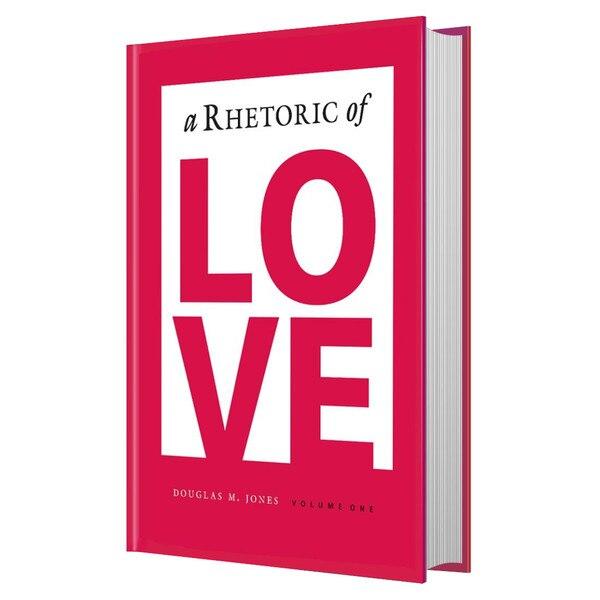
Veritas Press’s A Rhetoric of Love, written by Michael G. Eatmon and edited by Michael A. Collender, approaches rhetoric from within the classical Christian tradition and extends it. The goal, in their framework, is not only effective communication but communication shaped by love: persuasion that seeks the genuine good of the audience rather than merely the victory of the speaker. It stands in the tradition of Aristotle, Cicero, and Quintilian while asking the question those teachers could not fully answer: what does rhetoric look like when it is governed by love of neighbor? It is one of the most thoughtful high school-level treatments of the subject available.
Conversation as Practice Ground
Perhaps the most underused tool in rhetoric education is ordinary conversation. Every dinner table exchange where a student makes a case, responds to a challenge, or shifts someone’s thinking is a rhetoric lesson. Parents can help by taking their children’s arguments seriously, pushing back with genuine counterarguments, and noticing together when communication succeeds or fails and asking why.
The goal is not students who win arguments. It is students who argue honestly, listen carefully, and speak in ways that are true to both their convictions and their care for the person in front of them.
The Goal Is Formation
Rhetoric is not a list of terms to memorize. It is a way of engaging the world.
A student who understands rhetoric reads differently, recognizing not just what is being said but how the saying is working. They write differently, building from evidence rather than assertion, acknowledging objections rather than ignoring them. They listen differently, noticing the appeals being made and evaluating them rather than simply feeling their effects.
And at its best, rhetoric shapes not just how we communicate but who we are becoming as communicators. The classical tradition has always insisted on this. Quintilian’s “good man speaking well” was not a slogan. It was a reminder that the skills of rhetoric are only as valuable as the character that wields them.
That is the vision that has motivated rhetoric education for centuries. And it is the vision that makes the subject worth teaching to your children today. The world they will inhabit is saturated with messages designed to move them. The question is whether they will move through that world with clear eyes and honest voices, or be moved by it without knowing why.
The answer depends, in part, on whether someone took the time to teach them rhetoric.
Have questions? Talk to an expert for free!
Our Family Consultants are here to help! Fill out the form below to schedule a quick call for free.