

Great Books for Middle Schoolers: 20 Titles That Form Readers for Life

Middle school is the right time to start reading books that actually ask something of you.
Not because younger readers can’t handle hard ideas. They can. But something shifts in those years. Students start asking bigger questions about justice, loyalty, courage, and what makes a life worth living. The Great Books have been answering those questions for centuries. The timing turns out to be pretty good.
This list has 20 titles: 10 classical books and 10 modern classics. For each one, we’ll explain why it’s worth your student’s time and offer a practical tip for reading it well.
First, a couple of distinctions worth making.
What Is a Great Book?
A Great Book isn’t just a beloved book, or even a well-written one. It’s a book that has endured because it asks questions that never go away:
What does it mean to be loyal?
What do we owe each other?
How do we face suffering?
How do we choose when every option costs something?
These books reward careful attention. They’re often difficult. That difficulty is the point.
Classical Books vs. Modern Classics: What’s the Difference?
The terms get used interchangeably, but they mean different things.
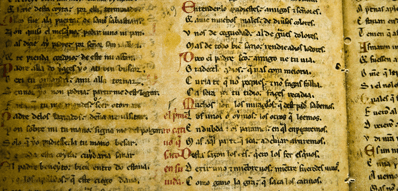
Classical books come from the ancient and medieval world: Greece, Rome, the early church, medieval Europe. These are the texts that shaped Western civilization, the ones that every educated person in history once knew. Homer, Sophocles, Virgil, Beowulf. They’re older, sometimes denser, and occasionally require a little context to unlock. Worth every bit of it.
Modern classics are books from the last few centuries that have earned a lasting place alongside the ancients. They’re often more accessible, sometimes explicitly Christian, but they’re tackling the same big questions with the same seriousness. Tolkien, Dorothy Sayers, Corrie ten Boom. These are books that become part of you.
Both lists belong in a serious education. They’re better together.
10 Great Classical Books for Middle Schoolers
1. Gilgamesh
Why it’s here: This is the oldest written story we have, roughly 4,000 years old and still startlingly alive. Gilgamesh is a king who has everything and loses his best friend. The grief that follows drives him to search for immortality. He doesn’t find it. What he finds instead is worth reading carefully.
The themes here, mortality, friendship, the limits of human power, show up in every great story that follows. Starting here gives students a frame for everything else on this list.
Reading tip: Don’t rush the friendship between Gilgamesh and Enkidu. It’s the emotional center of the whole story. The David Ferry translation (Farrar, Straus and Giroux, 1992) is very readable for this age.
2. The Odyssey (Homer)
Why it’s here: Odysseus has won the war. Now he just has to get home. It takes him ten years. What makes The Odyssey so durable isn’t the monsters or the magic, though those help. It’s the portrait of a man who survives by his wits, who loves his home enough to keep going when everything says stop.
Reading tip: Read it aloud, at least occasionally. Homer was composed to be heard. Even a page or two read aloud will open up the rhythm and make the experience richer.
3. The Oresteia (Aeschylus)
Why it’s here: A trilogy of plays about a family cursed by cycles of murder and revenge. It sounds bleak. It is, at times. But it ends in something remarkable: the invention of justice. The idea that we can break cycles of vengeance through law and reason rather than more violence. That idea changed the world.
Reading tip: Give students a brief overview of the house of Atreus before they begin. The family history is complicated, and five minutes of context will keep them from getting lost in the opening scenes.
4. The Theban Trilogy (Sophocles)
Why it’s here: Oedipus, Antigone, and the rest. These plays ask hard questions about fate and conscience. Can you be guilty of something you didn’t know you were doing? What do you owe the dead? What do you owe the state? Sophocles doesn’t give easy answers. He gives better questions.
Reading tip: Antigone tends to land hardest with middle schoolers. If you’re short on time, start there and then go back to Oedipus Rex. The emotional stakes are easier to feel on a first encounter.
5. The Last Days of Socrates (Plato)
Why it’s here: Four dialogues recording the trial and death of Socrates. He’s been accused of corrupting the youth of Athens (the irony that we still read him with young people is not lost on us). Socrates faces death with calm, clarity, and a total absence of self-pity. Students who read this start to develop a feel for philosophical argument. They also meet a man who believed ideas were worth dying for.
Reading tip: Pause after each dialogue and ask: do you agree with Socrates? Where is he right? Where might he be wrong? The Socratic method works best when you actually use it.
6. The Aeneid (Virgil)
Why it’s here: Aeneas didn’t want to found Rome. He wanted to stay in Troy, and then he wanted to stay in Carthage. What drives him forward is duty, and Virgil is honest about how much duty costs. This is one of the most human epics ever written. It also forms the backbone of Dante’s journey in the Divine Comedy, so reading it now pays dividends later.
Reading tip: The Robert Fitzgerald translation reads beautifully and is well-suited to this age. Pay attention to Aeneas’s emotional life throughout. He’s a man in grief for most of the poem, and that’s easy to miss if you’re focused on the plot.
7. Julius Caesar (Shakespeare)
Why it’s here: Power, rhetoric, betrayal, and the catastrophic difference between good intentions and good judgment. Brutus is not a villain. He’s something harder to reckon with: a good man who does a terrible thing for what he believes are the right reasons. Mark Antony’s funeral oration alone is worth the price of admission.
Reading tip: Watch a performance alongside the reading. The Globe Theatre has a full production available online. Seeing the speeches performed changes everything about how you hear them on the page.
8. Beowulf
Why it’s here: The oldest surviving epic in Old English, and still one of the most exciting. A warrior comes to help a king plagued by a monster. He succeeds. Then another monster appears. The poem is about what it means to keep showing up when the threats keep coming, and what a community owes the people who protect it.
Reading tip: The Seamus Heaney translation is the gold standard. Read his introduction first. He explains why this poem matters and how he approached the act of translating it, and his reasoning is itself worth reading slowly.
9. Sir Gawain and the Green Knight
Why it’s here: A knight makes a rash bargain with a mysterious stranger: I’ll strike you with an axe, and in a year you can return the blow. What follows is a story about honor, temptation, and the gap between who we think we are and who we actually are when it counts. Every middle schooler is already living that question.
Reading tip: J.R.R. Tolkien translated this poem (Oxford University Press, 1975), and his version rewards comparison with a more modern one. Reading both translations side by side is a surprisingly engaging exercise.
10. Macbeth (Shakespeare)
Why it’s here: Ambition unchecked by conscience will destroy you, and everyone around you. Macbeth knows what he’s doing is wrong at every step. He does it anyway. The psychology here is sophisticated enough to reward rereading at any age, and middle schoolers tend to find it genuinely gripping.
Reading tip: Spend ten minutes on context before beginning: the historical Macbeth, King James I, and Shakespeare’s reasons for writing this play when he did. It sharpens the whole experience.
10 Great Modern Classics for Middle Schoolers
1. The Hobbit (J.R.R. Tolkien)
Why it’s here: A homebody who wants nothing to do with adventure gets swept into one anyway. Bilbo Baggins is one of literature’s great reluctant heroes, and his journey is really a story about discovering that you’re more than you thought you were. Tolkien built Middle-earth on top of the classical tradition he loved, and The Hobbit is a wonderful entry point into that world.
Reading tip: Ask your student this question somewhere around chapter five: is Bilbo becoming more himself, or less? There’s no obvious answer, and the conversation that follows tends to be genuinely worthwhile.
2. Till We Have Faces (C.S. Lewis)
Why it’s here: Lewis’s retelling of the myth of Cupid and Psyche is arguably the best thing he ever wrote, and it’s criminally underread. Orual loves her sister so fiercely that the love becomes a kind of devouring. The novel asks hard questions about the difference between love that frees and love that controls. This one rewards older middle schoolers especially.
Reading tip: Read the original myth of Cupid and Psyche first. Apuleius tells it in The Golden Ass. Lewis is reworking it deliberately, and knowing the source material makes the novel’s choices far more interesting.
3. The Eagle of the Ninth (Rosemary Sutcliff)
Why it’s here: A young Roman officer goes north into unconquered Scotland to recover his father’s lost legion’s eagle standard. Sutcliff does something unusual: she makes the Romans genuinely Roman and the Celts genuinely Celtic. Neither side is cartoonish. The friendship at the heart of this story, between a Roman and a British slave, is one of the great friendships in all of children’s literature.
Reading tip: Sutcliff wrote a whole series of novels set in Roman Britain. If your student loves this one, there’s more where it came from: The Silver Branch and The Lantern Bearers continue the story across generations.
4. The Merry Adventures of Robin Hood (Howard Pyle)
Why it’s here: Pyle’s 1883 retelling remains the definitive Robin Hood. The language is deliberately archaic and entirely charming. The stories are episodic, funny, and full of real moral weight. What do you owe the poor? What do you do when the law is unjust? Pyle asks these questions without ever feeling preachy about them.
Reading tip: The language takes about a chapter to settle into. Don’t let early resistance put you off. By the second chapter, most readers have found their footing and don’t want to stop.
5. The Nine Tailors (Dorothy Sayers)
Why it’s here: Sayers’s Lord Peter Wimsey novel, set among the Fenland churches of England, begins as a detective story and becomes something larger: a meditation on guilt, community, and providence. The mystery plotting is masterful. But what stays with readers is the weight of the ending. Well suited to strong 8th graders.
Reading tip: Familiarize yourself with change ringing, the English art of ringing church bells in mathematical sequences, before you begin. Sayers assumes some familiarity, and a short primer will save a lot of confusion in the early chapters.
6. Treasure Island (Robert Louis Stevenson)
Why it’s here: A boy finds a treasure map, goes to sea, and encounters one of literature’s most complicated characters: Long John Silver, who is charming, dangerous, and genuinely hard to categorize morally. Stevenson is playing a serious game about trust, greed, and what makes someone good when circumstances are extreme.
Reading tip: Track what Jim thinks about Long John Silver at each stage of the story. His feelings keep changing. Following that change carefully is one of the most interesting things the book offers.
7. The Hiding Place (Corrie ten Boom)
Why it’s here: The memoir of a Dutch watchmaker who hid Jewish refugees during the Nazi occupation and survived the concentration camps. This book has been changing readers for fifty years. It raises questions about faith, forgiveness, and what love looks like when it costs everything. Students who read this remember it for the rest of their lives.
Reading tip: Read it slowly. Some sections are genuinely hard to sit with, and that’s appropriate. Give the difficult passages room rather than rushing past them. The discomfort is where the book does its deepest work.
8. The Bronze Bow (Elizabeth George Speare)
Why it’s here: First-century Judea. A young man consumed by hatred for Rome encounters a teacher whose approach to the world he can’t understand or ignore. The historical detail is excellent, the characters are fully realized, and the central question, what do you do when love asks you to lay down your hatred, lands hard for readers of any age. Speare won the Newbery Medal for this novel in 1962, and it still holds up.
Reading tip: The novel’s power lives in the tension between Daniel’s desire for vengeance and what Jesus asks of him. Keep that tension in focus as you read. It gives the ending its full weight.
9. God’s Smuggler (Brother Andrew with John and Elizabeth Sherrill)
Why it’s here: The true story of a Dutchman who spent decades smuggling Bibles into communist countries during the Cold War. Brother Andrew’s faith is practical and unsentimental. The courage on display here is quiet and sustained rather than dramatic, which makes it more impressive, not less. This book has launched more than a few students toward lives of genuine conviction.
Reading tip: Look at a map of Cold War Europe before you begin. Knowing the geography of where Brother Andrew traveled makes the danger feel concrete and the courage feel real.
10. Anne of Green Gables (L.M. Montgomery)
Why it’s here: An imaginative, talkative orphan arrives at a farmhouse where she wasn’t expected and gradually wins the hearts of everyone around her. Montgomery is doing something quietly remarkable: she’s writing about the formation of a person. How Anne changes over the course of the novel, and how she stays stubbornly herself, is the real story.
This one is frequently underestimated. It’s much richer than its reputation suggests.
Reading tip: Pay attention to the people Anne changes, not just Anne herself. Matthew and Marilla’s transformation over the course of the novel is one of the loveliest things in it, and easy to miss if you’re only watching the protagonist.
A List Is a Starting Point
A reading list can tell you what to read. It can’t tell you what to do with what you’ve read.
The Great Books come alive in conversation: talking through what surprised you, where you disagreed, what connected with what you already believe.
That’s where the real learning happens.
At Veritas Press, we’ve spent over 25 years building curricula around exactly this kind of engagement. Our Omnibus program weaves six years of Great Books, history, and theology together into a unified course of study, with real teachers leading real discussion. Whether your family is looking for live instruction, a structured self-paced approach, or materials to teach at home yourself, there’s a path into this conversation for you.
The books on this list are worth reading. The conversations they start are worth having.
Have questions? Talk to an expert for free!
Our Family Consultants are here to help! Fill out the form below to schedule a quick call for free.