

21 Critical Thinking Exercises: The Classical Approach

Critical thinking exercises are only as good as the framework behind them. Work through the wrong ones in the wrong order, and you end up with a student who can argue without reasoning, doubt without evaluating, or speak confidently about things they haven’t actually examined.
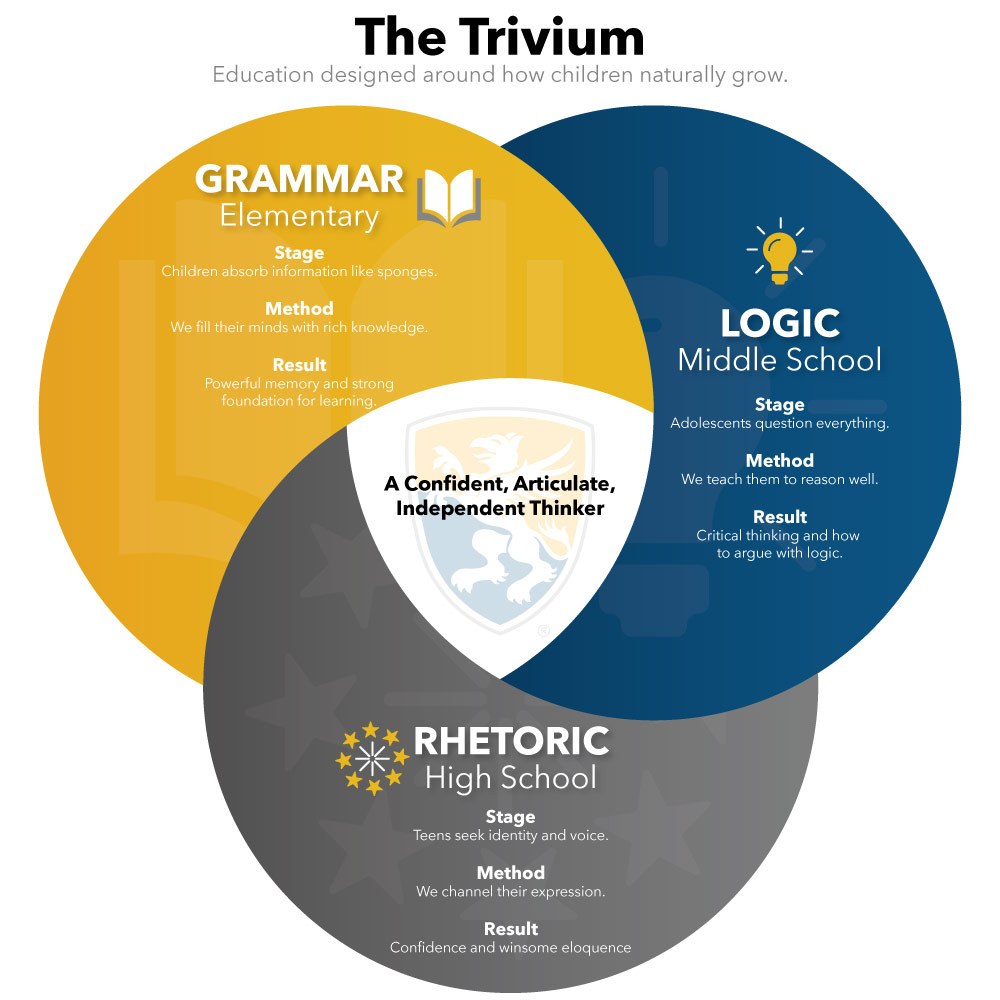
Classical education has been solving this problem for centuries. Rather than treating critical thinking as a subject to add to the schedule, the classical tradition treats it as the purpose of education itself, a capacity that develops in stages, each building on the last. That framework, the trivium, organizes the exercises in this guide.
Whether you’re a homeschool parent looking for exercises to use this week, a teacher building a logic curriculum, or an adult who wants to sharpen your own thinking, the stages below describe where you are in the development of a skill and not how old you are. Work through them in sequence and the progression makes sense.
Table of Contents
- The Classical Framework: Three Stages, Three Skill Sets
- Grammar Stage Exercises
- Logic Stage Exercises
- Rhetoric Stage Exercises
- Critical Thinking in Everyday Life
- Building the Practice Habit
- Common Mistakes
- A Note on the Veritas Approach
The Classical Framework: Three Stages, Three Skill Sets
The trivium is a sequence of three language arts: grammar, logic, and rhetoric. Sister Miriam Joseph defines their norms precisely in her 1937 textbook The trivium:
- correctness is the norm of grammar,
- truth is the norm of logic,
- effectiveness is the norm of rhetoric.
This matters for exercise design. Each stage has a different goal, and exercises that work beautifully at one stage can be counterproductive at another.
Dorothy Sayers observed that these three stages also happen to correspond to natural phases of intellectual development, which is why classical schools sequence curriculum this way (Sayers, “The Lost Tools of Learning,” 1947).
A brief sketch of each stage:
Grammar stage thinking is absorptive. The goal is building raw material: precise observation, accurate naming, careful retention. You cannot reason well about what you have not clearly perceived and named.
The norm here is correctness, or getting things right before evaluating them.
Logic stage thinking is analytical. The goal is structure: constructing valid arguments, evaluating evidence, identifying errors in reasoning. Peter Kreeft observes that formal logic is the grammar of thought. Just as you learn the rules of language before you can write with power, you must learn the rules of reasoning before you can argue with precision (Socratic Logic).
The norm here is truth.
Rhetoric stage thinking is integrative. The goal is synthesis and application: combining knowledge and reasoning into persuasive, well-ordered communication that can hold up under pressure.
The norm here is effectiveness, which is not just being right, but being able to demonstrate it.
Grammar Stage Exercises
The goal at this stage is not to teach argumentation. It is to teach the three preconditions for all critical thinking that follows: observation, naming, and narration. You cannot evaluate what you haven’t clearly seen. You cannot reason about what you cannot name. You cannot build an argument on a foundation you haven’t retained.
1. Narration
Narration is one of the most powerful and underused exercises in classical education. After reading or hearing a passage, the student retells it in their own words.
No prompts, no multiple choice, just recall and reconstruction.
Why it builds critical thinking: Narration requires actual comprehension. You cannot narrate what you haven’t processed. It builds the habit of paying close attention, organizing information in sequence, and expressing ideas with precision. This also makes comprehension gaps visible immediately—a student who misunderstood the text will narrate something different from what was there.
How to do it: Read aloud a short passage—a fable, a paragraph of history, a nature description. Close the book. Ask: “Tell me what you just heard.” Don’t correct or add during the narration. When the student finishes, ask: “What else do you remember?” Over time, increase length and complexity. Move from stories to arguments: “Tell me what the author was trying to say.”
What good looks like: A narration that covers the main events or ideas in order, uses the student’s own words without significant distortion, and begins to notice cause and effect within the material. A student who narrates “the author thinks X because Y” is ready to start evaluating whether Y actually supports X.
2. Precise Naming and Vocabulary
Rudolf Flesch, in The Art of Clear Thinking (1951), makes a point the classical tradition has always understood: the vocabulary you possess determines the distinctions you can make. The Inuit have numerous words for snow because those distinctions matter to survival. A student with imprecise vocabulary cannot think precisely—not because they lack intelligence, but because they lack the tools.
Why it builds critical thinking: Naming is the first act of logic. Naming is the moment a word is used precisely, it becomes a logical entity that can enter a proposition. Grammar-stage work on vocabulary is not separate from critical thinking. It is critical thinking at its most foundational.
How to do it: When a student uses a vague word—”good,” “bad,” “thing,” “said”—pause and ask: “Can you find the exact word?” Build the habit of distinguishing between words that seem similar: convince vs. persuade, assume vs. infer, reason vs. cause. Ask regularly: “What’s the difference between these two words?” Work through etymology when it clarifies meaning. Knowing that “critical” comes from the Greek krinein, to judge or separate, changes how a student understands the phrase “critical thinking.”
What good looks like: A student who spontaneously reaches for the precise word rather than the comfortable one. A student who notices when two things that seem the same are actually different, and can say why.
3. Structured Observation
Before students can evaluate arguments, they need to learn to see clearly. Structured observation trains this directly.
Why it builds critical thinking: The classical tradition distinguishes sharply between observation and inference. “The window is broken” is an observation. “Someone broke in” is an inference. Most critical thinking errors happen because people treat inferences as observations—they skip the evidence and go straight to the conclusion. This exercise builds the habit of pausing at the observation stage before moving to interpretation.
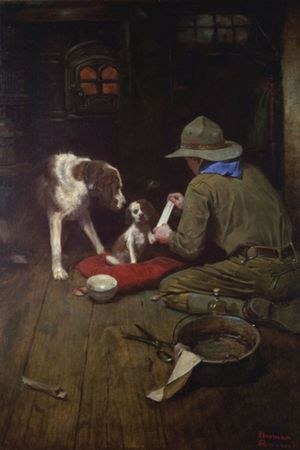
How to do it: Present an image, an object, or a short scene. Give the student one to two minutes to look carefully. Then ask a sequence of questions that move deliberately from fact to interpretation: “What do you see?” (only what is directly visible—no interpretations yet). “What do you notice that seems unusual?” “What do you think is happening?” “What might have happened just before this moment?” “What evidence supports that?”
Keep the stages distinct. When a student jumps to interpretation during the observation phase, say: “Is that something you see, or something you’re inferring?” The question itself is the lesson.
What good looks like: A student who can hold observation and inference as separate categories, and who automatically asks “what’s the evidence?” before accepting an interpretation—including their own.
A useful variation: Use a narrative painting. Pieter Bruegel the Elder’s crowded scenes reward careful looking, as do Norman Rockwell’s storytelling images. There is always more to find.
4. The “Why?” Chain
Simple, portable, and can be done anywhere. Start with any statement—a fact from a lesson, something your student told you, a claim from a book—and ask “Why?” When they answer, ask “Why?” again. Continue for four or five rounds.
Why it builds critical thinking: This exercise helps students discover where the foundation of an idea actually sits—and notice when they’ve run out of reasons and are simply repeating themselves or appealing to authority. It builds the habit of asking for reasons rather than accepting assertions.
How to do it: Keep the tone curious rather than interrogative. “Why do you think that?” rather than “Prove it.” The goal is not to frustrate but to excavate. When the student reaches a genuine first principle—something that seems self-evidently true and can’t be reduced further—name it. “That’s a premise. That’s where this argument stands.” Modeling the exercise on your own beliefs occasionally is valuable: “I think X. Why do I think that? Because Y. Why Y? Actually, I’m not sure. Let me think about that.”
What good looks like: A student who begins asking “why?” without prompting. A student who can distinguish between “I don’t know” and “there’s no answer”—and who finds the former interesting rather than threatening.
5. Reading Mysteries as Reasoning Practice
Flesch makes an observation worth taking seriously: mystery fiction is a training ground for logical thinking (The Art of Clear Thinking, 1951). A well-constructed mystery requires the reader to hold competing hypotheses, evaluate clues as evidence, resist premature conclusions, and reason toward a solution. The detective’s method is the critical thinker’s method.
Why it builds critical thinking: Edgar Allan Poe’s detective Dupin—the model for every detective who followed—reasons by eliminating what is impossible and accepting what remains, however unlikely. This is explicit deductive reasoning, packaged in narrative. Grammar-stage students who are too young for formal logic exercises can practice the same type of reasoning through story.
How to do it: Read mysteries together and pause at key moments. “What do we know for certain? What are we assuming? What would it mean if this clue were a coincidence?” After the solution is revealed, trace the reasoning backward: “What evidence should have told us? What did we miss? What did we assume that turned out to be wrong?” Classic starting points: Poe’s Dupin stories, Sherlock Holmes, Encyclopedia Brown for younger students.
What good looks like: A student who reads actively rather than passively, who notices details, forms hypotheses, and changes them when new evidence arrives. A student who, when the solution is revealed, can explain why it was or wasn’t the best-supported conclusion.
6. Copywork with Discussion
Copywork is a classical staple usually treated as a grammar and handwriting exercise. It can be considerably more.
Why it builds critical thinking: When a student copies a passage carefully, they encounter the author’s choices at the level of individual words and sentences. Discussion after copywork introduces the idea that writing is a sequence of decisions—and that different decisions produce different effects. This is grammar-stage rhetoric: noticing that language is not neutral.
How to do it: After copying a passage, ask: “Why do you think the author said it this way?” or “Could you say the same thing differently? What would change?” You are not looking for literary analysis. You are building the habit of noticing that words are choices.
Good passages for this: Aesop’s fables—short, deliberate, with a clear moral that invites discussion. Proverbs from Scripture. Well-crafted children’s literature where the language is precise and the sentences are short enough to examine. As the student develops, move to passages where the argument is explicit: a short paragraph of history, a scientist explaining an observation.
Logic Stage Exercises
At this stage, the work becomes formal and analytical. The grammar-stage student who has learned to observe carefully, name precisely, and retain accurately is now ready to examine structure: how arguments are built, how they fail, and how to tell the difference.
1. The Absurd-Premise Syllogism Drill
Here’s an easy drill to get started: create syllogisms with obviously false premises, designed specifically to isolate logical form from content.
“All mountains are made of marshmallows. Mont Blanc is a mountain. Therefore Mont Blanc is made of marshmallows.”
The conclusion follows. The argument is valid. The premises are false. That combination—valid but unsound—is the lesson.
Why it builds critical thinking: Most students, when evaluating arguments, conflate truth and validity. They accept an argument because the conclusion sounds right, or reject it because the conclusion sounds wrong—without examining whether the reasoning actually works. This drill forces a separation. When the premises are obviously ridiculous, the only question left is: does the conclusion follow?
How to do it: Present a set of syllogisms—some valid, some invalid—using absurd or fictional premises. Ask the student to evaluate only the logical form, not the real-world truth. Then introduce syllogisms with true premises but invalid form. Then introduce the real challenge: a syllogism where the premises are plausible, the conclusion sounds true, but the reasoning doesn’t actually work.
Sample progressions:
- Valid, false premises: “All robots are sensitive. C-3PO is a robot. C-3PO is sensitive.” (Valid—the conclusion follows from the premises, even though the major premise is false.)
- Invalid, true premises: “All dogs have four legs. My cat has four legs. My cat is a dog.” (Invalid—the middle term is undistributed. The conclusion does not follow.)
- The real test: “Most experts agree with this policy. This person is an expert. Therefore this person agrees with the policy.” (Invalid—”most” does not mean “all.”)
What good looks like: A student who can evaluate a syllogism’s structure without being distracted by whether the conclusion agrees with their existing beliefs. This is one of the hardest things to teach, and one of the most useful.
2. Hidden Assumptions (“Beware of Faulty Deductions”)
Here’s a second : incomplete arguments with an implied—but unstated—conclusion. Real-world bad reasoning almost never announces itself as a syllogism. It usually looks like this:
“Every successful entrepreneur I admire dropped out of college. I’ve been thinking about leaving school.”
The conclusion is left for the listener to supply: therefore dropping out is the right move. But the argument is missing a premise (dropping out causes entrepreneurial success, which is false; it’s at best a correlation among a self-selected group), and the conclusion doesn’t follow even if the premise were true (what’s true of a handful of famous people tells us little about any one individual’s situation).
Why it builds critical thinking: This is how propaganda and persuasion actually work. The most effective fallacious arguments never state their weakest link—they leave the listener to fill it in. A student who learns to identify what’s being implied, and to evaluate the implied premise, is much harder to mislead.
How to do it: Present a series of incomplete statements and ask: “What conclusion is this argument expecting you to draw? What unstated premise is required to reach that conclusion? Is the premise true? Does the conclusion actually follow?” Start with simple, obvious examples. Move toward real-world cases: advertising claims, political statements, news headlines.
Good examples to work through:
- “Since Mayor Thornton was elected, crime has increased.” (Implies Thornton caused it. Unstated premise: post hoc ergo propter hoc—after this, therefore because of this. A classic fallacy.)
- “Nine out of ten dentists recommend this toothpaste.” (Implies you should use it. Unstated premise: majority professional endorsement means it’s best. Missing: what were they comparing it to? What were the other options?)
- “Natural ingredients are always better.” (Unstated premise: natural = safe/effective. Counterexamples: arsenic, hemlock.)
What good looks like: A student who automatically asks “what’s the unstated assumption here?” when evaluating any argument, and who can articulate what would need to be true for the argument to work.
3. Fallacy Identification
The classical logical tradition catalogued the recurring errors in human reasoning. Teaching students to name and recognize them is among the most practically useful things you can do.
Why it builds critical thinking: Naming a fallacy breaks its power. A student who can say “that’s an ad hominem—you’re attacking the person, not the argument” has already stepped outside the rhetoric and into the logic. The Bluedorn brothers’ The Fallacy Detective (2009) presents this accessibly for students new to the material; Peter Kreeft’s Socratic Logic offers the formal treatment.
How to do it: Introduce one fallacy per week. Discuss its structure: why the reasoning fails, not just that it fails. Then spend the week finding examples in the wild: advertisements, news articles, political speeches, conversations. The student who can spot a straw man or a false dilemma in a real argument has learned something that transfers permanently.
Fallacies to prioritize first, in order of frequency in real life:
- Ad hominem: Attacking the person rather than the argument. “You can’t trust his opinion on economics—he failed his math class.”
- Straw man: Misrepresenting an opponent’s position to make it easier to attack. Setting up a version of their argument they didn’t make.
- False dilemma: Presenting only two options when more exist. “You’re either with us or against us.”
- Appeal to authority: Accepting a claim because an authority stated it, without evaluating the evidence. (Note: appealing to genuine expertise in the relevant field, with caveats, is legitimate. The fallacy is accepting authority as a substitute for evidence.)
- Hasty generalization: Drawing a broad conclusion from too few examples.
- Post hoc ergo propter hoc: After this, therefore because of this. Correlation mistaken for causation.
- Circular reasoning: The conclusion is smuggled into the premises. “This book is true because it says it’s true.”
- Slippery slope: Claiming that one step inevitably leads to an extreme conclusion without showing the mechanism.
What good looks like: A student who identifies fallacies in real arguments—not just textbook examples—and who can explain specifically why the reasoning fails, not just name the fallacy.
4. The Disjunctive Syllogism
Either/or reasoning is underrepresented in most critical thinking curricula, despite being one of the most common argument structures in real life.
The disjunctive syllogism takes this form: either A or B is true. A is true. Therefore B is not true. (Or: B is not true. Therefore A is true.)
Why it builds critical thinking: Many bad arguments succeed by presenting a false disjunction—two options that seem exhaustive but aren’t. Teaching students to evaluate either/or claims trains them to ask: are these really the only options? Could both be true? Could neither?
How to do it: Begin with clear, valid examples. “Either the train is late or we missed it. We didn’t miss it—we arrived on time. Therefore the train is late.” Then move to real-world disjunctions and test them: are the alternatives truly exclusive? Are they truly exhaustive?
Good progressions:
- Clear and valid: “Either the power is out or the bulb is burned out. The power is on. So the bulb is burned out.”
- Testing the disjunction: “Either you support this policy or you don’t care about children.” Are those the only options? What’s missing?
- Complex real cases: News coverage and political debate are full of false dilemmas framed as disjunctions. Have students find and evaluate them.
What good looks like: A student who instinctively asks “are those really the only options?” when confronted with an either/or argument.
5. Socratic Questioning
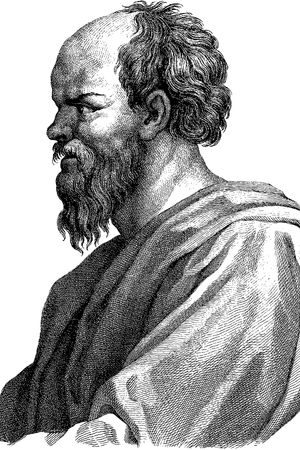
The Socratic method is the oldest and most powerful critical thinking exercise in the Western tradition. In Plato’s Meno, Socrates leads an untutored slave boy through a geometric proof using only questions—no lectures, no information given—demonstrating that understanding can be drawn out rather than poured in (Meno, c. 380 BCE).
Why it builds critical thinking: Socratic questioning does something no worksheet can: it makes the student’s reasoning visible, to themselves and to the questioner. Gaps, assumptions, and contradictions that live unexamined in a student’s thinking are exposed when they have to articulate and defend positions in real time.
How to do it: Choose a question the student has a view on. Ask them to state their position. Then work through a sequence: “What do you mean by that?” (clarify terms). “How do you know that’s true?” (examine evidence). “What would someone who disagrees say?” (consider opposition). “Is there a case where your position wouldn’t hold?” (test limits). “Given all of that, what do you actually think?” The goal is not to demolish the position—it is to help the student hold it more carefully, or to discover they should change it.
What good looks like: A student who changes their mind during a Socratic exchange and says so openly. This is the hardest thing to teach and the clearest sign it’s working.
6. The Steelman
The steelman is the opposite of the straw man fallacy. Rather than constructing the weakest version of an opposing argument, the student constructs the strongest possible version—and only then responds to it.
Why it builds critical thinking: Steelmanning forces a student to genuinely understand positions they disagree with. A student who can articulate the best argument against their own position, and still hold their position afterward, has actually thought about it. A student who can only repeat a weakened version of the opposition has not.
How to do it: Take a position the student disagrees with. Ask them to write or say the most compelling argument they can imagine in its favor—the version that would be hardest to refute. Then, and only then, have them respond. Over time, apply this to increasingly complex positions: moral questions, historical debates, contested interpretations of a text.
What good looks like: A student who spontaneously represents opposing positions fairly—not because they’ve been told to, but because they’ve internalized that understanding the opposition is part of having a well-reasoned view.
7. Argument Mapping
Argument mapping is a visual technique for diagramming the structure of an argument: identifying the main claim, the supporting reasons, the evidence for each reason, and the objections the argument must address.
Why it builds critical thinking: Mapping makes hidden structure visible. Students who learn to diagram arguments find it increasingly difficult to be fooled by rhetoric that sounds confident but rests on thin foundations—because they’ve trained themselves to ask what’s actually holding the argument up.
How to do it: Take a substantial argument—a persuasive essay, an editorial, a speech. The main claim goes at the top. Supporting reasons branch below it. Evidence branches below those. Objections appear to the side, connected to the points they challenge. Begin with simple, short arguments. Progress to complex, multi-layered ones. Eventually, have students map their own arguments before writing them.
What good looks like: A student who, reading any persuasive text, mentally or physically traces the structure before evaluating the content. A student whose own writing has a visible skeleton—not just a series of assertions, but a reasoned progression from evidence to conclusion.
8. The Truth-Teller/Liar Puzzle
A classic deductive reasoning format that forces students to reason from limited information to certain conclusions.
The setup: two types of people exist, one who always tells the truth and one who always lies. The student must determine who is who from their statements alone.
Why it builds critical thinking: These puzzles require the student to hold multiple hypotheses simultaneously, test each one against the available evidence, and eliminate possibilities methodically until only one conclusion remains. That is exactly the structure of good deductive reasoning—and it’s genuinely fun, which matters.
How to do it: Start with simple two-person versions. “Two people stand before you. One always tells the truth; one always lies. Person A says: ‘We are both liars.’ What can you conclude?” Progress to three-person versions, then to cases with partial information. After solving each puzzle, have the student explain their reasoning in full—not just the answer, but the path to it.
What good looks like: A student who works methodically rather than by intuition—who tests hypotheses explicitly and shows their reasoning, even when the answer seems obvious.
Rhetoric Stage Exercises
At this stage, the student has accumulated knowledge and learned to reason with precision. The exercises now focus on integration, synthesis, and performance: applying everything in real, demanding contexts.
1. Socratic Seminar
A Socratic seminar is a student-led discussion of a shared text in which no one—including the teacher—provides answers. The students do the intellectual work together, building on each other’s observations, challenging interpretations, and pursuing understanding through genuine dialogue.
Why it builds critical thinking: A seminar makes reasoning social and accountable. Students cannot coast on private certainty—they must articulate their thinking, respond to challenge, and demonstrate that their position holds up under real-time questioning. A student who can hold a well-reasoned position in a live Socratic exchange has reached the rhetoric stage in its fullest sense.
How to structure it: All participants read the text in advance and prepare: one passage that interests or troubles them, one genuine question, one claim they want to examine. The seminar opens with someone reading a passage and posing their question. Discussion follows. The facilitator’s only jobs are to ensure the conversation stays grounded in the text, to ask for clarification when claims are vague, and to make sure quieter participants are heard.
What good looks like: Students who build on each other’s points rather than simply waiting for their own turn. Students who change their minds during the seminar and say so. Students who return to the text to support claims rather than asserting them from memory.
2. Position Papers with Required Counterargument
A rhetoric-stage position paper is not simply a persuasive essay. It requires the student to engage seriously with the strongest objection before concluding.
The structure: State the thesis. Build the case. Then present the strongest counterargument—not a weakened version, but the real challenge to the position. Then respond to that counterargument directly. Conclude with the thesis, now more carefully qualified if the counterargument had merit.
Why it builds critical thinking: This structure forces intellectual honesty. It produces writing that is more persuasive precisely because it has anticipated and answered objections rather than ignored them. It also makes the student’s reasoning genuinely visible: a weak response to a strong counterargument is a signal that the thesis needs revision.
What good looks like: A paper where the counterargument section is the strongest part of the essay—where the student has genuinely tried to make the best case against themselves before defending their position.
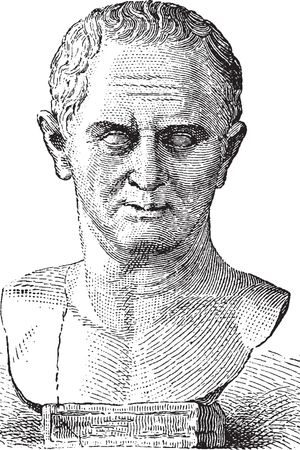
3. Cicero’s Topics of Invention
One of the most practical and underused tools in the classical tradition. Cicero identified sixteen categories through which any subject can be systematically analyzed:
- Definition
- Division
- Genus
- Species
- Contraries
- Contradictories
- Similarity
- Dissimilarity
- Comparison
- Cause
- Effect
- Antecedent
- Consequent
- Notation (the name)
- Conjugates (related terms)
- Testimony
Why it builds critical thinking: Cicero’s topics solve a specific rhetoric-stage problem: the student who knows how to reason but doesn’t know where to find material. Working through the topics systematically on any question ensures that no major angle has been missed and that the argument is built from a thorough analysis rather than the first things that came to mind.
How to do it: Take any substantial question. Work through the relevant topics in sequence. Definition: what precisely is the thing being discussed? Division: what are its parts? Contraries: what is it opposed to? Cause: what produces it? Effect: what does it produce? Comparison: how does it relate to similar or greater or lesser things? Not every topic will apply to every question, but the discipline of asking produces a richer inventory of material than intuition alone.
Applied example: A student writing about classical education runs through the topics. Definition: what precisely is classical education? Division: what are its parts (grammar, logic, rhetoric; the quadrivium)? Contraries: what approaches is it opposed to? Cause: what historical and philosophical developments produced it? Effect: what does it produce in students? Comparison: how does it compare to progressive or traditional schooling? Each question surfaces material.
What good looks like: A student who approaches any complex question with a systematic inventory rather than waiting for inspiration. A student whose essays and arguments are notably thorough because they have genuinely worked through the available angles.
4. Syntopical Reading
Mortimer Adler’s term for the most demanding form of critical reading: the student selects a question, identifies multiple texts that address it, reads them all with the question in mind, and constructs their own position in dialogue with all the authors (How to Read a Book, revised edition, 1972).
Why it builds critical thinking: Syntopical reading requires the student to become the author’s equal—not a passive receiver of one argument, but an active judge of multiple competing arguments. It is the rhetoric stage applied to reading rather than speaking or writing.
How to do it: Choose a genuine question—one where reasonable people disagree and where multiple serious texts are available. Assign three to four sources that address it from different angles. The student reads all of them, notes where authors agree and disagree, identifies the key points of dispute, and writes a paper that takes a position supported by engagement with all the sources. The paper is not a summary of what each author said. It is the student’s own argument, in which the sources are evidence and dialogue partners.
What good looks like: A paper that could not have been written without reading all the sources—where the student’s position is genuinely their own, but genuinely informed by the conversation they’ve entered.
5. Applied Logic: Evaluating Real Arguments
Take a real-world argument—a news editorial, a political speech, an advertisement, a social media post making a substantive claim—and subject it to full analysis.
Why it builds critical thinking: The gap between classroom logic and real-world rhetoric is significant. Arguments in the wild are rarely labeled. Premises are buried or omitted. Fallacies wear the costume of common sense. A student who can only recognize logical errors in clearly structured exercises has not fully learned the skill.
The analysis checklist:
- What is the main claim?
- What reasons are offered in support?
- What evidence is provided for each reason?
- What assumptions are being made that are not stated?
- What fallacies, if any, are present?
- What would a thoughtful person who disagrees say?
- Is the conclusion justified by the argument?
What good looks like: A student who applies this analysis spontaneously, without being prompted—who reads a persuasive text the way a trained reader reads a contract, looking for what’s being asserted, what’s being assumed, and what’s being left out.
6. The Liar Paradox
“Epimenides was a Cretan who said: ‘All Cretans are liars.’ Is his statement true or false?”
If it’s true, then Epimenides—a Cretan—is a liar, which means the statement is false. If it’s false, then not all Cretans are liars, which means Epimenides might be telling the truth, which means the statement might be true. The paradox is genuine. There is no clean resolution.
Why it builds critical thinking: The Liar Paradox, formalized in modern logic as Russell’s paradox and related problems, demonstrates something important: formal reasoning has limits. Some statements are self-refuting. Some questions cannot be answered within the system used to ask them. A rhetoric-stage student who has spent time learning formal logic needs to encounter its limits—not to abandon rigor, but to understand what rigor can and cannot do.
How to use it: Present the paradox. Let the student wrestle with it genuinely before explaining the history. Then discuss: what kind of statement produces this problem? (Self-referential ones.) What does this tell us about the limits of formal systems? The goal is not to solve the paradox but to understand why it can’t be solved and what that means.
What good looks like: A student who is intellectually humbled rather than defeated—who finds the limits of formal reasoning interesting rather than threatening, and who understands that acknowledging those limits is part of being a rigorous thinker.
7. Oral Defense
The student presents a thesis and defends it under live questioning, without notes.
Why it builds critical thinking: Oral defense is the rhetoric stage in its most demanding form. It requires a student to have genuinely internalized an argument rather than memorized a presentation of it. A student who truly understands their thesis can answer questions they’ve never heard before. A student who has only memorized an essay cannot.
How to structure it: The student has five to ten minutes to present their argument. Then ten to fifteen minutes of questions—some clarifying, some probing, some genuinely challenging. The questioner’s job is not to embarrass but to test: does this student really understand what they’re claiming? Can they defend it in real time?
What good looks like: A student who handles unexpected questions by reasoning from their argument’s foundations rather than reaching for a memorized response. A student who can say “I hadn’t considered that—let me think through how it affects my argument” rather than simply repeating their thesis more confidently.
Critical Thinking in Everyday Life
The exercises above belong in structured learning time. But critical thinking that only happens at a desk won’t transfer.
The families and communities that develop strong thinkers tend to share something: they talk. At dinner, in the car, walking somewhere. They discuss what they’ve read and heard and seen. Adults model genuine reasoning; not pretending to have all the answers, but real thinking out loud. Questions are taken seriously and answered with reasons, not just conclusions.
None of this requires a curriculum. It requires intention and two questions borrowed from Flesch’s The Art of Clear Thinking (1951), which turn out to catch most fallacious reasoning in everyday life:
“So what?”—Is this point actually relevant? Why does it matter to the argument being made?
“Specify.”—What exactly do you mean? What specifically is the claim? “Natural is better,” “everyone knows,” “research shows”—specify.
These two questions, asked regularly and with genuine curiosity rather than dismissiveness, build the habit of precision. They also make conversations more honest, because vague claims cannot survive them.
A few more questions worth building into regular conversation:
For grammar-stage thinking: “What’s the most interesting thing you encountered today, and why is it interesting?” “If you had to explain this to someone who’d never heard of it, what would you say?”
For logic-stage thinking: “What do you think about that claim? What reasons would someone give for disagreeing?” “We heard two different explanations for this. Which do you think is more likely to be right, and why?”
For rhetoric-stage thinking: “I read an argument I found interesting but not quite convincing. Here it is—what do you think is wrong with it?” “What’s a question you’ve been thinking about lately that you don’t have a good answer to?”
On modeling your own reasoning: One of the most powerful things anyone can do is think out loud in front of others—not performing certainty, but actually reasoning through something. “I’m not sure I agree with that. Let me think about why.” “That argument sounds right, but something feels off. Let me figure out what.” People who watch careful thinkers reason carefully learn that this is what thinking looks like: effortful, provisional, genuinely uncertain until it isn’t.
Building the Practice Habit
Critical thinking doesn’t fit into a daily time slot the way arithmetic does. This is partly why it gets neglected. The more realistic approach is integration rather than addition—doing what you’re already doing with more intentionality.
A simple weekly rhythm:
- Once: Introduce or revisit one concept—a fallacy, a logic form, a Socratic question.
- Twice or three times: Apply it to whatever subject is already being studied.
- Once: A dedicated exercise—narration, argument map, syllogism drill, steelman.
- Once: Discussion—what did you notice this week? What questions came up?
This is fifteen to twenty minutes of daily attention, not a curriculum overhaul.
What progress looks like:
Progress in critical thinking is not a test score. It looks like this:
- Asking “why?” without being prompted.
- Noticing when an argument they agree with has a weak point.
- Changing a position during a discussion and saying so openly.
- Writing that anticipates objections rather than ignoring them.
- Reading a persuasive text and asking what’s being assumed, not just what’s being said.
These things are hard to measure and impossible to fake.
Common Mistakes
Teaching critical thinking as a standalone subject. A critical thinking workbook, used in isolation, rarely transfers. The goal is to integrate reasoning habits into every subject—history, literature, science—where there is real content to reason about. The exercises work when they’re connected to ideas that matter, not when they’re an extra item on the schedule.
Rewarding skepticism rather than sound reasoning. There is a version of critical thinking education that produces students who reflexively challenge everything and mistake that habit for sophistication. What you’re looking for is not a student who doubts but a student who reasons. Doubt without method is just contrarianism.
Skipping formal logic. Many families defer formal logic because other subjects feel more pressing. This is worth reconsidering. The logic stage is when the appetite for argument is naturally high and the capacity for formal reasoning is developing. Teaching logic later is possible—adults do it regularly—but it is harder to build what should have been built earlier.
Confusing articulate speech with clear thinking. Verbally gifted students can talk their way through almost anything. This is not the same as reasoning well. The exercises that matter most for fluent speakers are often the ones that slow them down: argument mapping, written syllogisms, and so on. The goal is precision, not fluency.
Moving to rhetoric-stage exercises before the foundations are in place. A bright student doing Socratic seminar before they’ve learned to reason in syllogisms will perform rather than think. The stages are a sequence, not a menu.
A Note on the Veritas Approach
At Veritas Press, the trivium is the actual structure of how subjects are taught and sequenced.
Grammar-stage students build the factual and linguistic foundation, the raw material that logic-stage students will later examine and rhetoric-stage students will argue about. When a student sits in a live Omnibus class at Veritas Scholars Academy, they’re doing Socratic seminar, syntopical reading, and oral defense simultaneously, with teachers who have been trained to push for genuine reasoning rather than acceptable-sounding answers.
This is what happens when critical thinking is a method rather than a subject. The exercises aren’t a supplement to the curriculum. They are the curriculum.
For families building this at home, the exercises in this guide are designed to be used without specialized training, and they all pair well with both our curriculum kits and self-paced courses. The work is real and the results compound over time. We also offer a collection of some of the best books for critical thinking for families looking for one-off resources.
For families who want the structure of a live classical classroom—daily practice reasoning alongside peers, under the guidance of teachers who have been doing this for years—that’s the environment Veritas Scholars Academy provides.
Conclusion
The goal, in the end, is not a student who argues better. It is a student who reasons well, reads carefully, names things precisely, asks honest questions, and can articulate and defend what they believe with clarity and conviction.
Classical education has been building toward that goal for centuries. The exercises in this guide are the method by which that development happens when practiced consistently, applied across subjects, and modeled by people who take thinking seriously.
None of it happens by accident.
But with the right exercises, practiced in sequence, it does happen.
Have questions? Talk to an expert for free!
Our Family Consultants are here to help! Fill out the form below to schedule a quick call for free.