

Homeschooling in Florida: A Complete Guide for Families (2026-2027)
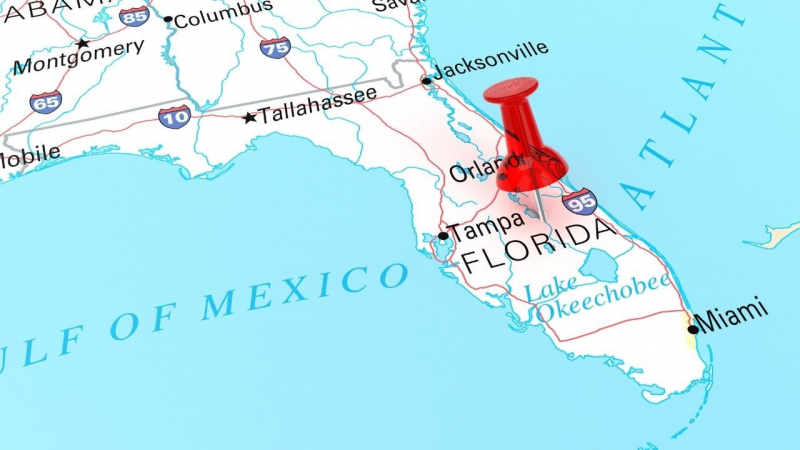
Florida is one of the largest and most established homeschool communities in the country.
Florida offers some of the most generous school choice funding in the nation, along with one of the lightest regulatory frameworks for families who prefer to homeschool independently. The trade-off is that Florida's options come with more moving parts than most states. This guide walks through the three legal pathways, the scholarship landscape, sports and NCAA eligibility, and how Veritas Press fits in. This guide is for informational purposes and is not legal advice. For legal questions, we recommend speaking with an attorney.
Is Homeschooling Legal in Florida?
Yes. Florida has long been a homeschool-friendly state, and home education is one of several recognized ways to satisfy the state's compulsory attendance law. What makes Florida distinctive is that families have more than one legal route to choose from, and the route you pick determines who you report to and what records you keep.
Florida's Three Homeschool Pathways
Florida families generally choose among three legal pathways. All three are legitimate, and the right one depends on how much independence you want, whether you plan to use scholarship funding, and how much administrative work you're willing to take on.
Home Education Program
Fla. Stat. § 1002.41The traditional homeschool route, and the one that gives families the most independence. You direct your child's education, choose your own curriculum, and report to your local school district only for attendance purposes.
- File a one-time notice of intent with your superintendent within 30 days of starting
- Maintain a portfolio: a log of activities and samples of your child's work, kept for two years
- Complete an annual educational evaluation and file it with the superintendent's office
No mandated subjects, hours, days, or teacher certification. The annual evaluation can be met five ways, including a certified-teacher portfolio review or a nationally normed test. A parent-signed affidavit of completion serves as the legal equivalent of a high school diploma.
Private or Umbrella School Enrollment
Families can enroll their child in a private school, including "umbrella" or "cover" schools that exist specifically to support homeschooling. Under this pathway, your child is legally a private school student.
You don't file a notice of intent, maintain a district portfolio, or complete the annual evaluation. Instead, you follow the umbrella school's policies, which often include attendance records and a set number of instructional days. This appeals to families who want to offload the state's record-keeping. The trade-off is operating under the umbrella school's rules rather than the independence of the home education statute.
Personalized Education Program (PEP)
Scholarship pathwayPEP is Florida's newer scholarship pathway, created in 2023. It provides an education savings account you can spend on curriculum, tutoring, online courses, and other approved expenses (full funding details in the next section).
There's one important thing to understand before choosing PEP: it is legally distinct from a Home Education Program. If a home education student begins receiving PEP funds, the parent files a notice of termination for their home education program and registers instead with a Scholarship Funding Organization such as Step Up for Students.
The two tracks report to different places
Home Education Program
Register with your school district. Complete the annual evaluation and file it with the superintendent.
PEP Scholarship
Register with a Scholarship Funding Organization. Submit a Student Learning Plan and an annual norm-referenced test.
Both groups are homeschoolers in the everyday sense. They simply operate under different statutes with different reporting obligations. Knowing which track you're on keeps everything clean.
Florida's Scholarship Programs
Florida runs several overlapping school choice programs, all administered by the Florida Department of Education with Step Up for Students serving as the main Scholarship Funding Organization and payment manager. Since 2023, when the Legislature passed HB 1, these programs are open to all Florida students regardless of household income. Income now affects funding priority, not eligibility.
Step Up for Students Scholarships
Administered by the Florida Department of Education · Managed through Step Up for Students
The two programs most homeschool families use
Homeschool ESA
Personalized Education Program
~$8,000
average per student, per year
The homeschool education savings account. Use it for curriculum, instructional materials, tutoring, online and virtual programs, part-time enrollment, and testing fees. For K–12 students not enrolled full-time elsewhere. Has an annual enrollment cap, so apply early.
Unique Abilities ESA
FES-UA
~$10,000
average per student, per year
The education savings account for students with disabilities, age 3 through grade 12 (or 22). Requires an IEP or a diagnosis from a licensed physician or psychologist. Covers tuition, therapies, tutoring, curriculum, and technology. A 504 plan alone does not qualify.
The underlying funding mechanism
You apply once
One universal application through the EMA portal covers everything.
FTC funds first
The Florida Tax Credit scholarship is applied until its funding is exhausted.
FES-EO follows
The state-funded scholarship picks up from there automatically.
FTC and FES-EO are the two funding streams behind the scholarships, both open to all K–12 Florida residents and averaging about $8,000. You don't choose between them; the system routes you. What you choose is the pathway: PEP for homeschooling, or a tuition scholarship for private school.
Qualifying educational expenses
How to Apply
All applications run through the Education Market Assistant (EMA) portal at apply.stepupforstudents.org. Applications typically open February 1 and run year-round, though capacity-limited programs like PEP reward early applicants. A student may hold only one active scholarship application at a time.
Veritas Press
Classical Christian Education, Built to Prepare Students for Life
Florida hands families a rare combination: real funding and real freedom. What you do with that freedom is the question that matters most, and it's the one Veritas Press exists to help you answer.
At Veritas, we believe classical Christian education is the best framework for forming students who can think clearly, reason from evidence, argue persuasively, and live faithfully. That's what we mean by our goal to prepare students for life. We're not maintaining a tradition for its own sake. We teach this way because it works.
Our curriculum and courses are built on the classical Trivium. The grammar stage, in the early years, works with how children actually learn: they are wired for memorization, pattern recognition, and absorbing rich content, and classical education leans into that with songs, chants, timelines, and primary sources. In the middle years, the logic stage shifts toward analysis and argument, as students begin to question and reason through the "why." By high school, the rhetoric stage asks students to synthesize everything they've accumulated, to make a case and defend it with skill. The result is a student who has learned not just what to think, but how to think.
Florida families access Veritas in three ways:
You-Teach Curriculum
Complete, carefully sequenced materials you teach yourself at home, covering K–12 across more than 21 subjects, from history and Bible to Latin, logic, and literature. You're the teacher; we give you everything you need to do it well.
Self-Paced Courses
Pre-recorded video courses taught by expert Veritas teachers. Students work through the material on their own schedule, with the depth and rigor of a live class. A natural fit for independent learners or families who want teacher-led instruction without the fixed schedule.
Veritas Scholars Academy (VSA)
Our fully accredited online school, where students attend live classes taught by credentialed faculty, two-thirds of whom hold advanced degrees. VSA is accredited by MSA-CESS and NCAA-approved, with a full Diploma Program, an assigned academic advisor, and an official transcript.
All three paths share the same classical Christian foundation. The question is simply how much of the teaching you want to take on yourself.
Using Your Scholarship with Veritas Press
Direct Payment
Because Veritas is pre-approved, log into your EMA account, click "Find Providers," select your student, and search "Veritas Press" to pay us directly.
Reimbursement
Purchase your Veritas curriculum or courses, then submit a reimbursement request in EMA with your proof of payment. Click "Reimbursements," select "New," and the portal guides you through the rest.
Sports, Extracurriculars, and NCAA Eligibility
Florida is the birthplace of homeschool sports access. The state's "Tim Tebow law," formally the Craig Dickinson Act (Florida Statute § 1006.15), was enacted in 1996 and lets home education students participate in interscholastic sports and extracurricular activities at their local public school. Tim Tebow himself was a homeschooled student who played high school football under this law before his career at the University of Florida.
To participate, a home education student generally must be registered with the district as a home education student, maintain a 2.0 GPA on a 4.0 scale, meet the same conduct and residency standards as other students, and register their intent before the season begins. A 2025 expansion broadened participation so that a home education student may now join an interscholastic athletic team at any public school in the district where they reside, not only their zoned school. Current details are maintained by the Florida High School Athletic Association (FHSAA).
Resources and Next Steps
Have questions? Talk to an expert for free!
Our Family Consultants are here to help! Fill out the form below to schedule a quick call for free.