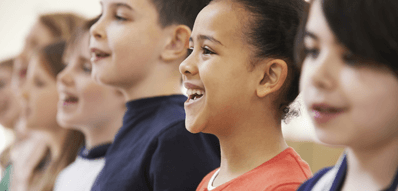



One of the first questions families ask about online classical education is whether students miss out on the communal life of a traditional school. It's a fair question. The social fabric of school, the friendships built in the margins between classes, the shared experiences of clubs and trips and events, is genuinely valuable. Veritas Scholars Academy takes that concern seriously.
The answer isn't to dismiss the concern. The answer is to build against it deliberately.
Why Extracurriculars Are Part of Formation
Classical education has always aimed at something larger than academic achievement. The goal is formation: producing students who think clearly, act wisely, lead well, and serve others. That goal doesn't stop at the end of a class period.
Research consistently shows that extracurricular participation develops the habits that formal instruction alone cannot fully produce. Participation supports character development by giving students the skills required for personal success, including leadership, time management, and the ability to accept constructive criticism. ERIC These are precisely the outcomes a classical education is working toward, and they develop best through practice in real community with real stakes.
At VSA, extracurriculars are not an afterthought appended to an academic program. They are part of what it means to be a Veritas student.
Clubs: Grammar and Secondary
VSA offers clubs at both levels of the school, each designed for the student's stage of development.
Grammar school students can explore Baking Club, Book Club, Chess Club, Drawing Club, Lego Club, and Writing Club. These are not placeholders. They are structured opportunities for young students to develop interests, build skills, and form friendships with peers who share them, in the same community they share with classmates during the school day.
Secondary students have a wider range to choose from: Apologetics Club, Art Club, Chess (Beginner and Advanced), College Advising, Computer Programming, Cooking, French Club, Lego, Logic Level Drawing, Math Club, Photography, Physical Education, Spanish Club, Writing Club, and Yearbook. Many of these are led by practitioners in their fields. A student exploring computer programming does so with a Silicon Valley engineer. A chess student competes under a National Chess Master. A student interested in biology may find themselves learning from an ornithologist.
The breadth of the secondary offerings reflects something important: students at the rhetoric stage are beginning to discover who they are and what they care about. Clubs give them structured space to pursue that discovery alongside peers who are doing the same.
Student Connections and Student Government
VSA's full-time secondary students gather by grade level twice monthly through Student Connections, meeting online to discuss everything from politics to poetry, pray for one another, share stories, debate favorites, and prepare for upcoming events. Class officers lead the discussions, which keep community alive between the more structured work of coursework and clubs.
Student Government runs alongside this, with each class from 7th through 12th grade electing a president, vice president, and secretary through genuine campaigns. Officers serve as liaisons between students and school administration, lead Student Connections gatherings, and play key roles at the End of Year Gathering. For students learning rhetoric and logic in the classroom, student government is where those skills meet real life: persuasive campaigns, contested elections, and the practical work of representing peers.
Field Trips: History Made Real
Mark Twain observed that "travel is fatal to prejudice, bigotry, and narrow-mindedness." He also noted that "broad, wholesome, charitable views of men and things cannot be acquired by vegetating in one little corner of the earth all one's lifetime."
VSA students don't only read about the places that shaped Western civilization. They walk them. Students and family members have traveled to Italy, Greece, Germany, France, and Switzerland to encounter firsthand the sites they've studied in Omnibus. Standing in the Roman Forum after reading Cicero is a different experience from reading about the Roman Forum. The history becomes legible in a way that no text alone can quite produce.
The destination list continues to grow.
Mission Trips: Learning Through Service
VSA's mission trips are better described as service learning, because students are not passive observers. They are active participants in work that matters.
Past trips have taken students to the Ecuadorian rainforest to help build for the Waorani people, to Washington D.C. to learn from Christian lawyers who advocate for abused women and children, and to Malawi to work alongside pilots and engineers delivering literature and food to people in need. In each context, students bring what they've learned in the classroom into contact with the needs of the world and discover how their knowledge, gifts, and talents can serve others.
This is formation in its fullest sense: not just learning about the world, but learning how to act in it.
The Yearbook: Legato
VSA's yearbook is named Legato, a musical term meaning "in a smooth, flowing manner, without breaks between notes." The name captures something intentional about the Veritas community: a group of students working together, demonstrating the love of Christ in all things, across the school year and across the years that follow. Students in the Yearbook Club capture and document the community's life together, for students and families to carry forward.
One School, Many Dimensions
A classical education forms the whole person. The coursework develops the mind. The extracurriculars develop the character, the community, and the capacity to lead and serve. At VSA, neither half is optional. Together, they produce students who are ready for more than the next test.
Have questions? Talk to an expert for free!
Our Family Consultants are here to help! Fill out the form below to schedule a quick call for free.