

10 Things We Wish People Knew About Classical Education
If you’ve mentioned classical education to friends or family, you’ve probably fielded some interesting responses.
“So . . . they learn Latin? And wear togas?”
“Isn’t that just for really smart kids?”
“That sounds nice, but what about science? What about the real world?”
We get it. Classical education sounds, well, old. And in an age obsessed with innovation, “old” doesn’t exactly sell itself. But there’s a very good reason this approach educated everyone from the Founding Fathers to Frederick Douglass, from Augustine to C.S. Lewis. And there’s a reason it’s experiencing a quiet resurgence among families who want something deeper for their children.
So let’s clear the air. Whether you’re knee-deep in the trivium or just trying to figure out what all the fuss is about, here’s what we wish more people understood about classical Christian education. And we’ve got the research that backs it up.
What Is Classical Education, Really?
1. It’s More Than Latin and Togas
Latin gets a lot of attention, and yes, many classical programs include it. But Latin isn’t the point. Latin is a tool. (Although there’s certainly something to be said for learning an ancient language for its own sake!) Learning Latin sharpens grammar skills, builds vocabulary (especially for those future doctors, lawyers, and scientists), and exposes learners to the great thoughts and the Great Books that shaped history.
But classical education is far bigger than any single subject. At its heart is something the Ancient Greeks called paideia, the formation of the whole person. Classical education is so much more than a collection of courses. Classical education offers a holistic vision of what it means to raise a human being who can think clearly, communicate persuasively, and live virtuously.
Dorothy Sayers, the British author and Oxford contemporary of C. S. Lewis, put it pointedly in her famous 1947 essay “The Lost Tools of Learning”: “Is it not the great defect of our education today that although we often succeed in teaching our pupils ‘subjects,’ we fail lamentably on the whole in teaching them how to think? They learn everything, except the art of learning.”
That’s the goal: not students who have memorized facts for a test, but students who have learned how to learn and who will keep learning for the rest of their lives.
2. Why Memorization Still Matters
Memorization gets a bad rap these days. We’ve been told it’s “rote,” that it kills creativity, that it belongs to a dustier era. But here’s what that critique misses: you can’t think deeply about nothing.
Memory is the foundation for learning, and memorization is a cultivated skill. Think about it. How can you understand anything, much less discuss anything, if you can’t recall basic facts about that topic?
Fortunately, young children are wired to absorb information. They’ll delight in chanting multiplication tables or reciting poetry. Classical education leans into that natural stage (what Sayers called the “Poll-Parrot” years) and fills their minds with the raw factual material they’ll need later: historical dates, geography, Latin vocabulary, Scripture, poetry. This isn’t busywork. Memorization builds the mental architecture for complex thought.
And those “old books”? They’re not a retreat from reality. Reading Plato, Augustine, and Shakespeare means grappling with the best that’s been thought and said, including ideas we might reject! Classical students read Marx and Nietzsche not to agree with them, but to understand their arguments and see where those ideas lead. That’s not sheltering. That’s preparation.
As a University of Notre Dame study found, graduates of a classical Christian education are 6.7 times more likely to be regular readers than their peers. They read, and they think about what they read.

Classical Christian graduates are 6.7x more likely to be regular readers than their peers.
3. Classical Education and STEM: Do the Humanities Hold Kids Back?
This one might be the most persistent myth. This myth is that classical education is somehow “soft,” all literature and philosophy while the real world runs on coding and calculus.
The data tells a different story.
That same Notre Dame study, conducted back in 2018-19 and comparing alumni from public, private, Catholic, evangelical, homeschool, and classical Christian schools, found that classical Christian graduates scored highest in college and career preparation.
Not just among religious schools. Highest, period. Roughly 90% completed a bachelor’s degree, and 55% earned A’s or mostly A’s in college.
Meanwhile, the Association of American Colleges and Universities has been surveying employers since 2006, asking what they actually want in new hires. The consistent answer? Communication, both verbal and written. Adaptability. Critical thinking.
Classical education doesn’t ignore STEM. It provides the foundation that makes STEM and every other subject so much more accessible: the ability to read carefully, reason logically, and communicate precisely. The humanities don’t compete with science. They make better scientists.
Who Are Classical Education Students?
4. Classical Education Isn’t Just for the Elite
The education now considered “elite” used to be standard.
Before the progressive education reforms of the early 20th century, classical education was American education. Students learned Latin grammar, read primary sources, studied rhetoric, and were expected to construct logical arguments. This wasn’t reserved for aristocrats.
It was the one-room schoolhouse.
It was Abraham Lincoln teaching himself from borrowed books.
It was Frederick Douglass, who taught himself to read and went on to become one of the most compelling orators in American history.
What changed? In the late 1800s and early 1900s, reformers like John Dewey argued that classical education was outdated—too abstract, too disconnected from the “real world” of industrial jobs. Schools shifted toward vocational training and what Dewey called “learning by doing.” The results were mixed at best. As C.S. Lewis observed in his 1943 work The Abolition of Man, the new approach had traded something essential: “In a word, the old [education] was a kind of propagation—men transmitting manhood to men; the new is merely propaganda.”
Classical education isn’t elitist. No, classical education is what education looked like before we decided to aim lower.
And it’s more accessible today than it has been in a century.
5. Are Classical Students Socially Awkward?
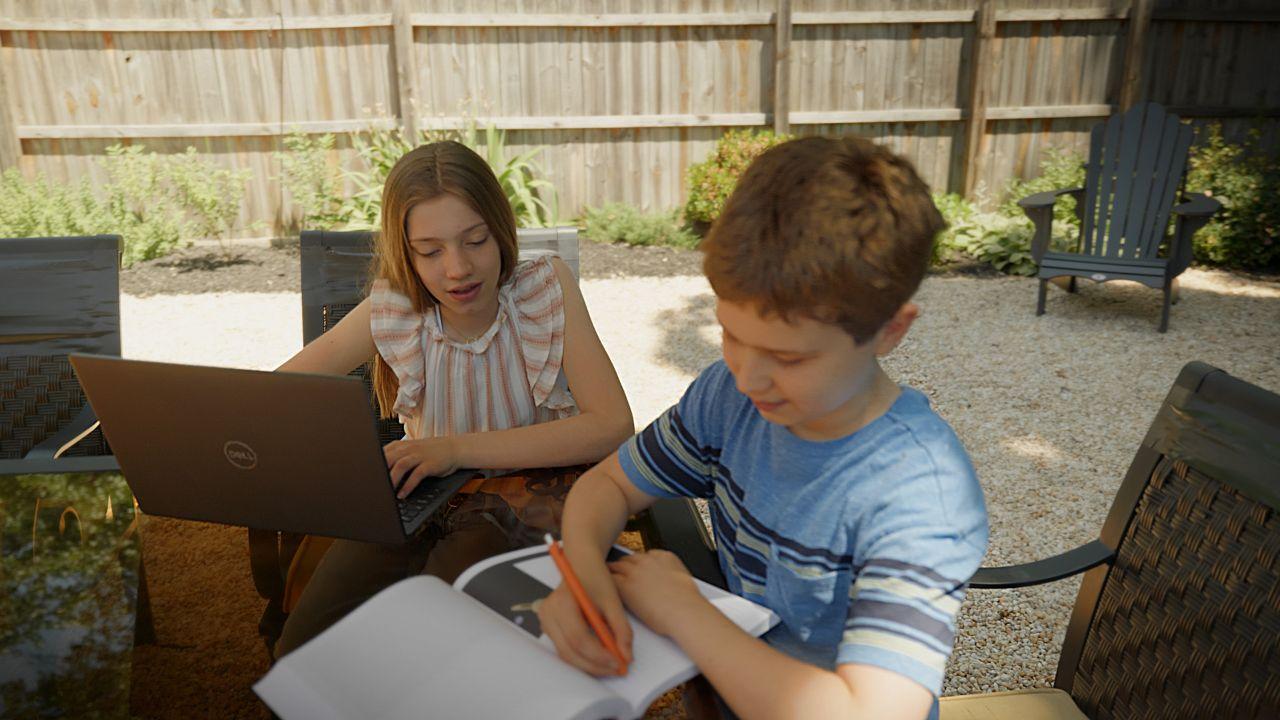
The stereotype writes itself. Kids who read old books and study Latin? Surely they’re pale, bespectacled, and allergic to sunshine.
The reality is more interesting.
Classical education places enormous emphasis on rhetoric, the art of speaking and persuading. Students read, sure, but then they discuss. Then they debate. They learn to listen very carefully, construct arguments, and articulate their ideas in front of others.
Socratic dialogue isn’t a spectator sport. By the time classical students reach high school, they’ve spent years practicing the art of conversation: asking good questions, considering other perspectives, and defending their positions with grace.
That training pays off. The Notre Dame study found that 90% of classical Christian alumni report having more close friendships than the national median. That’s the highest of any school type surveyed, by the way. It turns out that learning to speak and listen well tends to make you someone people enjoy being around.
And yes, classical students play sports. They run track, shoot hoops, and compete at the collegiate level. The life of the mind and the life of the body aren’t enemies. The Greeks knew that. So do we.
6. The “Sheltered” Myth: What the Research Actually Shows
This is perhaps the most common concern, and the most thoroughly debunked by the research.
The assumption runs like this: classical Christian schools are ideological bubbles, training kids to hide from ideas and people that challenge their faith. Graduates emerge blinking into the sunlight, unprepared for a pluralistic world.
Again, the data says otherwise.
According to the Notre Dame survey, classical Christian school alumni are more likely to personally know people outside their worldview than graduates of other evangelical schools. 63% know an atheist in their daily life, for example.
And they maintain their convictions anyway. Not because they’ve avoided hard questions, but because they’ve been trained to engage them. Students who have wrestled with Nietzsche’s critique of Christianity, who have traced Marx’s logic to its conclusions, who have debated the problem of evil in a seminar aren’t caught off guard by skepticism. They’ve already met it in the classroom.
Classical Christian education doesn’t shelter students from the world. It prepares them to enter it with eyes open, convictions intact, and ready to engage.
Classical Education Outcomes: What Does the Research Say?
We can make philosophical arguments for classical education all day. But at some point, a reasonable person wants to ask: does it actually work?
Let’s go back to that study conducted by the University of Notre Dame’s sociology department. Researchers surveyed alumni aged 24 to 42 from six different school types—public, private preparatory, Catholic, evangelical Protestant, religious homeschool, and classical Christian—and used regression analysis to isolate the effects of schooling from family background factors like income, parents’ education, and religiosity.
The results were striking.
7. College and Career Preparation
Classical Christian school graduates scored highest in college and career preparation, 32 points above the median, more than double the next closest group. Roughly 90% completed a bachelor’s degree. More than half earned A’s or mostly A’s in college. And they reported feeling just as prepared for the job market as graduates of elite preparatory schools.
This isn’t a fluke of family wealth or parental involvement. The researchers controlled for those factors. The school itself made the difference.
8. Independent Thinking and Lifelong Learning
One of the most telling metrics was what researchers called “independent thinking.” Classical Christian alumni scored twice as high as graduates of other methodologies on this measure and far above every other category.
What does that look like in practice? These graduates trust scientists and hold Scripture as reliable. They read widely. They don’t simply absorb the opinions of their teachers or their culture. They’ve been trained to weigh evidence, question assumptions, and reach their own conclusions.
Dorothy Sayers would be pleased. They learned how to learn.

9. Faith Retention: Does It Last?
For many Christian parents, this is the question that keeps them up at night:
“Will my child’s faith survive?”
The news here is encouraging. 90% of classical Christian alumni attend church three or more times per month. 83% participate in small groups weekly. 70% read the Bible weekly. They are 2.6 times more likely to pray alone than other graduates.
This isn’t faith by cultural inertia. These are adults who have examined what they believe and chosen to keep believing it and to live accordingly. The study found dramatically lower divorce rates (under 1%, compared to 5 to 8% in other groups) and zero reported cohabitation among classical Christian alumni.
The command of Deuteronomy 6, to impress God’s words on your children, to talk about them when you sit and when you walk, when you lie down and when you rise, finds its fulfillment in schools that take formation seriously.
The moral of the story? Faith sticks when it’s woven into everything, not tacked on as an elective.
10. Civic Engagement and Cultural Influence
Finally, and perhaps surprisingly, classical Christian graduates aren’t retreating to Christian enclaves. They’re engaged.
The study found that 60% know influential people in their communities. 40% are willing to protest for causes they believe in. 58% feel empowered to make a difference in their communities, compared to just 30 to 40% of graduates from other school types.
They volunteer. They lead. They show up.
This is the fruit of an education that takes seriously both the life of the mind and the call to love your neighbor. Classical Christian graduates are prepared for careers, and they’re prepared for citizenship, for service, for influence.
Why Classical Education Matters Now More Than Ever
We’ve thrown a lot of research at you. Studies, statistics, percentages. But let’s step back and ask the question that really matters.
Why does any of this matter for your family, in your living room, on an ordinary Tuesday morning when the coffee’s gone cold and someone’s crying over Latin declensions?
Here’s why.
We are living through a crisis of formation. Rates of anxiety and depression among young people have reached historic highs. Loneliness has become an epidemic. Trust in institutions like churches, schools, and the government continues to erode. And underneath it all is a generation that has been taught what to think but not how to think, trained to perform for metrics but not formed for wisdom.
C.S. Lewis saw it coming. In 1943, he warned that modern education was producing “men without chests,” people with appetites and intellects but nothing in between, no trained emotions, no moral imagination, no sense of honor or duty that could anchor them when the winds blew hard. “We make men without chests,” he wrote, “and expect of them virtue and enterprise. We laugh at honor and are shocked to find traitors in our midst.”
Eighty-plus years later, his diagnosis still fits.
Classical Christian education is a response to these problems, offering something our culture has largely forgotten: an education that forms the whole person, mind, heart, and soul, according to a coherent vision of what human beings are for.
That vision matters. Children become well-adjusted adults when they know that they are made in God’s image, when they have been taught to love what is good and true and beautiful, when they have practiced virtue and wrestled with hard questions in the safety of faithful mentors.
The world needs people who can think clearly in an age of confusion.
Who can communicate winsomely in an age of outrage.
Who can hold convictions graciously in an age of tribalism.
Who can lead with integrity in an age of cynicism.
Classical Christian education is forming those people and the research confirms it.
And you get to be part of it.
You’re Not Alone on This Journey
If you’re reading this, chances are you’ve already made a choice. You’ve decided that your children’s education is too important to outsource to the default setting. You’ve picked up the books and asked the hard questions. Some days it feels like a calling. Other days it feels like madness.
We want you to know that you’re not alone, and it’s not madness.
You are part of a tradition that stretches back millennia, through the one-room schoolhouses of early America, through the cathedral schools of medieval Europe, through the academies of ancient Athens and the wisdom literature of ancient Israel. You are doing what faithful parents have always done: passing on what matters to the next generation.
And the fruit? It’s real. Not perfect (because no education produces perfect people) but real. Graduates who love to read. Who think for themselves. Who know people different from them and love them anyway. Who stay in church, stay married, stay engaged. Who show up for their communities.
That’s not nostalgia. That’s data. And more importantly, it’s hope for cultural reform.
We see this lived out every day at schools like Veritas Scholars Academy, where this vision of education isn’t a theory or a nostalgic ideal but a lived reality with students engaging Great Books, wrestling honestly with hard questions, studying the trivium and core curriculum like math, history, and science, learning to speak clearly and live faithfully within a real community. It’s the kind of place where formation happens slowly, deliberately, and with joy.
So when someone asks you what classical education is, when they raise an eyebrow at the Latin or wonder about “the real world,” you have a joyous and confident answer.
This is what education looked like before we forgot what it was for. And by God’s grace, it’s what education can look like again.
Welcome to the journey. We’re glad you’re here.
Have questions? Talk to an expert for free!
Our Family Consultants are here to help! Fill out the form below to schedule a quick call for free.