

Phonics Museum vs. All About Reading
If you've been going back and forth between Phonics Museum and All About Reading, this page will get you to a decision.
Below you'll find what comes in each box, what each one actually costs once you add the pieces sold separately, how a lesson runs, and the difference that decides it for most families. All About Reading is built to answer, "What does this child need next?" Phonics Museum is built to answer, "What will make this child love reading?"
Nearly everything else follows from that.
Still working out what you need? Our guide to choosing a homeschool phonics curriculum covers the seven questions that narrow the field, with a chart comparing five programs side by side.
In this guide
At a Glance
All About Reading
All About Learning Press
- Founded by Marie Rippel, who began developing it while working to help her own son learn to read
- Orton-Gillingham based: explicit, systematic, multisensory
- Five stages: Pre-reading, then Levels 1 through 4
- Mastery-placed by a placement test rather than by grade
- Secular and faith-neutral
- One-year money-back guarantee
Phonics Museum
Where children learn to read
- Created by Marlin and Laurie Detweiler, Ned Bustard, and Diane Coleman
- Classical and multisensory, built around fine art, music, and story
- Two years: Kindergarten and 1st grade, taught in sequence
- Available as a physical kit, as an app, or as both together
- D'Nealian handwriting included
- Christian and classical throughout
What These Two Programs Agree On
Both of these are explicit, systematic phonics.
Children are taught the sounds letters make, in a deliberate order, and then taught to blend those sounds into words. Neither program asks a child to guess a word from the picture or the shape or the first letter. That sounds obvious. It has not always been the consensus, and the argument over it has run for seventy years, from Rudolf Flesch's Why Johnny Can't Read (1955) through the National Reading Panel's report in 2000, which found systematic phonics instruction to be significantly more effective than the alternatives. Both Phonics Museum and All About Reading land on the same side of that question.
Both are multisensory.
Children move things with their hands, hear sounds, say sounds, and see letters, all in the same lesson, because young children learn with their whole bodies.
Both are scripted.
Neither program expects you to arrive already knowing how to teach reading. The manual tells you what to say.
And both give children real decodable text early.
That means a child who has learned six sounds gets to read something using those six sounds that same week. The moment a child reads a sentence themselves for the first time is the moment the whole thing becomes real to them, and both programs are engineered to get there fast.
Two Different Questions
Every curriculum is built to answer a question, and you can usually work out which question by looking at what the program organizes itself around.
All About Reading
What does this child need next?
There is a placement test, because the program doesn't assume a 5-year-old belongs in Level 1 and a seven-year-old belongs in Level 2. There are five stages rather than grades, and the levels are explicitly not grade labels.
Lessons are gated by mastery, so a child stays on a concept until it is solid, whether that takes one day or two weeks. Level 1 contains 53 lessons, and the publisher is direct that a lesson is not the same thing as a day.
The Orton-Gillingham approach it draws on (Gillingham and Stillman) was developed to teach reading to children for whom reading did not come easily, and All About Reading carries that lineage forward.
The core
Diagnostic by design. Built to find the gap and fill it.
Phonics Museum
What will make this child love reading?
Percival is a boy knight. Miss Biddle wears a dress covered in letters. Together, they walk children through an art museum, and the letters and sounds are what you learn while you are touring it.
There are songs. There is a pop-up museum that doubles as a game board. There are paper dolls to walk through the exhibits and puzzle pieces to snap together into phonograms.
Here's the thing: none of that is decoration on top of a phonics program. Rather, it is the delivery mechanism. A five-year-old who is enchanted will work harder and remember far more.
The core
Formation by delight. Built so that reading becomes a pleasure, not a chore.
The museum theme, the history topics in the primers, and the integration of fine art make Phonics Museum particularly well suited to families pursuing a classical education. That is the design working as intended.
We built Phonics Museum around the second question (What will make this child reading?) because of what we think is at stake in these two years. A child who learns to decode has gained a skill. A child who learns that books are where the good things are has gained an appetite, and that appetite will carry them through everything that comes next. Both programs will teach a child to read. We built ours to send a reader into the rest of their education wanting more.
Program Structure
| All About Reading All About Learning Press |
Phonics Museum Veritas Press |
|
|---|---|---|
| Approach | Orton-Gillingham; explicit, systematic, multisensory | Classical; multisensory, art- and story-driven |
| Scope | Pre-reading plus Levels 1 through 4 (roughly preschool through 4th-grade decoding) | Kindergarten and 1st grade, taught in sequence |
| Placement | Placement test; mastery-based, not grade-based | Grade-based, Kindergarten then 1st |
| Lesson length | About 20 minutes a day | About 20 to 30 minutes a day |
| Worldview | Secular and faith-neutral | Christian and classical |
| Handwriting | Sold separately | D'Nealian handwriting included, with letter formation instruction in the manual |
| Art and music | Not included | Fine art flashcards, art projects, and songs included |
| Digital option | Letter Tiles app ($19.99) replaces the physical tiles | Full Phonics Museum app ($9.99/mo or $99/yr, up to 3 children; 1 year free with the kits) stands alone or supplements the physical kit |
| Cost structure | Per level; one-time purchases for tiles and review box | Per grade, or one Combo Kit covering both years |
| What comes after | Level 4 leads into All About Spelling | 1st grade leads into First Favorites and literature study |
What's in the Box
All About Reading Level 1 Materials ($159.95) includes the Teacher's Manual, the Student Packet (activity book, flashcards, viewfinder bookmark, stickers), and three full-color hardcover readers. You will also need the Review Box ($17.95) for organizing flashcards and the Letter Tiles ($25.95). The tiles are a one-time purchase per household and carry across every level of both All About Reading and All About Spelling, which is a sensible piece of design. The readers and manual are non-consumable, so a second child needs only a new Student Packet and Review Box. All in, Level 1 runs $203.85.
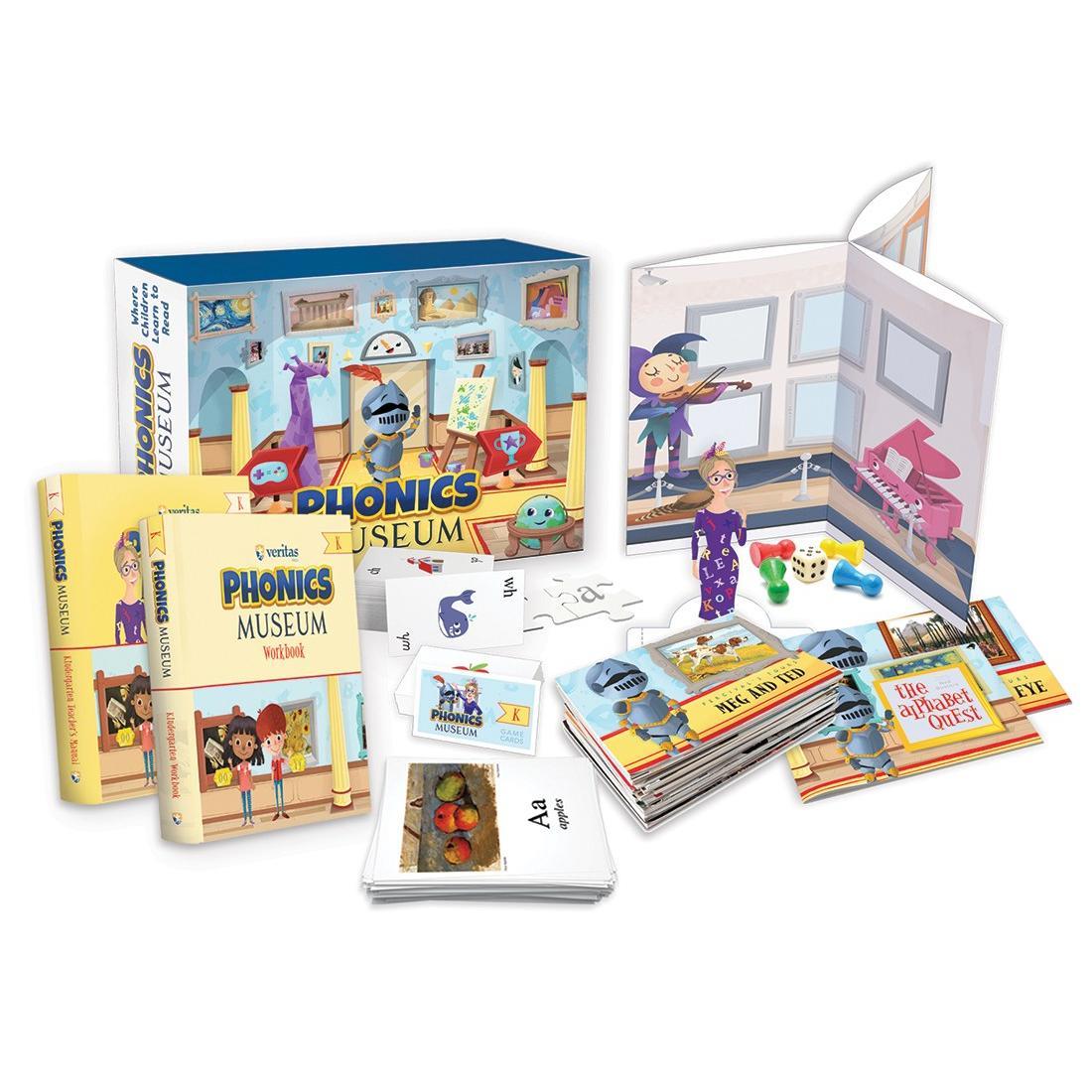
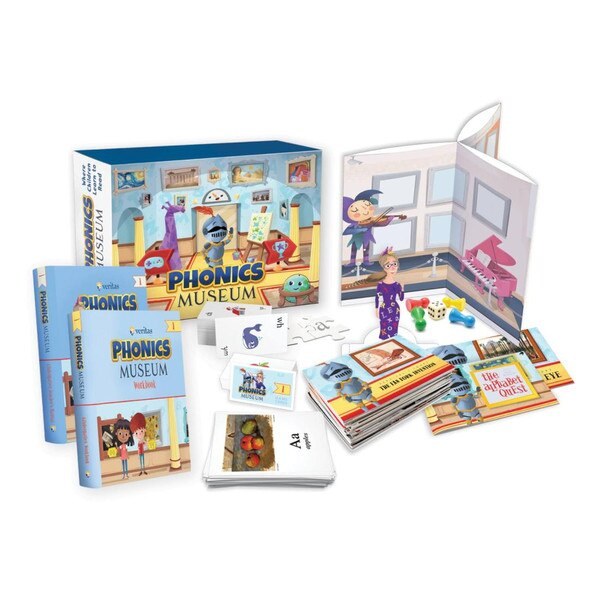
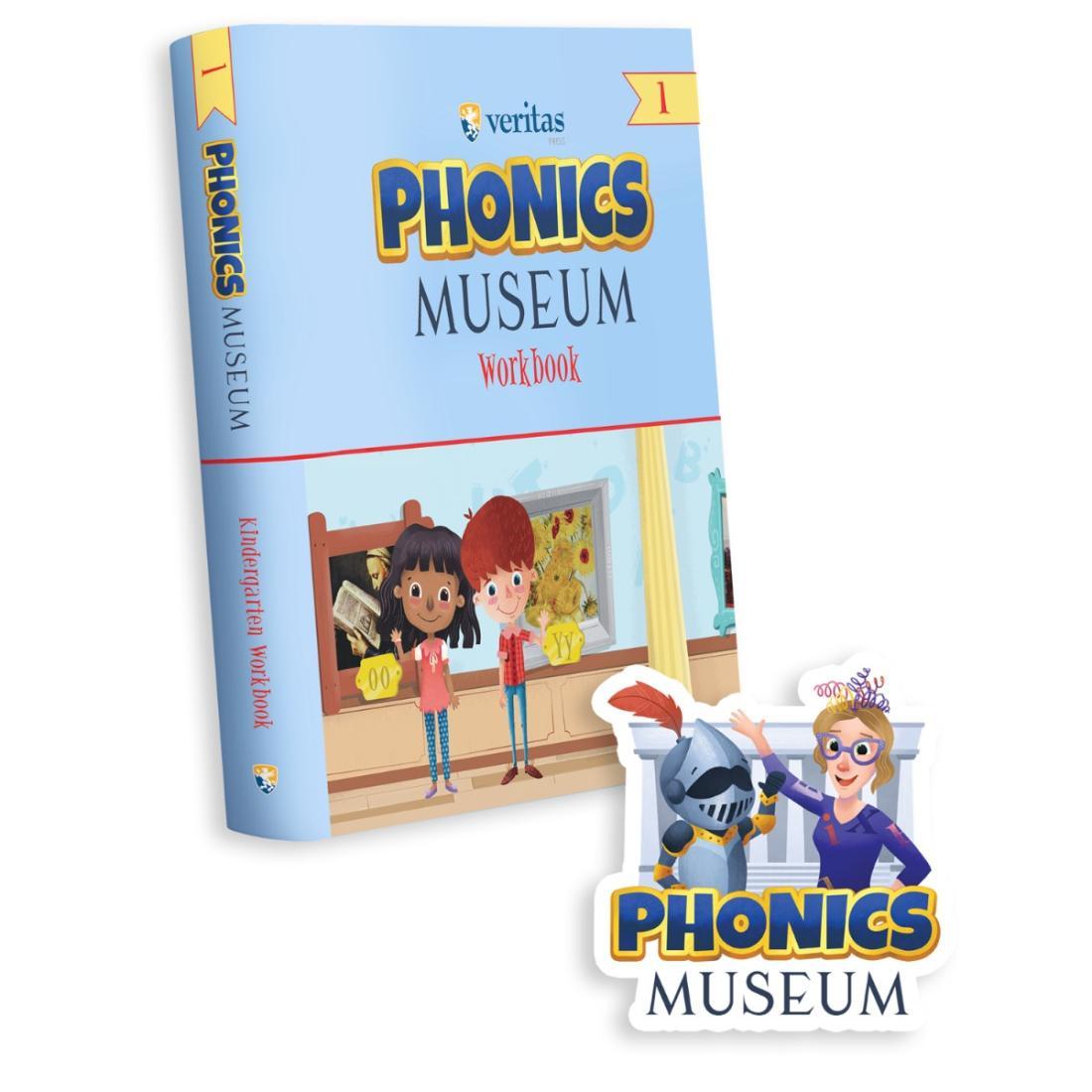
The Phonics Museum Kindergarten Kit ($190) includes the scripted Teacher's Manual, the full-color Workbook, alphabet flashcards using fine art, alphabet playing cards, Fine Art cards, the pop-up art museum game board, game cards and playing pieces, the Alphabet Quest introductory book, a Museum Bag decal, ten primers, fifty puzzle pieces, paper dolls, and downloadable songs. The First Grade Kit ($190) carries the same architecture forward with twenty more primers, word flashcards, and the addition of copywork, spelling, and reading comprehension. The Combo Kit ($250) is both years together, and additional students need only an Individual Student Kit ($45 without primers, $70 to $85 with them).
Additionally, D'Nealian handwriting is built into the Phonics Museum workbook, with letter formation instructions in the manual, so it is not a separate purchase or a separate part of your morning. Furthermore, the songs, the games, and the art projects are in the box rather than sold as supplements.
What It Costs
All About Reading | 1 Year
$203.85
Level 1, including one-time tiles and review box
Each level after that is a fresh materials purchase. The program runs five stages, carrying a child through roughly fourth-grade decoding, then leads into All About Spelling.
Phonics Museum | 2 Years
$250
Combo Kit, covering Kindergarten and 1st grade
Because the first grade year continues from where kindergarten left off rather than re-teaching the beginning, the Combo Kit is the whole program for most families. One purchase, two years, done.
For the two years both programs cover, Phonics Museum costs less and puts more in the box, and the included app year widens the gap.
Bought on its own, the app is $9.99 a month or $99 a year, covers up to three children on one account, and includes over 900 games, videos, songs, and early readers, with a two-week free trial. It works alone or alongside the kit. We recommend the app if your circumstances require it, and both together if they permit that.
How Each One Teaches
The signature manipulative tells you a lot about a program's methods and goals.
All About Reading's is the letter tile: color-coded, magnetic, arranged on a board so a child can build a word, break it apart, and swap one sound for another. It is a precise tool. A parent can show a child exactly what changed between sat and sit by moving one tile. That precision is the point, and it is why the tiles carry through every level of both the reading and spelling programs.
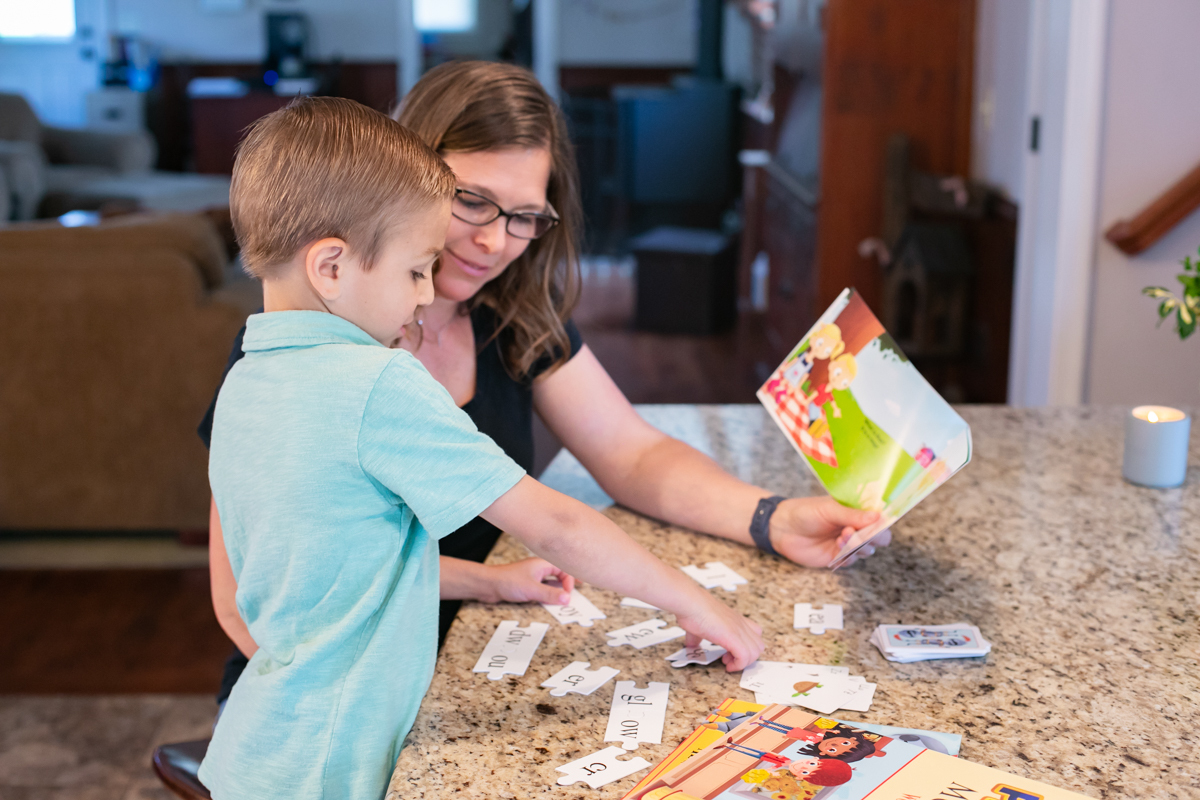
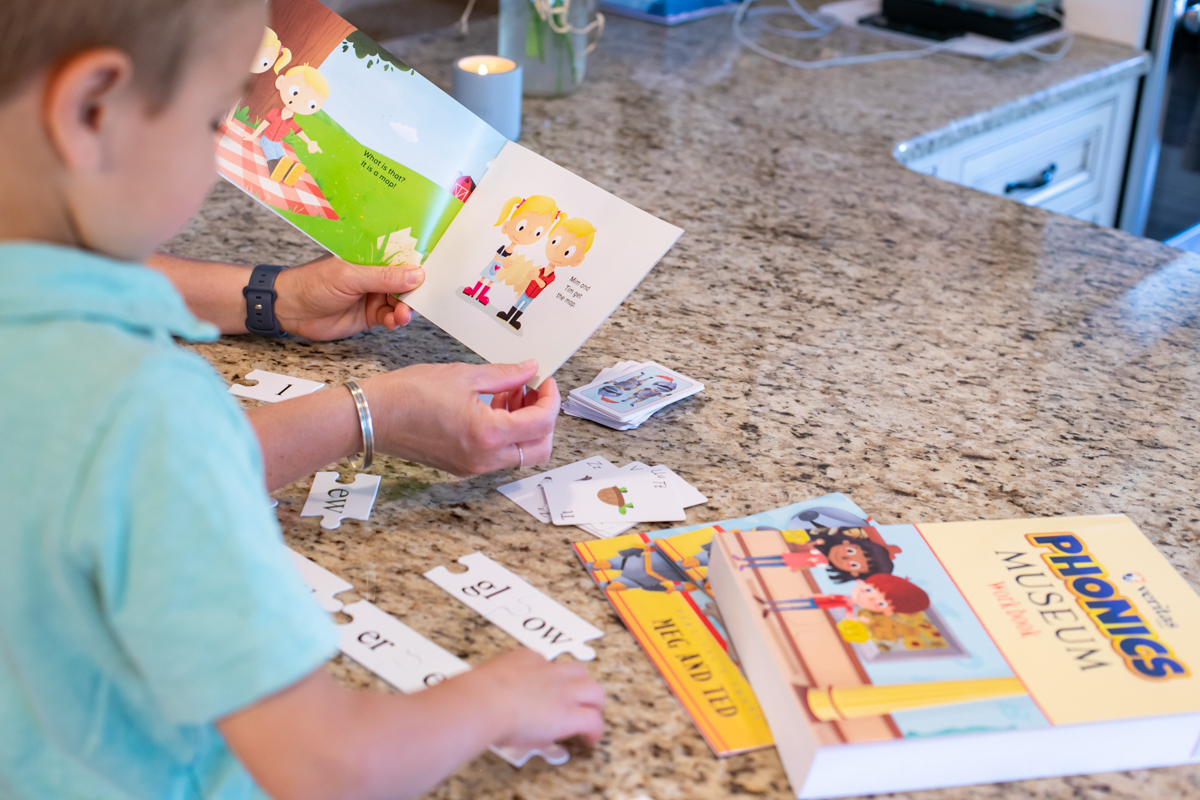
Phonics Museum's is the puzzle piece. Phonograms are printed on interlocking pieces, so when a child joins ow to gl the pieces physically click. The child feels the sounds combine. It is a small difference and a real one: a tile sits next to another tile, and a puzzle piece commits.
The rest of a Phonics Museum lesson tends to move around the table. There are songs to sing, a museum board to play on, primers to read, a workbook page with handwriting, and art to look at.
“
I used it for my son along with the curriculum. I didn't do all the games in the curriculum. I mostly let him do at least one lesson in the app a day and then the workbook handwriting and reading. He also really enjoyed the coloring pages of fine art that corresponded to the lessons. Of all five of my children this was the most efficient method of teaching and learning. All kids are different though, so maybe this was just the perfect fit for him.
Stacey F.
Phonics Museum Parent
An All About Reading lesson is tighter and more uniform: review the flashcards, teach the new concept with the tiles, work the activity book page, read from the reader. About twenty minutes. There's definitely value in that consistency, particularly for a parent teaching several children in a morning who needs to know exactly what the next block requires.
About the Primers
The readers are where these two programs feel most different.
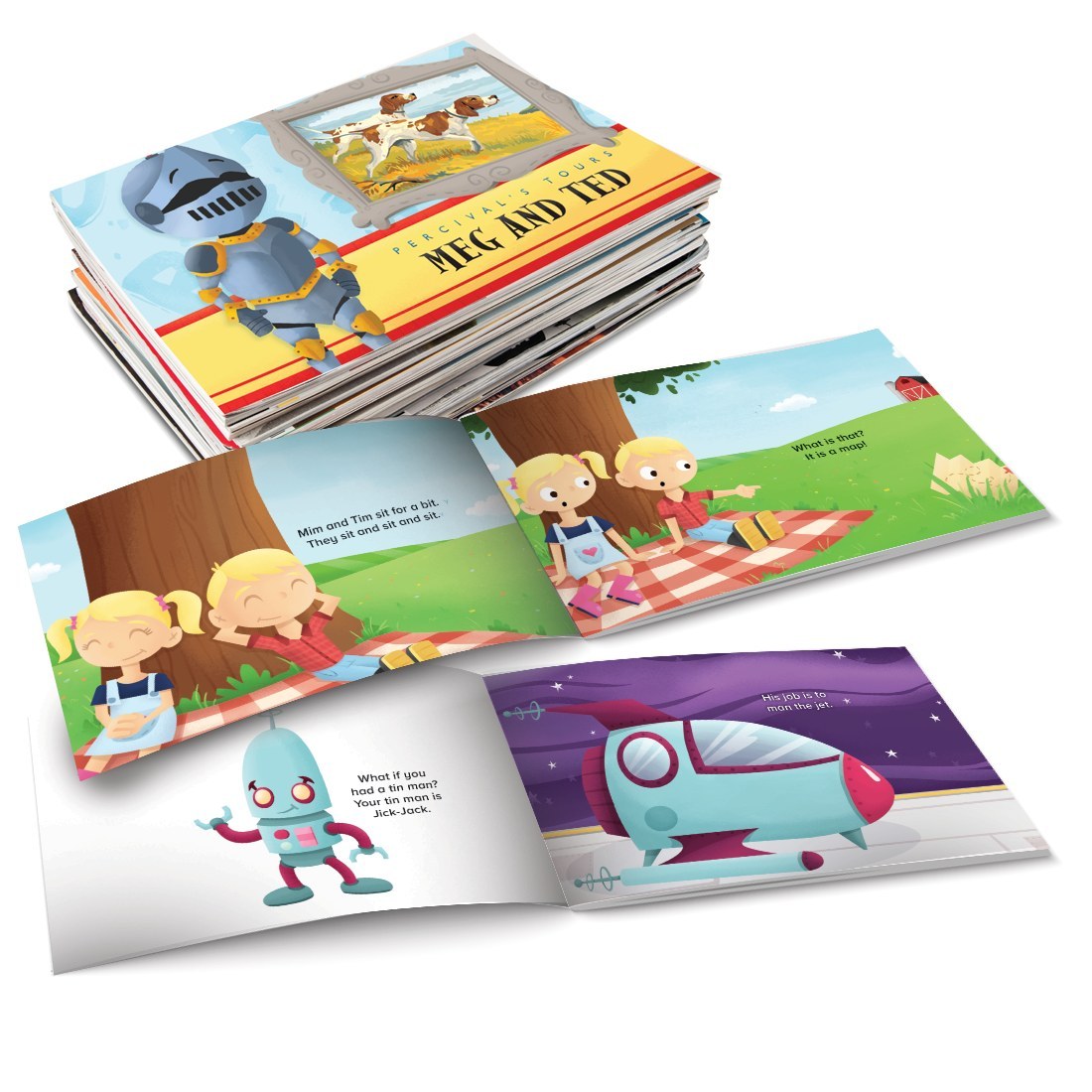
Percival's Tours: the Phonics Museum primers
The earliest Phonics Museum primers are simple, and they have to be. A child six weeks into the alphabet can decode Mim and Tim sit for a bit, and asking for more than that would mean handing them a book they cannot actually read. Every well-built phonics program starts here.
What changes is where they go. The primers are framed as Percival's tours, and as the phonograms accumulate, the subject matter opens up further into art, history, and real stories. By 1st grade, children are reading about things worth reading about, which is the point of learning to decode in the first place.
“
I love the readers. I can't stand "Jack and Jill" readers as I call them. So I love that even at the earliest level they're learning to read great, meaningful stories.
Brittany R.
Phonics Museum Parent
All About Reading's readers are well made, full-color hardcovers with characters children get attached to, and they are carefully engineered so that a child only encounters patterns already taught. That engineering is a strength. It also means the stories exist primarily to serve the sequence.
Where the Art Actually Matters
The fine art in Phonics Museum is not a border around the worksheet.
The alphabet flashcards are paintings. A child learning the letter A is looking at a still life of apples by an actual painter. The workbook covers frame Van Gogh's sunflowers and the Mona Lisa because the museum the children are touring is a real one, stocked with real work. The Fine Art cards, the coloring pages that correspond to each lesson, the songs, the paper dolls walking the galleries: all of it is the same museum.
What this buys you is that a child finishes 1st grade able to read and also having spent two years looking closely at good paintings and listening to good music, without a single hour set aside for art appreciation. For families who care about beauty as part of an education rather than an elective within it, that integration is the entire point.
Beauty is not the reward for finishing the academic work but how the academic work gets done.
Which Program Fits Your Family?
Choose All About Reading if…
- Your child is older than five and starting late, or is struggling, or has been assessed for dyslexia
- Something else has already been tried and did not take
- You want a single reading spine that carries through fourth-grade decoding
- A secular program is what your family needs
Choose Phonics Museum if…
- You are starting a child at four, five, or six and want these particular years to be delightful
- Art and music matter to you and you would rather they be woven in than scheduled separately
- You want a Christian, classical program with a clear beginning and a clear end
- You want handwriting included and one purchase to cover both years
- You want the option of an app that can carry a lesson on a morning when you cannot
The Orton-Gillingham foundation and the mastery-based placement in All About Reading are built precisely for the child who needs to be met exactly where they are, and the program has earned its reputation there.
Choose Phonics Museum, too, if you are teaching several children at once and they are not in the same place.
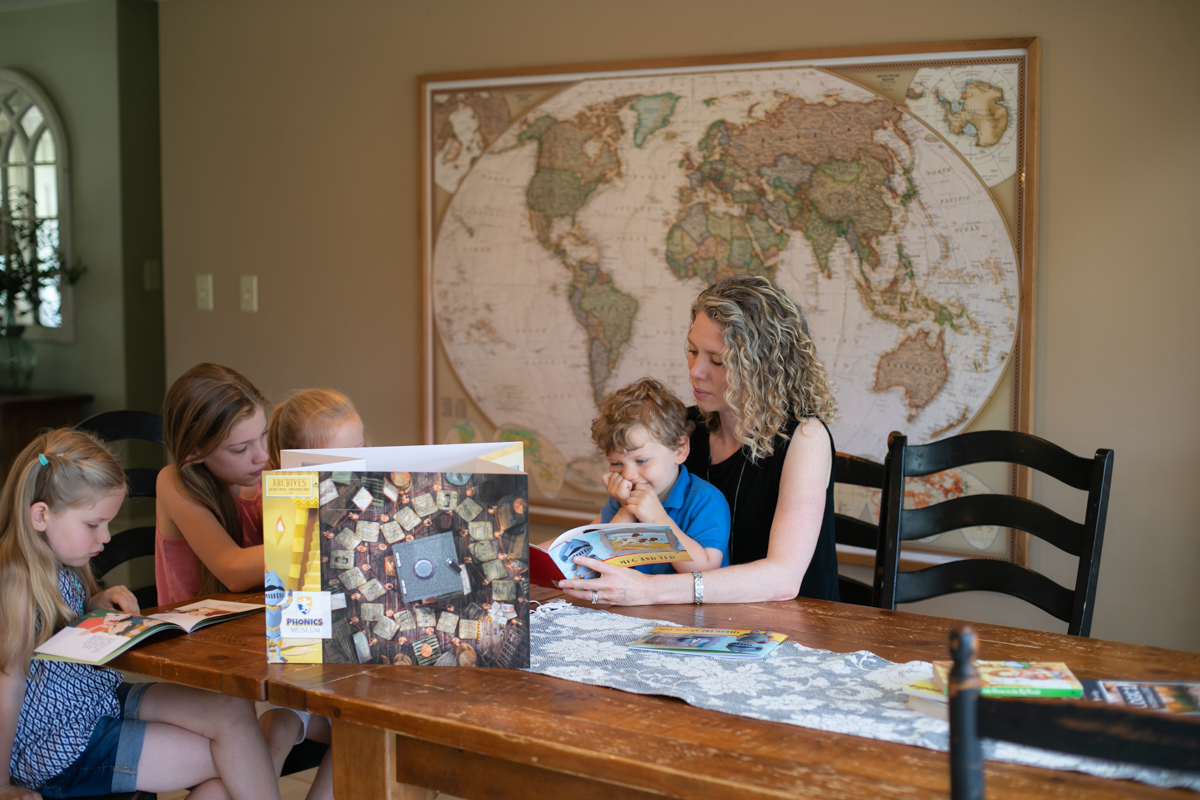
“
My kids are older now but we used it when it was fairly new. It was a really good mix of fun and educational. I used it with three kids. One was a struggling reader, one was on target, one was a pre-reader. It worked well for each kid at their own level. It was a good review and a great introduction.
Angela R.
Phonics Museum Parent
Getting Started
The Combo Kit covers Kindergarten and 1st grade in one purchase, with a full year of the Phonics Museum app included.
Keep comparing
How to Choose a Homeschool Phonics Curriculum Seven questions that narrow the field, plus a side-by-side chart of five leading programs.- Phonics Museum vs. The Good and the BeautifulWhere each program starts, and what an all-in-one language arts course covers.
- Phonics Museum vs. Logic of EnglishHow much of the structure of English a five-year-old should be handed, and when.
- Phonics Museum vs. Hooked on PhonicsApp-led or parent-led, subscription or ownership.
Have questions? Talk to an expert for free!
Our Family Consultants are here to help! Fill out the form below to schedule a quick call for free.