


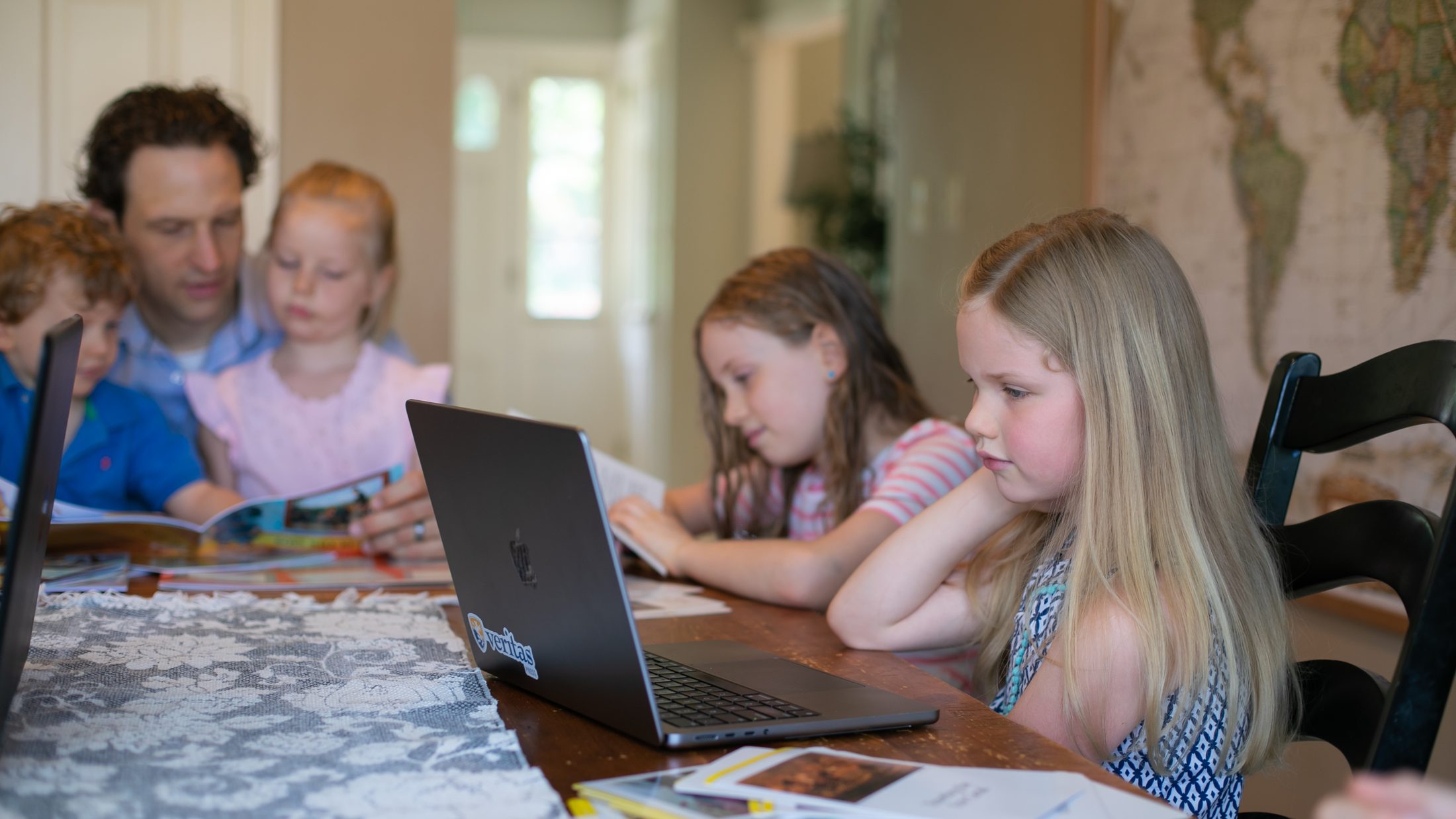
There’s a moment every morning when a group of children settles onto the rug, or around the kitchen table, and the day hasn’t quite begun. Some are wide awake. Some are still half asleep. One is bursting to tell you about a loose tooth, and another would rather not say a word.
A good morning meeting question gathers all of them in. It gives every child a reason to speak and a reason to listen, and it only takes a minute. Our free tool below offers a fresh, quick question for kids every day. Shuffle for another, put it on the screen, or plan a whole month of morning meeting questions and print them.
Today’s question Thursday, November 19
What would you take with you to the moon?
Choose your questions
Pick the kinds of questions you’d like. Today’s question and your plan follow your choices.
Plan your school days
Weekends are skipped. Lock the questions you love, swap the rest, write your own, and remove any days off. Your plan is saved in this browser.
Share or print
Show your plan on screen one day at a time, copy it, or print it.
The tool opens with quick questions, the kind that work best when every child gets a turn. Want something longer for a smaller group? Switch the length to Discussion or Any length, and choose the kinds of questions you like.
What Is Morning Meeting?
Morning meeting is a short gathering at the start of the school day, usually with everyone seated in a circle. The practice was shaped by the Responsive Classroom approach and described in Roxann Kriete’s The Morning Meeting Book, which says a meeting lasts up to a half hour each day. It has four parts:
- Greeting: children greet one another by name.
- Sharing: children share a bit of news or an answer to a prompt, and others respond.
- Group activity: a short game, song, or chant the whole group does together.
- Morning message: a note from the teacher, often written on the board, that previews the day.
Homeschool families have their own version, often called Morning Time. Cindy Rollins describes years of it with her own children in Mere Motherhood: Morning Times, Nursery Rhymes, and My Journey Toward Sanctification, and Pam Barnhill’s Better Together has helped many families start the practice. The setting is different, but the heart is the same: begin the day together, with attention and warmth, before the lessons start.
How to Use a Question in Each Part of the Meeting
One good question can carry through the whole meeting. Here are a few ways to use it.
As a greeting question. Each child greets the next by name and answers in a word or two. “Good morning, Eli. My favorite sound is rain on the roof.” Quick questions work best here because everyone answers.
As a share question. Invite two or three children to answer more fully, then let classmates ask one question or make one comment. “What is something kind someone did for you this week?” makes a lovely share question, because the answers tend to spread kindness around the circle.
As a group activity. Turn a this-or-that question into a game of corners. Ask, “Would you rather be a bird or a fish?” and send the birds to one side of the room and the fish to the other. Then let each side give its best reason.
In the morning message. Write the day’s question at the bottom of your note on the board. Early readers get a little practice, and children arrive at the circle already thinking.
Morning Meeting Questions by Grade
Every question in the tool is written for children from kindergarten through fifth grade, but the way you ask can grow with them.
Kindergarten and First Grade
The youngest children do best with concrete questions and simple choices. They can answer from what they see, hear, and love.
- What is your favorite sound?
- What color would you use to paint a happy day?
- Would you rather be a bird or a fish?
Second and Third Grade
At this age, children are ready to add a reason. A simple follow-up, “Why?”, turns a one-word answer into a small argument.
- Which animal character from a story would you want as a friend?
- If you could invent your own ice cream flavor, what would be in it?
- What is the best thing that happened to you this week?
Fourth and Fifth Grade
Older elementary students love questions about fairness, friendship, and right and wrong. Try turning on Great Ideas and choosing Discussion for a longer conversation.
- What does it mean to be humble?
- Is it better to win a game or to have fun playing it?
- What makes a person wise?
For older students, our middle school and high school questions make a natural next step.
Making Room for Every Child
Some children love the circle from the first day. Others find it hard to speak while everyone is watching, and that’s a very understandable feeling. Many adults feel the same way in a meeting. With a little patience, most children come to enjoy their turn.
- Let children pass. Say “Pass for now” is always allowed, then come back to them at the end. Most will be ready by then.
- Share with a partner first. Talking to one friend is much easier than talking to twenty.
- Give a few seconds of quiet. A short pause after the question lets slower thinkers catch up.
- Go first. A short, cheerful answer from you shows what an answer can sound like.
We’ve gathered more ideas in 3 Ways to Draw Quiet Children into Discussion.
Morning Time in a Classical Home or Classroom
In many classical Christian schools and homeschools, the first minutes of the day hold some of the most treasured things: a prayer, a hymn, a passage of Scripture to memorize, a history song, a poem recited together. Young children in what classical educators call the grammar stage love this kind of rhythm, repetition, and song (The Trivium Explained).
A question of the day fits beautifully into that rhythm. After the singing and recitation, it gives each child a chance to speak in their own words before the lessons begin. A theology question can follow the morning’s Bible reading. A history question can follow the timeline song. A casual question can simply help a sleepy household wake up and laugh together.
The first minutes of the day teach children what their family or class cares about most.
At Veritas Press, our grammar school courses fill the early years with songs, chants, and memory work, because we’ve seen how much children enjoy learning this way. If your mornings feel more frantic than peaceful right now, you’re in good company, and small changes help. Our post on how to have a calm homeschool morning is a gentle place to start.
Frequently Asked Questions
What makes a good morning meeting question?
A good morning meeting question is quick to understand, easy to answer in a sentence or two, and has no wrong answer. That way every child can take a turn. Questions that invite a choice and a reason, like “Would you rather live on a farm or in a big city?”, work especially well.
How long should morning meeting last?
The Responsive Classroom approach describes a meeting of up to a half hour. Many teachers and parents find that 10 to 20 minutes fits their day better, especially with younger children. A single quick question takes only a few minutes.
Can homeschoolers do morning meeting?
Yes. Many homeschool families start the day with Morning Time, which often includes prayer, reading aloud, memory work, and conversation. A question of the day makes an easy addition, and it works well with children of different ages at the same table.
Can I print a month of morning meeting questions?
Yes. In the planner, choose a start date and 20 school days, then select “Open print page.” You can print a week-by-week schedule or one large question per page to post on the wall.
What ages are these questions for?
They’re written for kindergarten through fifth grade. For the youngest children, read the question aloud and offer two choices if they need a place to start.