


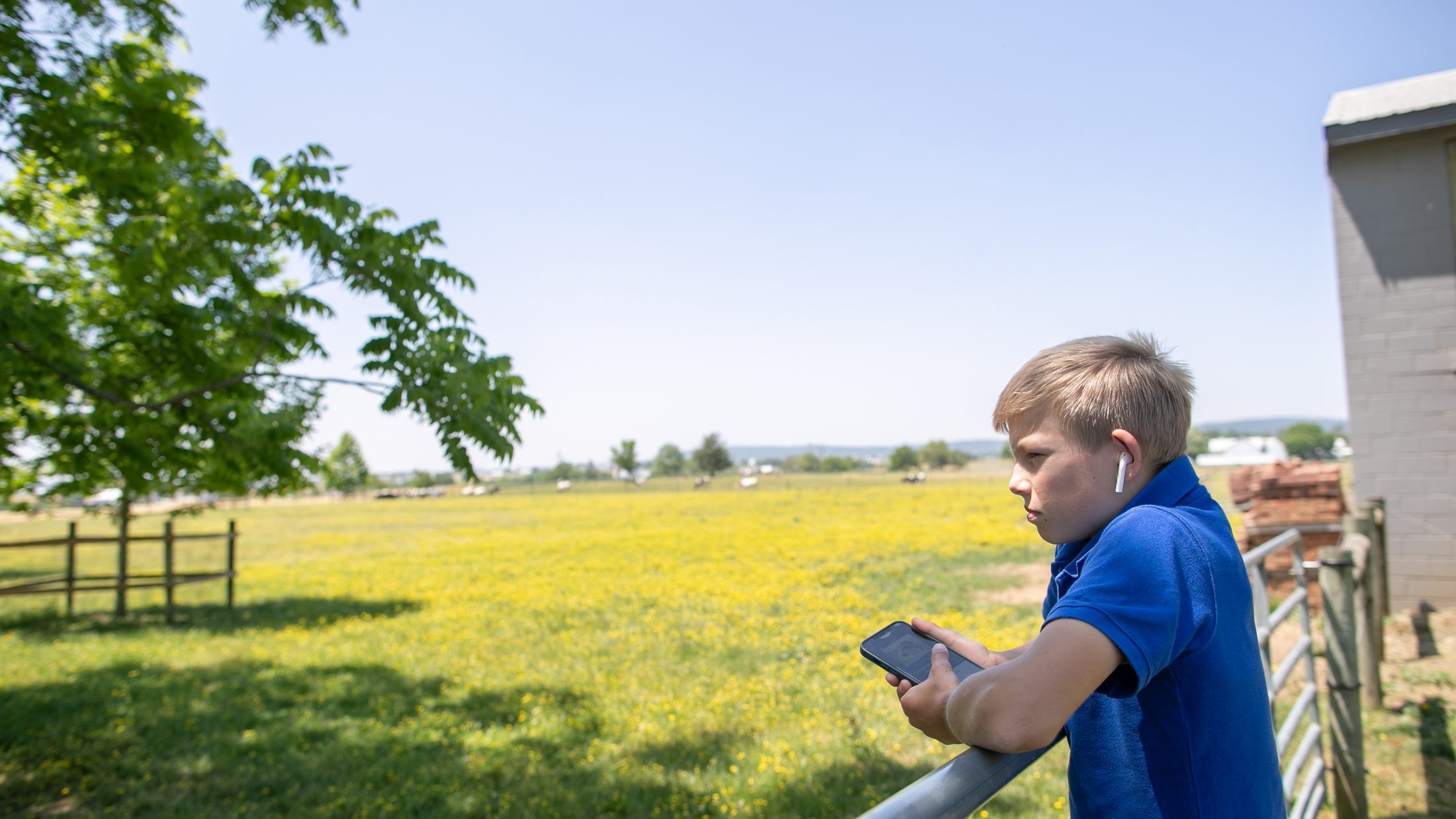
West Virginia has a long and steady homeschool tradition, and in recent years the state has added new support for families who teach at home: access to public school sports since 2020 and the Hope Scholarship, one of the broadest education savings accounts in the country.
About 6%
of West Virginia K-12 students were homeschooled in 2022 and 2023 on average, by a Census-based estimate.
Johns Hopkins Institute for Education Policy, Homeschool Hub: West Virginia
West Virginia gives families two ways to learn at home, and the paperwork depends on whether you use the Hope Scholarship. This guide explains both paths, what each requires, and how to choose a curriculum that fits your child.
In this guide
Is Homeschooling Legal in West Virginia?
Yes. West Virginia has recognized home instruction since 1987. Children ages 6 to 17 must attend school, and home instruction is one of the exemptions from compulsory attendance (W. Va. Code §18-8-1(c)). Since 2016, the Notice of Intent is filed once rather than every year.
Two Ways to Learn at Home in West Virginia
Both paths cover the same core subjects: reading, language arts, mathematics, science, and social studies. The difference is whether your child receives Hope Scholarship funds. The two paths can’t be combined in the same school year.
Most common
Home Instruction
W. Va. Code §18-8-1(c)
You homeschool independently and file a one-time Notice of Intent with your county.
Requirements
- File a one-time Notice of Intent with your county superintendent, listing each child’s name, address, and age, with an assurance of instruction in the five core subjects. If your child is in public school, file on or before the day home instruction begins.
- Submit evidence that the instructor has a high school diploma or equivalent, or a qualifying postsecondary degree.
- Obtain an annual academic assessment (see the options below). Submit results to the county superintendent in grades 3, 5, 8, and 11, by June 30.
- Keep copies of each assessment for three years, and file a Notice of Termination when home instruction ends.
Hope Scholarship families
Learning at Home With Hope
W. Va. Code §18-31
Families who receive the Hope Scholarship and learn at home follow the program’s own requirements instead of the home instruction exemption.
Requirements
- File a Hope Notice of Intent with your county board once your application is approved.
- Each year, show academic progress through a nationally normed test or a certified teacher’s review.
- Report year-end academic progress to your county board by June 8.
- Tell the Hope Scholarship Board if your child returns to public school or moves out of state.
Hope Scholarship rules are set by the Hope Scholarship Board. Check the current Parent Handbook before you apply.
If you’re considering online school, our post Is My Student Considered a Homeschooler When in the Diploma Program? explains how part-time and full-time enrollment differ, and our Online School in West Virginia page covers how West Virginia families enroll with Veritas Scholars Academy.
The Annual Assessment
The yearly assessment is the requirement that worries new families most. It helps to know that you have four options, and you choose the one that fits your child.
- A nationally normed standardized achievement test, given under standard conditions by a qualified person.
- The public school testing program, taken at a public school in your county.
- A portfolio review by a certified teacher, who writes a short narrative about your child’s progress.
- An alternative assessment that you and your county superintendent agree on.
Required subjects
- Reading
- Language arts
- Mathematics
- Science
- Social studies
You choose the curriculum. If an assessment doesn’t show acceptable progress, the law asks families to start a remedial program, and many families find the portfolio review a helpful, low-stress way to get feedback.
Paying for It: The Hope Scholarship
For many West Virginia families, cost is the question that decides everything. The Hope Scholarship can cover much of a year of curriculum and courses.
West Virginia education savings account
West Virginia Hope Scholarship
Administered by the West Virginia State Treasurer’s Office through the Education Market Assistant (EMA) platform from Student First Technologies.
Per student, per year
About $5,267
How it works
- Funds can pay for private school tuition, homeschool curricula, tutoring, online courses, educational therapies, standardized testing fees, educational technology, and up to $750 a year in transportation.
- Applications are accepted on a rolling, quarterly basis.
- Eligibility has expanded since the program began. Check hopescholarshipwv.gov for the current year’s rules and award amount.
Reimbursement is limited, so confirm that an expense qualifies before you buy.
Using Hope with Veritas Press
Log in to your Hope Scholarship account, open the Education Marketplace, and search for Veritas Press. Choose your courses or products and submit a payment request. Once it’s approved, funds go directly to Veritas Press. A Family Consultant can confirm which Veritas courses and curriculum qualify.
Hope Scholarship help
- Phone(681) 999-4673
- Websitehopescholarshipwv.gov
Getting Started: Your First Steps
Leaving a public school can feel like a big step. In West Virginia, the order is simple: notice first, then home instruction begins.
Three steps to begin
- Choose your pathDecide whether you’ll homeschool independently or apply for the Hope Scholarship. The two can’t be combined in the same year.
- File your noticeHome instruction families file a Notice of Intent with the county on or before the day they begin. Hope families file a Hope Notice of Intent once approved.
- Plan your assessmentChoose this year’s assessment option early, and start a simple portfolio on day one.
Moving to a new county? Notify your previous county and file a new Notice of Intent with the new one.
Then give your family room to settle in. Our guide How to Start Homeschooling has more on planning your first year.
Diplomas, Transcripts, and College
West Virginia homeschool graduates receive a diploma and transcript from their parents. Homeschoolers can qualify for West Virginia’s PROMISE Scholarship by meeting its academic requirements and submitting a transcript and documentation of homeschool status from the county. Keep course descriptions, reading lists, and assessment results as you go.
Families who prefer an accredited diploma can look at Veritas Scholars Academy’s Diploma Program, which includes an official transcript and an Academic Advisor to plan the high school years.
Sports and Activities
Since 2020, West Virginia law has allowed homeschooled students to take part in interscholastic athletics and other extracurricular activities at the public secondary school serving their attendance zone (W. Va. Code §18-2-25). Students must show satisfactory academic progress, with average test results at or above the fourth stanine in all subjects, and meet other eligibility rules, which have included enrolling in at least one virtual course through the public school system. Districts may charge reasonable participation fees.
Ask your zoned school’s athletic office about current requirements well before the season. West Virginia also has homeschool co-ops and athletic organizations statewide.
Veritas Press
Classical Christian Education, Built to Prepare Students for Life
Choosing to homeschool means choosing to take your child’s education seriously. At Veritas, we believe classical Christian education is the best framework for that work, and we’ve watched it bear fruit in families for more than 30 years.
Classical education forms students who can think clearly, reason from evidence, argue persuasively, and live faithfully. That’s what we mean when we say our goal is to prepare students for life.
Our curriculum and courses follow the classical Trivium: the grammar, logic, and rhetoric stages (The Trivium Explained). Each stage fits how children actually grow. Young children love to memorize and chant, so we fill those years with songs, timelines, and rich stories. Middle schoolers begin to question and argue, so the work turns to analysis and reasoning. By high school, students learn to synthesize, persuade, and defend what they know.
West Virginia families can use Veritas in three ways:
- You-Teach CurriculumComplete, carefully sequenced materials you teach at home, covering K-12 across more than 21 subjects, including history, Bible, Latin, logic, and literature. You’re the teacher, and we give you everything you need to do it well.
- Self-Paced CoursesVideo courses taught by expert Veritas teachers. Students work through lessons on their own schedule, with the depth and rigor of a live class. Explore Self-Paced
- Veritas Scholars AcademyOur accredited online school, with live classes taught by experienced teachers. VSA is accredited by MSA-CESS and NCAA-approved, and its Diploma Program includes an Academic Advisor and an official transcript. Explore VSA
Frequently Asked Questions
How do I start homeschooling in West Virginia?
File a one-time Notice of Intent with your county superintendent, on or before the day home instruction begins if your child is in public school. Include evidence of the instructor’s high school diploma or equivalent.
Do West Virginia homeschoolers have to take tests?
Every homeschooled student needs an annual academic assessment, which can be a standardized test, the public school testing program, a certified teacher’s portfolio review, or an agreed alternative. Results go to the county in grades 3, 5, 8, and 11.
Can I use the Hope Scholarship to homeschool?
Yes. Hope funds can pay for homeschool curricula, tutoring, and online courses. Hope families who learn at home follow the program’s requirements instead of the home instruction exemption.
Can West Virginia homeschoolers play public school sports?
Yes. Since 2020, homeschooled students can take part in WVSSAC activities at their zoned public school if they meet academic progress and other eligibility requirements.
Resources and Next Steps
Legal and administrative
- WVDE: Homeschool State CodeOfficial requirements and the Notice of Intent letter
- W. Va. Code §18-8-1The compulsory attendance and home instruction statute
- HSLDA: West Virginia Homeschool LawPlain-language legal overview
Hope Scholarship
- West Virginia Hope ScholarshipEligibility, applications, and the Parent Handbook
- Using Hope with Veritas PressHow to pay for Veritas through the Education Marketplace
Curriculum and courses
- Veritas Press CurriculumYou-Teach, Self-Paced, and live online options for K-12
- Online School in West VirginiaHow West Virginia families enroll with Veritas Scholars Academy
- Request a Free ConsultationTalk through your family’s options with a Family Consultant
This guide is for informational purposes and is not legal advice. Laws and program rules change, so confirm current requirements with your county superintendent or the West Virginia Department of Education before making decisions.