Veritas Scholars Academy in West Virginia
Online School in West Virginia
If you’re comparing online schools in West Virginia, you’re asking important questions about your child’s mind, faith, and future. Veritas Scholars Academy gives West Virginia families live classes with expert teachers and fellow students, a classical Christian education from kindergarten through 12th grade, and an accredited diploma. And because VSA participates in the Hope Scholarship, your scholarship can help pay for it.

- Hope Scholarship participant
- Accredited by Middle States
- Live classes, grades 3-12
- Classes on Eastern Time
- Classical and Christian
- Enroll year-round
On This Page
Classical Christian Education, From the Mountains to the Ohio Valley
Now that the Hope Scholarship is open to every family in West Virginia, many parents are weighing private school for the first time. That’s exciting, and it can also feel like a lot to sort through. If you’re still working out what fits your child, you’re in good company.
Here’s what sets VSA apart. Veritas Press has helped families teach classically for more than 30 years, and Veritas Scholars Academy brings that education into a live online classroom. Students walk through history in order, beginning with Creation, read the great books, learn Latin, and grow in their ability to think, reason, and speak well. Every class is taught from a Christian worldview, by teachers who know their students by name.
Families choose how much VSA to bring home:
- Full-Time Diploma Program. A full course load with VSA, a personal Academic Advisor, and an accredited diploma and transcript at graduation.
- Part-Time live classes. Many West Virginia homeschool families keep teaching most subjects and add a few live courses where a seasoned teacher and real classmates make the biggest difference.
The Hope Scholarship Can Help Fund a VSA Education
Starting in 2026-27, every West Virginia K-12 student can apply for the Hope Scholarship, with no prior public school, income, or disability requirement. Each scholarship is expected to provide about $5,436 for the year, paid quarterly through the Hope portal, for private school tuition, online courses, curriculum, and more.
VSA is priced by the course, so here’s how a typical year compares.
| Typical yearly cost | |
|---|---|
| Typical Full-Time Grammar year | $2,786 |
| Typical Full-Time Secondary year | $5,828 |
| Hope Scholarship, 2026-27 (estimated) | about $5,436 |
Tuition only; books are separate.
Hope covers a typical full-time Grammar School year with room left for books, and most of a typical full-time Secondary year. Every family’s plan is different, so build your own child’s plan to see your real number.
How to Pay With Hope
Log In to the Hope Portal
Sign in to your Hope Scholarship account and open the Education Marketplace.
Find Veritas Press
Search for Veritas Press, choose your courses or services, and submit a payment request.
Hope Pays Veritas
Once your request is approved, the funds go directly to Veritas.
Plan ahead. Families who apply between March 2 and June 15 receive full funding for the coming school year, and later applications are prorated. Reimbursement is allowed only in specific circumstances, so check with the program before paying out of pocket. A Family Consultant can help you line up your application, course plan, and start date. Using the Hope Scholarship with Veritas Press
What West Virginia Requires of VSA Families
Every family that leaves a traditional school wonders what the state will expect. In West Virginia, the paperwork depends on whether you learn at home with Hope or without it. Both paths cover the same core subjects: reading, language, math, science, and social studies.
Learning at Home With Hope
The Hope Pathway
- File a Hope Notice of Intent with your county board once your application is approved. Your account is funded after it’s on file.
- Each year, show academic progress through a nationally normed test or a certified teacher’s review.
- Report year-end progress to your county board by June 8. In grades 3, 5, 8, and 11, assessment results also go to the county.
- Tell the Hope Scholarship Board if your child returns to public school or moves out of state.
Homeschooling Without Hope
A Homeschool Notice of Intent
- File a Homeschool Notice of Intent with your county board of education (W. Va. Code §18-8-1).
- Submit a copy of the instructor’s high school diploma or equivalent.
- Complete a yearly assessment: a nationally normed test, the public school testing program, a certified teacher’s portfolio review, or an alternative your superintendent approves.
- File a Notice of Termination when home instruction ends.
Enrolling full-time? How a full-time VSA student fits these paths can depend on how you enroll and how you use Hope, and the two paths can’t be combined in the same school year. Talk with a Family Consultant before you withdraw from a public school, so your scholarship, paperwork, and start date line up. How switching to VSA works
Wondering how other states treat VSA students? Is My Student Considered a Homeschooler When in the Diploma Program?
A Diploma That Opens Doors
When your child starts thinking about college, the transcript suddenly matters a great deal. Many West Virginia families choose VSA so their high schooler graduates with a record any admissions office will recognize.
An Accredited Diploma
Full-Time Diploma students graduate with a diploma and official transcript from a school accredited by the Middle States Association since 2014. Honors, AP, and dual enrollment courses appear on the transcript with a weighted GPA.
Ready for College
VSA graduates have gone on to schools such as Harvard, Hillsdale, Wheaton, Grove City, and New Saint Andrews. Your child’s Academic Advisor helps plan a course of study with their college goals in mind.
College Credit and NCAA
Eligible high school students can earn college credit through our dual enrollment partnership with Cairn University. VSA courses are also NCAA-approved (high school code 392122).
What a Week Looks Like for West Virginia Students
Online school can be hard to picture until you see it. Here’s what a typical week looks like.
Live Classes, Twice a Week
Each live course meets twice a week at a set time, with the same teacher and up to 20 classmates all year. Students raise their hands, answer questions, and discuss ideas together.
Never Behind
Every class is recorded. If a mountain snowstorm knocks out the power or a family trip gets in the way, your child watches the recording and stays on track.
Between classes, much of the work happens with books, paper, and pencil. Younger students sing their way through history and chant their Latin vocabulary. Older students read Homer and Augustine, work through formal logic, and learn to write and defend arguments of their own, the classical stages Dorothy Sayers described in “The Lost Tools of Learning” (1947).
Friends Across West Virginia, and Across the Country
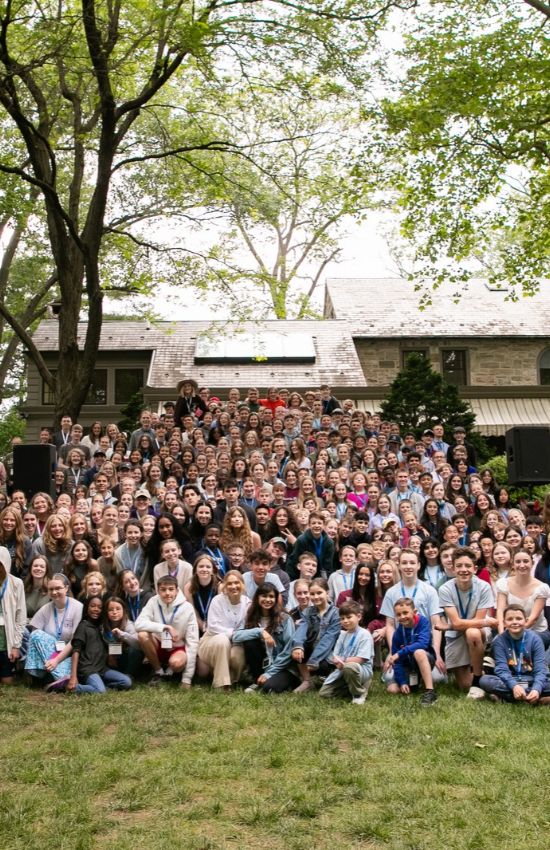
Parents often worry about friendships most of all, and we understand why. VSA students see the same classmates every week, and real friendships grow from there. Clubs, field trips, and our End-of-Year Gathering bring students together outside class, and your child may find classmates across West Virginia and across the country.
Something that happened at VSA that I didn’t expect was that I’d actually make a lot of friends.
Annelise, VSA graduate
I didn’t think you could make friends online, but I’m actually closer to some of my online friends than I am to the ones in real life.
Getting Started, One Step at a Time
Talk With a Family Consultant
Tell us about your child and your goals. A Family Consultant replies within 24 hours and can walk you through Hope alongside your course plan.
Apply for the Hope Scholarship
Apply between March 2 and June 15 for full funding for the coming school year.
Apply and Find the Right Placement
We review your child’s records, and we may ask for a short placement test so your child starts in the right courses.
Build Your Child’s Plan
Full-Time students meet with an Academic Advisor to plan their courses and register for classes.
Questions West Virginia Families Ask
Is online school free in West Virginia?
West Virginia has tuition-free public virtual options, which follow state standards and teach from a secular perspective. VSA is a private school with tuition. For many West Virginia families, though, the Hope Scholarship covers much or all of a year of VSA tuition. See how Hope works at VSA.
How much is the West Virginia Hope Scholarship?
For 2026-27, the Hope Scholarship is expected to provide about $5,436 per student, paid quarterly. Starting this year, every West Virginia K-12 student can apply, with no prior public school, income, or disability requirement. Families who apply between March 2 and June 15 receive full funding for the coming year, and later applications are prorated.
Can I use the Hope Scholarship for VSA?
Yes. Log in to the Hope portal, find Veritas Press in the Education Marketplace, choose your courses or services, and submit a payment request. Once it’s approved, the funds go directly to Veritas. Reimbursement is allowed only in specific circumstances, so check with the program before paying out of pocket. Using the Hope Scholarship with Veritas Press.
How much does online school cost in West Virginia?
It depends on the school and your child’s plan. At VSA, you pay for each live course, plus a yearly enrollment fee for Full-Time Diploma students. Our tuition calculator shows your real yearly number in a few minutes. Build your child’s plan.
Do I need to file a homeschool Notice of Intent if my child attends VSA?
It depends on your path. Families who homeschool without Hope file a Homeschool Notice of Intent with their county board of education. Hope families who learn at home file a Hope Notice of Intent instead, and the two paths can’t be combined in the same school year. Your Family Consultant can help you confirm which applies to you.
Is VSA accredited?
Yes. VSA is accredited by the Middle States Association Commissions on Elementary and Secondary Schools (MSA-CESS), and our accreditation applies to students wherever they live, including West Virginia. How accreditation works at VSA.
What time are classes in West Virginia?
Class times are listed in Eastern Time, the same time zone as West Virginia, so the time you see is the time your child logs on. Courses are usually offered at several times, so families can choose what fits.
Can my child start in the middle of the year?
Yes. VSA welcomes new students throughout the year. Students can join classes in progress, catch up with recorded lessons, and work with their teachers on any makeup work. How switching works.
Let’s Build Your West Virginia School Plan Together
A Family Consultant would love to hear your child’s story, walk you through the Hope Scholarship, and help you find the right next step, whether that’s next month or next fall.
Keep Exploring
More About VSA
Start Any Time
Switching Schools
How families move to VSA mid-year or next fall, from first call to first class.
See how switching works
Real Numbers
Tuition
Build your child’s plan and see a real yearly cost in a few minutes.
Build your plan
Also helpful: Elementary · Middle School · High School · Diploma Program · ESAs and School Choice